The Philosopher’s Stone (Latin: Lapis Philosophorum) is the most legendary and enigmatic concept in alchemy. More than just a mythical substance that turns lead into gold, it represents perfection, immortality, and divine wisdom.
For centuries, alchemists across Europe, the Islamic world, and Asia pursued this elusive treasure, believing it could: ✔ Transmute base metals into gold (physical perfection). ✔ Grant eternal youth and immortality (the Elixir of Life). ✔ Awaken spiritual enlightenment (union with the divine).
This article explores:
Origins & Symbolism of the Philosopher’s Stone
Key Alchemists Who Sought the Stone
Famous Texts & Manuscripts on the Stone
Scientific & Spiritual Interpretations
Modern Legacy (Science, Pop Culture, and Esotericism)
The Philosopher’s Stone remains the ultimate symbol of human aspiration—whether for wealth, immortality, or wisdom. Though no one has ever confirmed its physical existence, its spiritual and philosophical lessons endure.
“The Stone is within you; the work is within you. Seek it there.” — Anonymous Alchemist
Introduction: The Secret Thread of Hermetic Wisdom
Hermeticism (or Hermetism) is one of the most influential philosophical and spiritual traditions in Western esotericism, deeply intertwined with alchemy. Named after the mythical sage Hermes Trismegistus (“Thrice-Greatest Hermes”), this tradition teaches that the universe is a living, interconnected whole, and that humanity can attain divine knowledge through spiritual and alchemical practices.
At the heart of Hermeticism lies the belief that “As above, so below”—the microcosm (man) reflects the macrocosm (universe), and by mastering the secrets of nature, one can achieve gnosis (illumination) and immortality.
This article explores:
Who Was Hermes Trismegistus?
The Core Teachings of Hermeticism
Key Hermetic Texts (The Emerald Tablet, Corpus Hermeticum, etc.)
Hermeticism’s Influence on Alchemy
The Evolution of Hermetic Thought (From Antiquity to the New Age)
1. Who Was Hermes Trismegistus?
Hermes Trismegistus is a syncretic figure, blending the Greek god Hermes (messenger of the gods) with the Egyptian Thoth (god of wisdom, magic, and writing). He was said to have lived in ancient Egypt and authored sacred texts on alchemy, astrology, and theology.
The Legend of Hermes
Revealed divine secrets to humanity in cryptic writings.
Possessed the Emerald Tablet, the foundational text of alchemy.
Considered the father of Hermeticism, a tradition that shaped Western occultism.
“What is below is like what is above, and what is above is like what is below.” — The Emerald Tablet
Conclusion: The Living Tradition of Hermetic Alchemy
Hermeticism remains a powerful undercurrent in Western esotericism, alchemy, and occultism. Its teachings—hidden in symbols, encrypted in texts, and practiced in secret—continue to inspire seekers of divine knowledge.
“The lips of wisdom are closed, except to the ears of understanding.” — The Kybalion
The Magnum Opus (Latin for “Great Work”) is the pinnacle of alchemical pursuit—a sacred process of material and spiritual perfection. More than just turning lead into gold, it represents the transmutation of the self, the purification of the soul, and the attainment of divine wisdom.
For centuries, alchemists across Europe, the Islamic world, and Asia sought to complete the Great Work, believing it would grant: ✔ The Philosopher’s Stone (transmutation & immortality). ✔ The Elixir of Life (healing & eternal youth). ✔ Divine Enlightenment (union with the cosmic mind).
This article explores:
The Stages of the Magnum Opus
Key Alchemists & Their Interpretations
Sacred Texts & Manuscripts
Scientific & Psychological Perspectives
The Burning Question: Did Anyone Ever Complete It?
1. The Four Stages of the Magnum Opus
The Great Work was traditionally divided into four color-coded stages, each representing a phase of transformation:
1. Nigredo (Blackening) – Putrefaction
Symbolism: Death, decay, the “dark night of the soul.”
Process: Breaking down impure matter (or ego) to its raw state.
The Magnum Opus was never just about gold—it was about transforming the self and the universe. Whether through lab experiments, meditation, or art, the Great Work remains humanity’s quest for perfection.
“The Stone is within you; the Work is within you. Begin where you are.” — Anonymous Alchemist
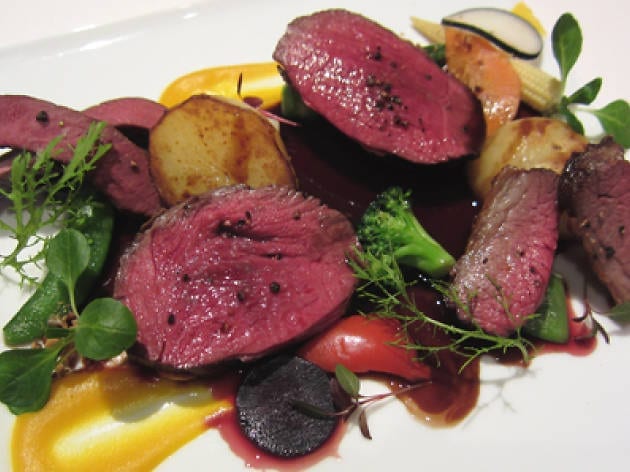
Trying to force myself to be unimpressed by the man who called himself Dr. Ma’bus as he spoke to the crowd at this uber-secret meeting of the high ranking members of the Brotherhood of EArth, I turned my attention to my meal — meticulously carving into the blood red meat that draped my plate: venison, tartar-style — having been freshly killed and butchered just hours before. While the meat was intensely good, I didn’t care much for the rest of the items on my plate: a radiant display of uncooked root vegetables, warm but unleavened bread, and bright field greens.
And while I knew that this has been the standard Brotherhood Meal for the last century– for it signified ‘an eternal connection to the Living Earth’ – it still didn’t make it any more appetizing. (You might find it ironic to hear that we were actually still consuming real meat when Bates has been on record for over a decade promoting the benefits of his fake meat, but I’d remind you that what Bates says is good for you peons of the public is a far cry from what he believes is good for himself).
I did my best to pay as little attention as possible to Bates’ speech – for although most of the Brothers were captivated by the man Dr. Ma’bus’ oratory style, the fact of the matter was that the Dinner Reading was standard fare for every Brotherhood meeting for those who had reached the enlightenment of the Fifth School of The Serpent Incarnate onward.
“Lest they should ever forget” was the theme of this famous discourse and it recanted the primary theology of our group – as, for security purposes, we have always been told that there was only ONE copy of our sacred book (The Annals of the Brotherhood), this oral history was the only way that we Brothers were given access to the tenants of our religion (or at least what we were told were the true beliefs – to be honest with you I’m still not sure what the Inner Circle’s ultimate plans are since, like most of the sheep at this dinner, I’d never attained that rank).
Even though I wasn’t part of the top 1% of Brotherhood elite, I was still pretty high up (enough to make it to this meeting at least). Therefore I smiled inside as I recalled some of the ruses The Brotherhood used to dupe the lower levels of membership – for, like any secret society, The Brotherhood of the EArth had an assortment of ranks – each one holding a new set of supposed ‘illuminating’ knowledge for the advancing member. Although the actual specifics for most of the early ranks had changed over the years – and the hazing associated with them – the basic premise of level advancement had remained the same…
Satisfy the desire to belong of the new recruits – give them something exciting to feel a part of and then see who proved themselves by completing the supposedly important (yet in reality quite meaningless) “world-saving” projects.
Those that excelled were chosen to move along The Path to Enlightenment…
The Path was obviously a sham of a concept for those of us in the know, but it was a key principle for new Seekers to aspire to.
Meanwhile, those among the recruits that failed in their early tasks were either disposed of (if they posed a threat to The Brotherhood from their ineptitude) or allowed to continue to toil in those early ranks without ever really getting anywhere (if they were deemed harmless).
In this manner, was the Brotherhood able to build a steady stream of recruits, ever develop new talent, and weed out those individuals who didn’t fit the bill.
My thoughts were interrupted by Ma’bus speech — I could feel his silky words enticing me too, and though I tried to resist, his <presence> called out to me, beckoning me to pay attention…
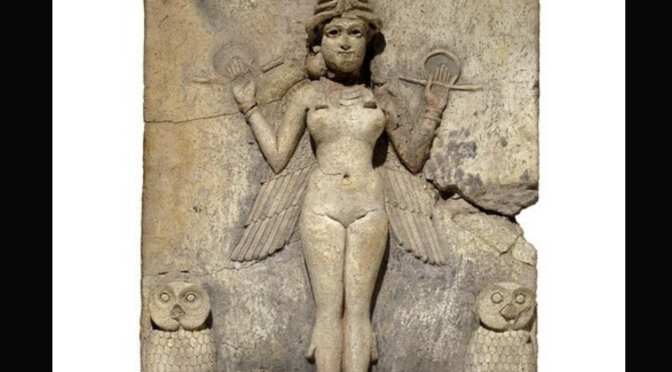
In desperation I turned my mind inwards, searching for another distraction — the first thing that came to me was the memory of when I myself reached the Third School of the Rite of Inanna.
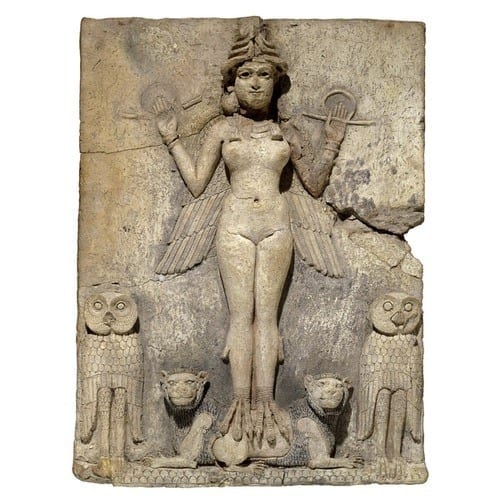
The Brotherhood bastardized Inanna’s memory by setting her up as the “Queen of Anu” – supplying mystical information to the wannabe brothers who reached this rank.
Attainment of the Third School was the time during which The Brotherhood offered the opportunity for enlightenment through sexual immortality. In spite of it’s cliche nature (or perhaps because of it), the Brotherhood attempted to satisfy this innate fleshly desire of its lower level members.
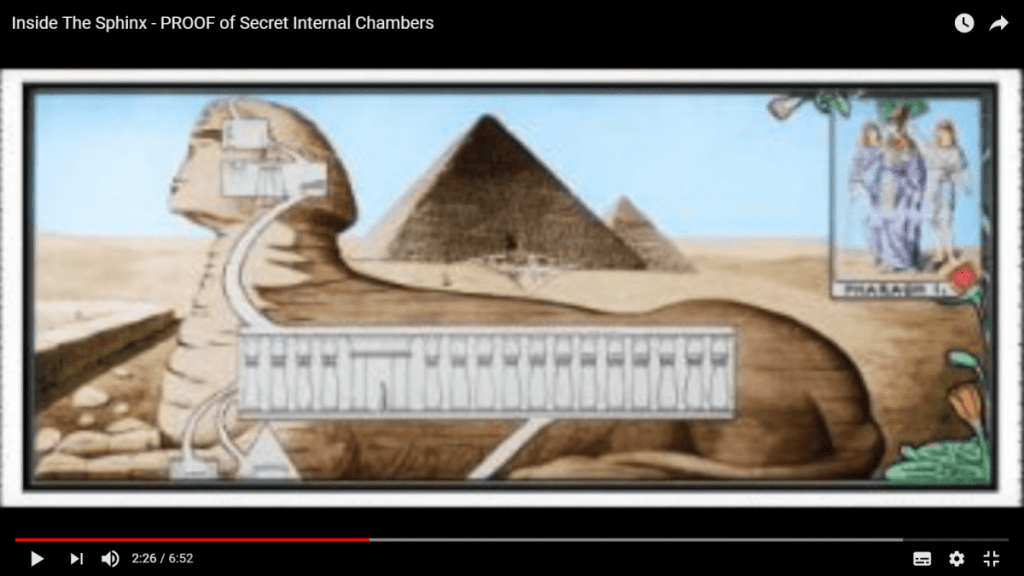
For my part, I experienced my first Third School initiation in the year 327 – under the identity of Zosimos — in a secret chamber beneath the Great Sphinx of Egypt.
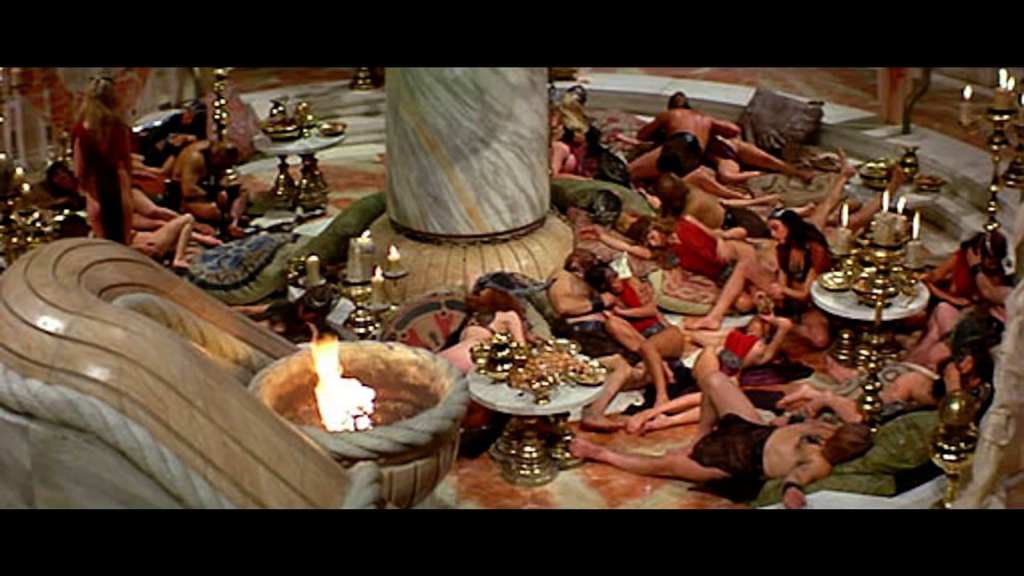
What started as a typical roman-style orgy – with Brothers encouraged to engage in debauchery of all kinds amidst a sea of flesh – took on a rather unique twist when a vat of lukewarm olive oil was poured into the brothel pit where our orgy was taking place.
Even more unusual was the fact that the oil carried with it a sea of serpents.
Third School Rite of Inanna Initiation Ceremony
Now all of us initiates had previously been told by our upper-level mentors to ‘expect the unexpected’ and to ‘go with the flow’ – being advised to allow our bodies to literally mold and melt with whatever we encountered as the oil carried us around the orgy pit. The snakes, they advised us, were all non-venomous and their purpose was to heighten our sensations in such a way as to allow us to (and I quote)…
“Experience such waves of pleasure that we would leave our earthly bodies and catch a glimpse of the true spirit world.”
My Brotherhood coach had also made it clear that my colleagues and I would be judged for our sexual conquests by the Inner Circle who would be watching us from concealed locations in the shadows of the great room.
Now I realize this is pretty appalling stuff for me to reveal – especially given the fact that I have experienced this Third School Initiation in some similar form MANY times, yet as I told you before, this was the Old Me, and back then I wasn’t concerned about committing any number of sins such as this. (Obviously, I would never allow myself to engage in such debauchery again – and I sure hope that YOU don’t either! Hmm, but this makes me wonder — how did Lazarus ever get past this rank? Surely he wouldn’t have done…? But I digress…)
OK, let’s be clear on something – I knew what I was getting into and I knew this whole charade was merely a mythological archetype that tapped into the whole satanic rituals require sexual immorality motif, but I must admit that, between the bonfires that ringed the orgy pit, the religious prostitutes who offered their bodies as living sacrifices, the pseudo-boiling oil, and the multitude of snakes, this rite did fulfill its mission because…
I really was able to transcend my flesh and escape into a world of full-on spiritual pleasure.
Had the ritual stopped there, it would have been enough.
However, The Brotherhood was not known for just satisfying cliches and using borrowed rituals. Instead, unbeknownst to me and my fellow orgy participants, mid-way through the debauchery, another wave of oil was released – this a bit more heated and, instead of the clear olive oil, this new oil was burned black. Now this last fact was important for it served to mask the nature that the second wave of serpents carried within its viscosity: black mambas – the most deadly snakes known to man at the time!
While the second vats of oil were poured in, the tribal drummers on the sidelines picked up their intensity and further worked us into a frenzy. Thus, when the mambas struck, the screams of their victims failed to instill panic into the rest of us – for trust me when I tell you that the pleasure and pain of sexual immorality cascaded in waves throughout the throng in a manner that was indescribably powerful!
I learned later that only a handful of mambas were released into the orgy pit, but this was intentional, for that small number was more than enough – after all, a single mamba can strike in rapid succession – sometimes up to twelve times in a row.
Obviously The Brotherhood did not want to murder all of us prospective Third School members; instead the deadly snakes were released so they could act on behalf of the Goddess Inanna and weed out those of us unworthy of her knowledge – as any who were fatally bitten were later said to have been discovered with the Mark of Mortality and thus deemed unfit to continue as Brothers.
For my part, I can tell you that I was in fact bitten by one of the venomous snakes — twice!
I was first aware of a fifteen foot, steel-colored mamba after it had already delivered a deadly bite to the shrine prostitute with whom I was entangled with at the time – as the mamba’s venomous neurotoxin quickly worked its way through the woman’s body, I saw her begin to convulse and scream, and minutes later she was glassy eyed and paralyzed.
Just moments later I felt the snake writhing around my own heel!
Quelling my nausea, I looked the mamba dead in the eye — and the mamba stared back.
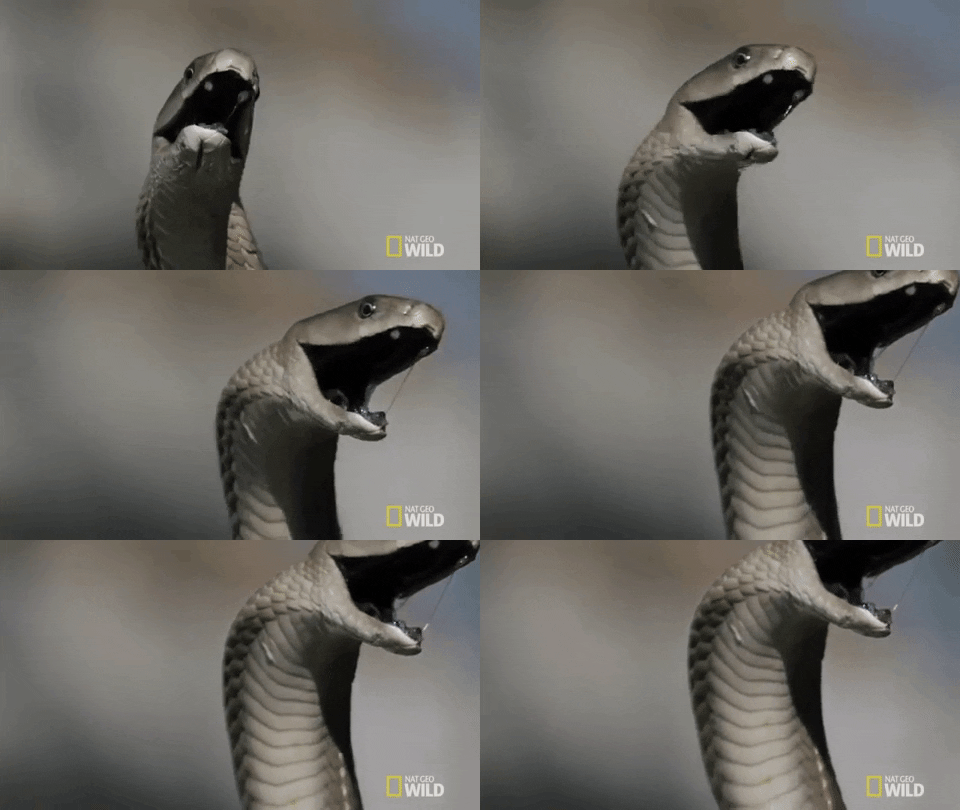
Even today I cannot escape the dreaded image of the mamba’s inky black mouth as it opened its jaws to expose <DEATH> just before it viciously tore into my heel – pumping nearly 100 mg of venom into me!
What was it like?
Immediately my body seized up as the mamba’s toxins surged through me. After the initial pain that gripped my heel grew numb, I felt a tingling sensation in my mouth and arms. That’s when the snake struck again – this time biting into my calf – and I thought that perhaps this was the hand of Divine Providence at work – punishing me for my sins and sending me to Hell.
Then, just as suddenly as it appeared, the mamba vanished — carried off by the swirling oils.
Unfortunately I continued to suffer.
I lost my sense of where I was, experienced double vision, confusion, and quickly lost muscle control. Another Brother came over and attempted to body up to me, but I vomited on him and that sent the lecherous man reeling away in disgust. As the mamba’s cardio-toxin took further effect, I began to foam at the mouth, and then of a sudden, my heart stopped.
At this point, my body sank down into the murky oils and I truly tasted – albeit ever so briefly – Sweet Death.
Inanna’s orgy carried on – how much longer I never knew – but eventually the fleshly desires of the Brothers were sated and at last the oils were drained from the brothel pits.
Exhausted beyond compare, none of the Brothers or the shrine prostitutes were lucid when the servants came to clean up the mass of humanity and serpents that remained in the pit. The mambas and the rest of the non-venomous snakes were rounded up, and so too were us men and women – carried off to various recovery rooms.
At first I guess I was going to be thrown in with a pile of the dead, but just as I was about to be tossed, I awoke… before passing out yet again. After being confirmed alive, I was then taken to the nurses stations for recovery assistance.
Although I’d come so close to Death as a result of the mamba’s bites, because of my cursed immortality, I managed to survive and was thus proclaimed as a worthy member of the Third School.
Of the hundred persons or so who were engaged in the orgy, I never knew how many had perished – but more than a few Brothers that I once knew, I never saw again. And I was smart enough NOT to ask what happened to them.
Now that, my friends, is how you conduct a secret society initiation!
This memory successfully served to distract me from Bates’ speech, yet I knew it was high time I paid attention again – for I didn’t want to miss anything important – especially if it was news about my friends…




 The Last Temptation of John