Tag Archives: Twelve Keys

The Philosopher’s Stone: Alchemy’s Ultimate Mystery

Introduction: The Ultimate Quest of Alchemy

The Philosopher’s Stone (Latin: Lapis Philosophorum) is the most legendary and enigmatic concept in alchemy. More than just a mythical substance that turns lead into gold, it represents perfection, immortality, and divine wisdom.

For centuries, alchemists across Europe, the Islamic world, and Asia pursued this elusive treasure, believing it could:
Transmute base metals into gold (physical perfection).
Grant eternal youth and immortality (the Elixir of Life).
Awaken spiritual enlightenment (union with the divine).

This article explores:

  • Origins & Symbolism of the Philosopher’s Stone
  • Key Alchemists Who Sought the Stone
  • Famous Texts & Manuscripts on the Stone
  • Scientific & Spiritual Interpretations
  • Modern Legacy (Science, Pop Culture, and Esotericism)

1. Origins & Symbolism of the Philosopher’s Stone

Ancient Roots

The idea of a “perfected substance” appears in:

  • Chinese Alchemy (Jindan – Golden Elixir).
  • Indian Alchemy (Amrita – Nectar of Immortality).
  • Greek & Egyptian Alchemy (Hermes Trismegistus’ Emerald Tablet).

Symbolic Meanings

The Stone was not just a physical object but a metaphor for transformation:

  • Material – Turning lead into gold.
  • Spiritual – Purifying the soul.
  • Divine – Union with God.

“The Stone is one, the medicine is one, to which we add nothing, only removing what is superfluous.”
Paracelsus

Further Reading:


2. Key Alchemists Who Sought the Stone

AlchemistContribution
Hermes TrismegistusMythical founder; linked Stone to Emerald Tablet.
Zosimos of Panopolis (3rd-4th c.)Early Greek-Egyptian alchemist; wrote on transmutation.
Jabir ibn Hayyan (Geber) (8th c.)Islamic alchemist; theorized the Stone’s composition.
Nicolas Flamel (14th c.)Legendary French alchemist; claimed to have found it.
Paracelsus (16th c.)Reinterpreted the Stone as a medical cure.
Isaac Newton (17th c.)Secretly studied alchemy to uncover its secrets.

Video Resource:


3. Famous Texts on the Philosopher’s Stone

1. The Emerald Tablet

  • Attributed to Hermes; basis for all alchemy.
  • Key phrase: “As above, so below.”

📜 Read it here: Emerald Tablet Translation

2. The Mutus Liber (1677)

  • A wordless alchemical manual with symbolic images.
  • Allegedly reveals the Stone’s preparation.

📜 View the manuscript: Mutus Liber Online

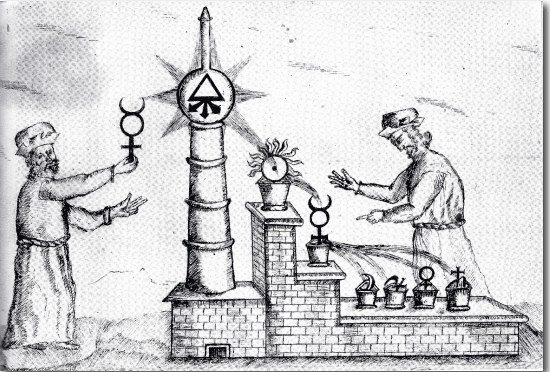
3. The Twelve Keys of Basil Valentine

  • A step-by-step guide to creating the Stone.
  • Uses Christian and alchemical symbolism.

📜 Free PDF: The Twelve Keys


4. Scientific & Spiritual Interpretations

Was the Stone Real?

  • Alchemists believed it existed, but descriptions were symbolic.
  • Some theories suggest:
  • A red powder (possibly gold oxide).
  • A philosopher’s mercury (purified liquid metal).

Psychological Interpretation (Carl Jung)

Jung saw the Stone as a symbol of the Self—the goal of individuation (inner wholeness).

“The alchemical opus was not just chemistry, but a process of psychic transformation.”
Carl Jung, Psychology and Alchemy

Further Reading:


5. Modern Legacy of the Philosopher’s Stone

In Science

  • Nuclear transmutation (turning elements into gold via particle accelerators).
  • Nanotechnology (creating “perfect” materials).

In Pop Culture

  • Harry Potter’s Sorcerer’s Stone (immortality theme).
  • Fullmetal Alchemist (equivalent exchange concept).

In Esotericism

  • Rosicrucians & Freemasons still study alchemical symbolism.
  • New Age spirituality uses the Stone as a metaphor for enlightenment.

Video Resource:


Conclusion: The Eternal Quest Continues

The Philosopher’s Stone remains the ultimate symbol of human aspiration—whether for wealth, immortality, or wisdom. Though no one has ever confirmed its physical existence, its spiritual and philosophical lessons endure.

“The Stone is within you; the work is within you. Seek it there.”
Anonymous Alchemist

Additional Resources:

The Magnum Opus: Alchemy’s Great Work of Transformation

Introduction: The Ultimate Alchemical Quest

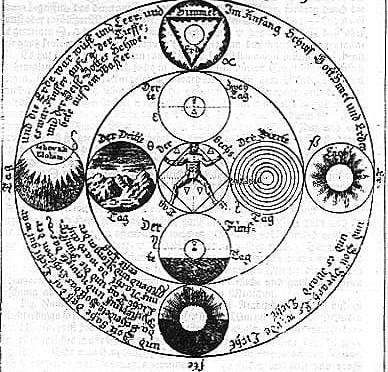
The Magnum Opus (Latin for “Great Work”) is the pinnacle of alchemical pursuit—a sacred process of material and spiritual perfection. More than just turning lead into gold, it represents the transmutation of the self, the purification of the soul, and the attainment of divine wisdom.

For centuries, alchemists across Europe, the Islamic world, and Asia sought to complete the Great Work, believing it would grant:
The Philosopher’s Stone (transmutation & immortality).
The Elixir of Life (healing & eternal youth).
Divine Enlightenment (union with the cosmic mind).

This article explores:

  • The Stages of the Magnum Opus
  • Key Alchemists & Their Interpretations
  • Sacred Texts & Manuscripts
  • Scientific & Psychological Perspectives
  • The Burning Question: Did Anyone Ever Complete It?

1. The Four Stages of the Magnum Opus

The Great Work was traditionally divided into four color-coded stages, each representing a phase of transformation:

1. Nigredo (Blackening) – Putrefaction

  • Symbolism: Death, decay, the “dark night of the soul.”
  • Process: Breaking down impure matter (or ego) to its raw state.
  • Alchemical Act: Calcination (burning away impurities).

2. Albedo (Whitening) – Purification

  • Symbolism: Washing, lunar energy, the purified self.
  • Process: Cleansing the material (or soul) to a pristine state.
  • Alchemical Act: Sublimation (rising above base nature).

3. Citrinitas (Yellowing) – Illumination

  • Symbolism: Solar awakening, wisdom, the dawning of gold.
  • Process: Infusing the purified matter with divine light.
  • Alchemical Act: Fermentation (spiritual nourishment).

4. Rubedo (Reddening) – Perfection

  • Symbolism: The Philosopher’s Stone, resurrection, divine union.
  • Process: Final unification of opposites (soul + spirit).
  • Alchemical Act: Coagulation (solidifying perfection).

“Make the fixed volatile, and the volatile fixed, and you will have the Stone.”
Hermes Trismegistus, The Emerald Tablet

Further Reading:


2. Key Alchemists & Their Visions of the Great Work

AlchemistContribution
Hermes TrismegistusMythical founder; laid groundwork in Emerald Tablet.
Maria the Jewess (1st-3rd c.)Early alchemist; invented the bain-marie for gentle heating.
Zosimos of Panopolis (3rd-4th c.)Wrote on spiritual alchemy; linked Great Work to dreams.
Nicolas Flamel (14th c.)Claimed to complete the Work with his wife, Pernelle.
Isaac Newton (17th c.)Secretly sought the Stone through lab experiments.

Video Resource:


3. Sacred Texts of the Magnum Opus

1. The Emerald Tablet

  • Core axiom: “As above, so below.”
  • Link: Full Text

2. The Rosarium Philosophorum (1550)

  • A visual guide to the Great Work with symbolic illustrations.
  • Link: Online Manuscript

3. The Twelve Keys of Basil Valentine

  • Step-by-step instructions for creating the Stone.
  • Link: Free PDF

4. Scientific & Psychological Interpretations

Chemistry’s View

  • The Great Work mirrored early lab processes:
  • Distillation (separating essences).
  • Alloying metals (gold-like amalgams).
  • Modern parallels: Nuclear transmutation, nanotechnology.

Jung’s Perspective

Carl Jung saw the Magnum Opus as a metaphor for individuation:

  • Nigredo = Shadow work.
  • Rubedo = Wholeness of the Self.

“Alchemy is the psychology of the Middle Ages.”
Carl Jung

Further Reading:


5. Did Anyone Ever Complete the Magnum Opus?

Legendary Claims

  1. Nicolas Flamel – Allegedly succeeded with his wife, achieving immortality. His tomb was later found empty.
  2. Fulcanelli (20th c.) – Mysterious French alchemist said to have vanished after completing the Work.

The Truth?

  • No verifiable proof exists, but some alchemists may have:
  • Discovered medical tinctures (Paracelsus’ laudanum).
  • Achieved spiritual enlightenment (via inner alchemy).
  • Modern “successors”:
  • Chemists (synthesizing gold in particle accelerators).
  • Mystics (using meditation as the “inner Great Work”).

Video Resource:


Conclusion: The Eternal Work Continues

The Magnum Opus was never just about gold—it was about transforming the self and the universe. Whether through lab experiments, meditation, or art, the Great Work remains humanity’s quest for perfection.

“The Stone is within you; the Work is within you. Begin where you are.”
Anonymous Alchemist

Additional Resources: