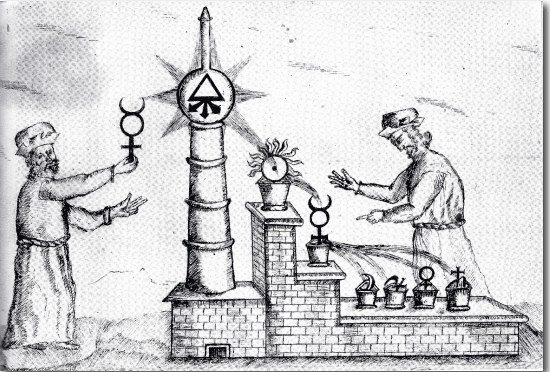
Tag Archives: Nectar of the gods

The Philosopher’s Stone: Alchemy’s Ultimate Mystery

Introduction: The Ultimate Quest of Alchemy

The Philosopher’s Stone (Latin: Lapis Philosophorum) is the most legendary and enigmatic concept in alchemy. More than just a mythical substance that turns lead into gold, it represents perfection, immortality, and divine wisdom.

For centuries, alchemists across Europe, the Islamic world, and Asia pursued this elusive treasure, believing it could:
Transmute base metals into gold (physical perfection).
Grant eternal youth and immortality (the Elixir of Life).
Awaken spiritual enlightenment (union with the divine).

This article explores:

  • Origins & Symbolism of the Philosopher’s Stone
  • Key Alchemists Who Sought the Stone
  • Famous Texts & Manuscripts on the Stone
  • Scientific & Spiritual Interpretations
  • Modern Legacy (Science, Pop Culture, and Esotericism)

1. Origins & Symbolism of the Philosopher’s Stone

Ancient Roots

The idea of a “perfected substance” appears in:

  • Chinese Alchemy (Jindan – Golden Elixir).
  • Indian Alchemy (Amrita – Nectar of Immortality).
  • Greek & Egyptian Alchemy (Hermes Trismegistus’ Emerald Tablet).

Symbolic Meanings

The Stone was not just a physical object but a metaphor for transformation:

  • Material – Turning lead into gold.
  • Spiritual – Purifying the soul.
  • Divine – Union with God.

“The Stone is one, the medicine is one, to which we add nothing, only removing what is superfluous.”
Paracelsus

Further Reading:


2. Key Alchemists Who Sought the Stone

AlchemistContribution
Hermes TrismegistusMythical founder; linked Stone to Emerald Tablet.
Zosimos of Panopolis (3rd-4th c.)Early Greek-Egyptian alchemist; wrote on transmutation.
Jabir ibn Hayyan (Geber) (8th c.)Islamic alchemist; theorized the Stone’s composition.
Nicolas Flamel (14th c.)Legendary French alchemist; claimed to have found it.
Paracelsus (16th c.)Reinterpreted the Stone as a medical cure.
Isaac Newton (17th c.)Secretly studied alchemy to uncover its secrets.

Video Resource:


3. Famous Texts on the Philosopher’s Stone

1. The Emerald Tablet

  • Attributed to Hermes; basis for all alchemy.
  • Key phrase: “As above, so below.”

📜 Read it here: Emerald Tablet Translation

2. The Mutus Liber (1677)

  • A wordless alchemical manual with symbolic images.
  • Allegedly reveals the Stone’s preparation.

📜 View the manuscript: Mutus Liber Online

3. The Twelve Keys of Basil Valentine

  • A step-by-step guide to creating the Stone.
  • Uses Christian and alchemical symbolism.

📜 Free PDF: The Twelve Keys


4. Scientific & Spiritual Interpretations

Was the Stone Real?

  • Alchemists believed it existed, but descriptions were symbolic.
  • Some theories suggest:
  • A red powder (possibly gold oxide).
  • A philosopher’s mercury (purified liquid metal).

Psychological Interpretation (Carl Jung)

Jung saw the Stone as a symbol of the Self—the goal of individuation (inner wholeness).

“The alchemical opus was not just chemistry, but a process of psychic transformation.”
Carl Jung, Psychology and Alchemy

Further Reading:


5. Modern Legacy of the Philosopher’s Stone

In Science

  • Nuclear transmutation (turning elements into gold via particle accelerators).
  • Nanotechnology (creating “perfect” materials).

In Pop Culture

  • Harry Potter’s Sorcerer’s Stone (immortality theme).
  • Fullmetal Alchemist (equivalent exchange concept).

In Esotericism

  • Rosicrucians & Freemasons still study alchemical symbolism.
  • New Age spirituality uses the Stone as a metaphor for enlightenment.

Video Resource:


Conclusion: The Eternal Quest Continues

The Philosopher’s Stone remains the ultimate symbol of human aspiration—whether for wealth, immortality, or wisdom. Though no one has ever confirmed its physical existence, its spiritual and philosophical lessons endure.

“The Stone is within you; the work is within you. Seek it there.”
Anonymous Alchemist

Additional Resources:


The Elixir Vitae: Alchemy’s Quest for Immortality

For millennia, alchemists across the world have pursued the ultimate prize—the Elixir of Life (Elixir Vitae), a substance believed to grant eternal youth, perfect health, and even immortality. This legendary potion was not merely a fantastical dream but a serious philosophical and experimental endeavor, deeply intertwined with spiritual enlightenment, medical science, and the secrets of nature.

From the cinnabar-laden elixirs of China to the nectar of the gods (Amrita) in India, and the Philosopher’s Stone-infused potions of Europe, the search for immortality shaped alchemical traditions worldwide. Some seekers died in their pursuit, while others left behind cryptic manuscripts hinting at hidden truths.

In this exploration, we will delve into:

  • The Origins and Symbolism of the Elixir Vitae
  • Chinese Alchemy: Jade, Cinnabar, and Deadly Experiments
  • Indian Alchemy: Amrita, the Nectar of Immortality
  • European Alchemy: The Elixir and the Philosopher’s Stone
  • Modern Interpretations: Science, Myth, and Legacy

1. The Origins and Symbolism of the Elixir Vitae

The Elixir Vitae (Latin for “Elixir of Life”) was more than just a potion—it was a metaphor for divine knowledge, spiritual perfection, and the conquest of death. Different cultures envisioned it in various forms:

  • As a liquid (drinkable tincture, often gold or ruby-colored).
  • As a powder (the “White Powder of Gold” in some European traditions).
  • As a mystical substance (like the Hindu Amrita or the Taoist Jindan).

Alchemists believed that just as base metals could be purified into gold, the human body and soul could be refined into an immortal state. The Elixir was not merely about living forever but about transcending decay, disease, and spiritual ignorance.

The Connection to the Philosopher’s Stone

In European alchemy, the Philosopher’s Stone was often linked to the Elixir—some believed the Stone itself could produce the potion. The legendary alchemist Nicolas Flamel was said to have discovered both, granting him and his wife extended life.

“The Elixir of Life is nothing other than the Quintessence, the Fifth Element, which contains the powers of all four.”
Paracelsus


2. Chinese Alchemy: Jade, Cinnabar, and Deadly Experiments

Chinese alchemy (Waidan – external alchemy, and Neidan – internal alchemy) was deeply tied to Taoist immortality practices. The quest for the Jindan (“Golden Elixir”) led to dangerous but fascinating experiments.

Key Ingredients in Chinese Elixirs

  • Cinnabar (Mercury Sulfide) – Believed to grant longevity, but often caused mercury poisoning.
  • Jade – Symbolized immortality; powdered jade was ingested.
  • Gold – Thought to be incorruptible, thus granting eternal life.

Emperors like Qin Shi Huang and Emperor Wu of Han consumed these elixirs, only to suffer alchemical poisoning. Historical records describe symptoms like organ failure, madness, and death—proof that the pursuit of immortality was perilous.

The Shift to Internal Alchemy (Neidan)

After many deaths, Chinese alchemists turned to breath control, meditation, and energy cultivation (Qi Gong) as safer paths to immortality. The “Inner Elixir” replaced toxic substances with spiritual practices.

“To refine the Elixir, first refine the self.”
Ge Hong, Baopuzi

Further Reading:


3. Indian Alchemy: Amrita, the Nectar of the Gods

In India, the quest for immortality centered around Amrita, the divine nectar of the gods. The concept appears in Hinduism, Buddhism, and Sikhism, each with its own interpretation.

The Myth of Amrita

The Samudra Manthan (Churning of the Ocean) myth describes how gods and demons churned the cosmic ocean to obtain Amrita. The god Dhanvantari emerged holding the elixir, but a battle ensued over its possession.

Rasayana: The Science of Longevity

Indian alchemy (Rasayana) sought to replicate Amrita using:

  • Mercury (Parada) – Purified mercury was called Siddha Makaradhwaja.
  • Herbs (Soma, Ashwagandha, Shilajit) – Used in rejuvenation tonics.
  • Yogic PracticesKundalini awakening was seen as an internal elixir.

Tantric alchemists like Nagarjuna wrote extensively on mercury-based elixirs, though many recipes were symbolic, representing spiritual transformation rather than literal potions.

Further Reading:


4. European Alchemy: The Elixir and the Philosopher’s Stone

European alchemists, inspired by Hermeticism and Arabic alchemy, sought the Elixir Vitae as part of the Magnum Opus (Great Work).

Famous European Alchemists and Their Claims

  • Paracelsus – Developed Alkahest, a universal solvent believed to purify the body.
  • Raymond Lull – Claimed to have created an “Elixir of Long Life” using distilled alcohol and herbs.
  • Fulcanelli – A mysterious 20th-century alchemist rumored to have discovered immortality.

The Red Tincture vs. The White Tincture

  • Red Tincture – Associated with gold, said to cure all diseases.
  • White Tincture – Linked to silver, believed to prolong life.

Many alchemical texts, like the Rosarium Philosophorum, describe the Elixir in cryptic poetry:

“Drink this pure water, for it is the Draught of Immortality.”

Further Reading:


5. Modern Interpretations: Science, Myth, and Legacy

While literal immortality remains elusive, the Elixir’s legacy persists in:

Scientific Research on Longevity

  • Antioxidants & Telomeres – Modern “elixirs” like resveratrol (from red wine) and NAD+ boosters aim to slow aging.
  • Cryonics – Freezing bodies for future revival mirrors alchemical preservation.

Pop Culture & Symbolism

  • Harry Potter’s Sorcerer’s Stone – Grants eternal life.
  • Fullmetal Alchemist’s Philosopher’s Stone – Powered by human souls.

Spiritual Alchemy Today

Many still seek the “inner Elixir” through meditation, yoga, and energy work—proving that the quest for immortality is as much about spirit as it is about substance.

Further Reading:


Conclusion: The Eternal Quest Continues

The Elixir Vitae was never just a potion—it was a symbol of humanity’s deepest desire: to conquer death, transcend suffering, and achieve perfection. Though alchemists of old may have failed in their literal experiments, their philosophical and spiritual insights endure.

Perhaps the true Elixir was never meant to be drunk from a cup, but realized within the soul.

“The Elixir is not found in the furnace, but in the heart.”
Anonymous Alchemist

Would you like to explore how to make a “safe” modern Elixir using herbs and spiritual practices? Let me know, and we shall continue the journey!