Few biblical figures evoke as much fear, fascination, and speculation as the Antichrist—the ultimate embodiment of evil in the Book of Revelation. Described as the Beast (Revelation 13), this end-times tyrant will deceive the world, wage war against God’s people, and establish a global dictatorship before Christ returns to defeat him.
For centuries, Christians have tried to identify who the Antichrist might be—from Roman emperors to modern political leaders. Some believe he will rise to power in a time of global crisis, wielding unmatched influence through politics, religion, and technology.
In this deep dive, we’ll explore:
What (or who) is the Antichrist?
Why do Christians fear his coming?
5 historical figures once believed to be the Antichrist
5 modern candidates who fit the profile
How should Christians respond to Antichrist speculation?
1. Who (or What) Is the Antichrist?
The term “Antichrist” appears only in the letters of John (1 John 2:18, 22; 4:3; 2 John 1:7), where it refers to anyone who denies Christ. However, in Revelation, the Antichrist is depicted as the Beast from the Sea (Revelation 13:1-10), a satanic world leader who:
5. How Should Christians Respond to Antichrist Speculation?
While it’s fascinating to speculate, the Bible warns against date-setting and paranoia. Instead, Christians should:
Focus on Christ’s Return (Acts 1:7 – “It is not for you to know times or seasons”).
Live Righteously (2 Peter 3:11 – “What sort of people ought you to be?”).
Test All Spirits (1 John 4:1 – Not every leader is the Antichrist).
Share the Gospel (Matthew 24:14 – The end will come after the Gospel is preached to all nations).
Conclusion: The Antichrist Is Coming—But Christ Has Already Won
The Antichrist remains one of the Bible’s most mysterious and feared figures. While history is full of tyrants and deceivers, the true Beast will be uniquely empowered by Satan to lead the world into rebellion against God.
Yet, Christians need not fear: “He who is in you is greater than he who is in the world” (1 John 4:4). No matter who rises to power, Christ will return to destroy the Antichrist and establish His eternal kingdom.
What do you think? Could one of these modern figures be the Antichrist, or is he still to come? Share your thoughts below!
The Book of Revelation, the final book of the Bible, has captivated Christians for nearly 2,000 years. Its vivid imagery, apocalyptic visions, and prophetic warnings about the end of the world have inspired countless interpretations, debates, and even fears. From theologians to conspiracy theorists, people have long sought to decode its symbols—the Four Horsemen, the Antichrist, the Mark of the Beast (666), and the Battle of Armageddon.
In today’s world, with global conflicts, pandemics, economic instability, and rapid technological advancements, many Christians see striking parallels between current events and Revelation’s prophecies. This article explores why Revelation fascinates believers, examines key themes, and considers how modern events might (or might not) align with its predictions.
1. What Is the Book of Revelation?
Authorship and Context
Traditionally attributed to the Apostle John while exiled on the island of Patmos (Revelation 1:9), Revelation is a blend of apocalyptic literature, prophecy, and epistle. Written around AD 95 during Roman persecution, it was meant to encourage suffering Christians with the promise of God’s ultimate victory over evil.
Literary Style
Revelation is highly symbolic, drawing from Old Testament prophets like Daniel, Ezekiel, and Zechariah. Its visions include:
The Seven Seals (Revelation 6) – Judgments unleashed on the earth.
The Seven Bowls (Revelation 16) – Final plagues before Christ’s return.
The Beast and the False Prophet (Revelation 13) – Figures of deception and tyranny.
The New Jerusalem (Revelation 21-22) – The glorious eternal kingdom of God.
2. Why Are Christians So Fascinated by Revelation?
A. The Promise of Ultimate Victory
At its core, Revelation is a book of hope. Despite chaos, evil, and suffering, it assures believers that God wins. Christ returns (Revelation 19), defeats Satan (Revelation 20), and establishes a new heaven and earth (Revelation 21). This promise resonates deeply in times of crisis.
B. The Mystery of Prophecy
Humans are naturally drawn to mysteries, and Revelation is full of them:
Who (or what) is the Antichrist?
Is the Mark of the Beast (666) a literal mark, or symbolic?
When will the Rapture happen? (Though the word “rapture” isn’t in Revelation, many associate it with 1 Thessalonians 4:17.)
This intrigue fuels endless speculation, books, and sermons.
C. The Urgency of the End Times
Jesus said, “Watch therefore, for you do not know the hour” (Matthew 24:42). Many Christians believe we are living in the “last days,” making Revelation feel urgently relevant.
3. Current Events and Revelation’s Prophecies
Could today’s headlines be fulfilling biblical prophecy? Let’s examine some key areas where people see connections.
A. Wars and Rumors of Wars (Revelation 6:1-4)
The First Horseman (White Horse) is often seen as false peace or conquest.
The Second Horseman (Red Horse) represents war. With ongoing conflicts in Ukraine, Israel, and global tensions, some believe we are seeing the precursors to a larger, apocalyptic war (possibly Armageddon, Revelation 16:16).
B. Famine and Economic Collapse (Revelation 6:5-6)
The Third Horseman (Black Horse) signifies famine and economic hardship.
Rising food shortages, inflation, and supply chain disruptions make this imagery feel eerily relevant.
C. Pestilence and Death (Revelation 6:7-8)
The Fourth Horseman (Pale Horse) brings death by “sword, famine, pestilence, and wild beasts.”
The COVID-19 pandemic, along with other diseases, has led many to wonder if this is a fulfillment.
D. The Rise of a Global Government (Revelation 13)
The Beast (often interpreted as a tyrannical world leader) and the False Prophet (a deceptive religious figure) may point to:
Increasing globalism (United Nations, World Economic Forum).
Digital currency and surveillance (could this relate to the Mark of the Beast?).
E. The Role of Technology (Revelation 13:16-18)
The Mark of the Beast (666) is speculated to be a biometric implant, digital ID, or cryptocurrency.
With AI, facial recognition, and cashless societies advancing, some see this as a potential fulfillment.
4. Caution: Should We Try to Predict the End Times?
While it’s tempting to map current events directly onto Revelation, Jesus Himself said:
“But concerning that day and hour no one knows, not even the angels of heaven, nor the Son, but the Father only.” (Matthew 24:36)
Possible Interpretations of Revelation:
Preterist View – Much of Revelation was fulfilled in the 1st century (e.g., fall of Jerusalem, Roman persecution).
Historicist View – Revelation outlines church history up to the present.
Futurist View – Most prophecies are yet to be fulfilled in a literal end-times scenario.
Idealist View – Revelation is symbolic of the ongoing struggle between good and evil.
Balance is key: While we should be aware of the times, we must avoid sensationalism or date-setting.
5. The Ultimate Message of Revelation: Hope in Christ
Despite its terrifying imagery, Revelation’s central message is hope:
Christ is coming back (Revelation 22:12).
Evil will be judged, and God’s people will be vindicated.
A new, perfect world is coming (Revelation 21:4 – “He will wipe away every tear…”).
Rather than fearing the future, Christians are called to:
Stay faithful (Revelation 2-3 – Letters to the Churches).
Live with urgency, sharing the Gospel.
Trust in God’s sovereignty, no matter how chaotic the world becomes.
Conclusion: Why Revelation Matters Today
The Book of Revelation remains fascinating because it speaks to humanity’s deepest fears and hopes. In a world of uncertainty, it offers a divine perspective: God is in control, evil will not triumph, and a glorious future awaits those who trust in Christ.
While we may see shadows of prophecy in today’s events, our focus should not be on decoding every symbol but on living faithfully, watching prayerfully, and proclaiming the Gospel boldly until Christ returns.
Are we in the end times? Maybe. But the real question is: Are we ready?
What do you think? Do current events align with Revelation’s prophecies, or should we be cautious in drawing connections? Share your thoughts in the comments!
Further Reading:
The Late Great Planet Earth (Hal Lindsey)
Revelation: A Shorter Commentary (G.K. Beale)
The Book of Revelation (N.T. Wright’s interpretations)
Scripture References:
Revelation 1:1-3 – The blessing of reading Revelation.
Revelation 22:20 – “Surely I am coming soon. Amen. Come, Lord Jesus!”
The Book of Revelation has fascinated readers for nearly 2,000 years. In this article we’ll delve into the most popular topics related to this famous apocalyptic text. We’ll discuss the most famous verses, key symbols, and noteworthy characters of Revelation. We’ll debate if the Apostle John is really the author of Revelation. We’ll examine popular books that feature themes of Revelation. And we’ll even consider the question – what if the John’s Revelation was coming true today. It promises to be a wild ride – are you ready?
Editor’s Note: This article is a master guide that provides an introduction for each of the topics listed above. For those subjects that require more in-depth research, links to ‘feature articles’ are provided so you can learn even more! Additionally, throughout this article, you’ll see words highlighted in BLUE – all of these are hyperlinks to other quality websites whose content we have curated for you as reference material, specific Bible verses, and further discussion so you can continue your research.
[lwptoc]
I. Book of Revelation – Fast Facts
1-Who is the author of the Book of Revelation?
The author identifies himself as John of Patmos. The mainstream view is that this is the Apostle John, however not everyone agrees on this. (See more about this controversy in Section III below – “Debate: Did the Apostle John really write Revelation?”)
2-When was the Book of Revelation written?
The majority of early church fathers believed the Book of Revelation was written sometime between 64-96 AD. Modern scholars tend to pinpoint the date to 81-96 AD. Why 64AD? It was the year of the Great Fire of Rome – allegedly started by the Emperor Nero (but blamed on the Christians). Emperor Nero was the first historical figure to be proclaimed as the Antichrist and it was believed by many that the Beast of Revelation was none other than Nero himself. As for the 81-96 AD range – these dates comprise the reign of Emperor Domitian – allegedly the Roman ruler who exiled the Apostle John to the island of Patmos where the saint is thought to have written this book.
3-What are the other names for the Book of Revelation?
The Book of Revelation is also sometimes called The Revelation to John, The Apocalypse of John, The Revelation of Jesus Christ, The Apocalypse, or just Revelation.
Note that the word “Revelation” is singular and not pluralized in any of the titles.
The book is structured as a letter from John of Patmos writing to the Seven Churches of Asia. In the text, John describes his visions (i.e. his inspired revelations) of a coming apocalypse – a series of cataclysmic catastrophes that will rock the world – and warns his readers about the Antichrist – the incarnate of Satan’s Son who is destined to rule the world during Armageddon. Thankfully John concludes on a positive note – describing the inevitable victory of Good over Evil in the form of Jesus Christ’s glorious return to save the world.
Revelation – Key Definitions
If we truly want to understand what the Book of Revelation is about, we should probably define a couple key words. To begin with we need to know the definition of the word revelation. Next we’ll need to know what people mean when they talk about apocalyptic literature.
What is the definition of the word revelation?
If we want to delve into the meaning of the BOOK of Revelation we first need to start by knowing what the meaning of the WORD revelation is. To that end, Merriam-Webster and Dictionary.com give the meaning of the word revelation as follows:
an act of revealing or communicating divine truth
something that is revealed by God to humans
an act of revealing to view or making known
something that is revealed especially : an enlightening or astonishing disclosure
a pleasant often enlightening surprise
Meanwhile, Bible Study Tools talks about the meaning of revelation from a Biblical standpoint, defining a revelation as “an uncovering, a bringing to light of that which had been previously wholly hidden or only obscurely seen… The Scriptures are not merely the “record” of revelation; they are the revelation itself in a written form, in order to the accurate preservation and propagation of the truth.”
Now that we understand what a revelation is, let’s explore what people mean when they talk about apocalyptic literature.
What is Apocalyptic Literature?
Britannica has a great piece about this topic and defines apocalyptic literature as a “literary genre that foretells supernaturally inspired cataclysmic events that will transpire at the end of the world.” The discussion points out a few key elements of this type of writing:
It is a product of the Judeo-Christian tradition.
“Apocalyptic literature is characteristically pseudonymous.
It takes narrative form.
It employs esoteric language.
It expresses a pessimistic view of the present.
It treats the final events as imminent.”
There are well over 30 ancient texts that have been classified as apocalyptic literature, but the most famous are:
And yet, it is the Book of Revelation that is nigh synonymous with the word Apocalypse — and a single reading of the text is enough to let anyone understand why.
III. Debate: Did the Apostle John really write Revelation? (Feature Article)
Did the Apostle John really write The Book of Revelation?
The answer is not as easy as it seems. In this feature article we’ll explore who “John of Patmos” may be. I’ll give you the arguments in favor of St John being the author and also talk about why some experts believe there was “another John” behind this famous book. I’ll also give you my opinion on this age-old question which has now plagued Christians for nearly 2,000 years.
As noted already, the Book of Revelation can be found as the final book of the New Testament in most Christian Bibles. But it wasn’t always that way.
When was The Book of Revelation added to The Bible?
The earliest Christians didn’t have the modern Bible that we know today – in fact those of the first and second centuries often didn’t even agree on which books among early Christian literature should be recognized as ‘canon’ and which should be cast aside – such was the case with the Book of Revelation too. Although we don’t know the exact date the Revelation was formally included into early forms of The Bible, we can pinpoint down to the decade. Writings from early church fathers and various councils of elders discuss the book as follows:
In 348 AD Cyril of Jerusalem did NOT list Revelation as part of scripture.
In 363 the Council of Laodicea did NOT list Revelations as an accepted book.
Given these dates, we can say with some assurance that the Book of Revelation was accepted into formal Christian canon sometime between 364 AD and 367 AD.
Additionally it should be noted that the Book of Revelation was also later affirmed by the synods of Hippo (393 AD) and Carthage (397 AD) and the church elders Philastrius of Brescia (385 AD), Rufinus of Aquileia (404 AD), Jerome (414 AD), and Augustine (426 AD).
As an interesting aside, in addition to the challenges that the Book of Revelation faced in mainstream Christian circles, it should be noted that some Eastern Orthodox churches have never accepted it into their sacred canon.
What is the relationship of Revelation to The Old Testament?
It’s hard to overlook the fact that much of the content, symbols, and imagery of the Book of Revelation can be found in numerous books of the Hebrew Old Testament and other apocryphal literature from the time before Christ. For example, debates rage over the relationship of Revelation to all of the following Old Testament books.
This book is not part of mainstream Christian Bibles but interestingly enough IS accepted as canon by the Eastern Orthodox Church (even though some factions of that faith still don’t accept Revelation).
One thing is for sure, the author of Revelation was very familiar with the Hebrew Old Testament.
The importance of this fact is key for another reason — that the author of Revelation was so influenced by the Old Testament speaks to the author likely being Jewish. And what do we know about St John the Apostle?
He was a Jew from Galilee.
His mentor Jesus was also a Jew, and as an apocalyptic teacher Jesus was quoted many times over in preaching that ‘this generation will not pass away before these things come to pass’ (Matthew 24:34) and similar apocalyptic messages that related back to the Old Testament.
That Saint John was indoctrinated with a heavy dose of apocalyptic thinking is an easy connection to make.
Most importantly, these facts support the case for Saint John as the author of the Book of Revelation. (Keep this in mind when you read the feature article “Who Really Wrote Revelation?”
“The Apocalypse” by Master Bertram, c 1380 AD
V. The 13 Most Famous Verses from Revelation
(Feature Article)
No study of the Book of Revelation would be complete without diving into the most famous verses from the text. We have another feature article that explores this topic in detail and provides some great artwork to accompany the verses. Click here to read “The 13 Most Famous Verses from The Book of Revelation.”
In the interest of space we’ll merely list the most referenced verses from the book. They are:
Given that the Book of Revelation is at one and the same time an apocalyptic, prophetic, and futuristic text, it should come as no surprise that the book is filled with symbols and imagery laced with alternative meaning. Church elders and scholars have debated for nearly 2,000 years about what all the signs and symbols of Revelation mean. We have an in-depth article about this topic called “Understanding the Apocalyptic Imagery & Symbols from the Book of Revelation” that we encourage you to read, but in the meantime, here is a brief introduction to each of the key symbols.
3 Woes: world catastrophes that are triggered by the final 3 trumpets. The 3rd Woe also triggers the release of the 7 Bowls.
The Little Scroll – a ‘bitter’ scroll given to John by a Mighty Angel (Michael?) that is a source of prophetic knowledge about the coming apocalypse.
7 Bowls of Revelation: more disasters are unleashed upon our world as each of the Seven Angels pour out a bowl filled with God’s wrath.
NOTE: The relationship between the 7 Seals, 7 Trumpets, 7 Bowls, and 3 Woes is explored in detail in the feature article.
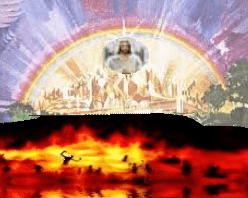
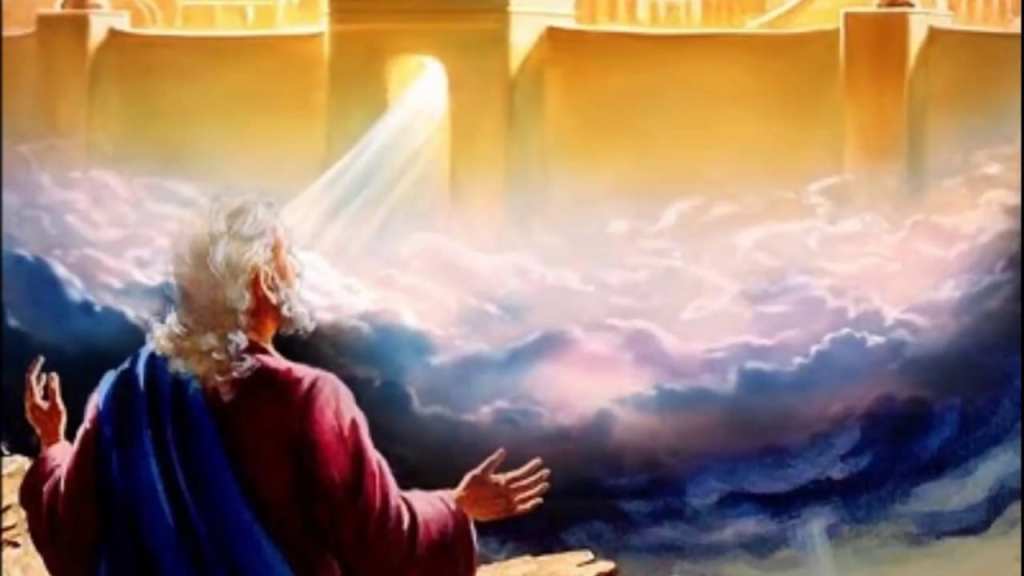
The New Jerusalem: the climax of Revelation occurs in Revelation 21 when a New Jerusalem emerges where the saved ones will dwell with God.
The River of Life: Revelation 22 describes the return of Eden and the final destruction of the curse of sin.
VII. The Main Characters of Revelation
The Book of Revelation is filled with a colorful cast of characters – some good, some evil, but all interesting. Here are the main characters from Revelation with links to learn more about each one…
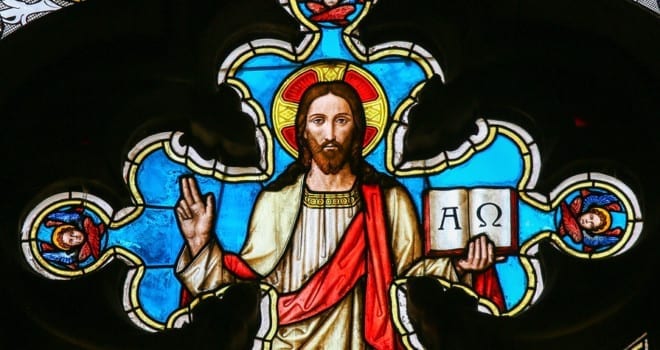
The very first verse of Revelation tells us that the visions of the author are in fact the ‘testimony of Jesus Christ.’ Jesus is featured throughout Revelation and the book is the de facto story of Christ’s Second Coming.
Later in Revelation (example 5:5 Jesus is also called “The Conquering Lion of Judah“)
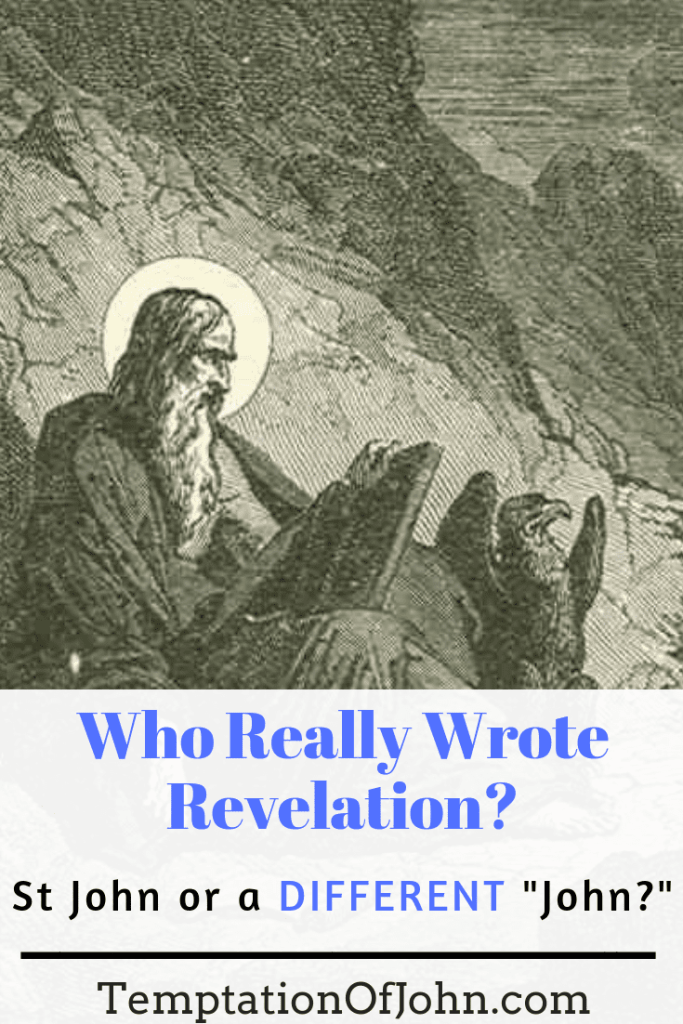
We meet John of Patmos in Revelation 1:9 where he identifies himself as the author of the Book of Revelation. John of Patmos is thus clearly an important figure for our research, and yet, we know so little about him. Is he Saint John the Apostle or another persona entirely? Check out this article to learn more: “Who Really Wrote Revelation?“
Gustav Dore’s “John of Patmos”
The Seven Angels of the 7 Churches
Revelation 1: 20 introduces the Seven Angels of the 7 Churches. As we discussed above, John gives a message to each angel at each of the churches in Revelation chapters 2 & 3. The angels are located at Ephesus, Smyrna, Pergamum, Thyatira, Sardis, Philadelphia, and Laodicea.
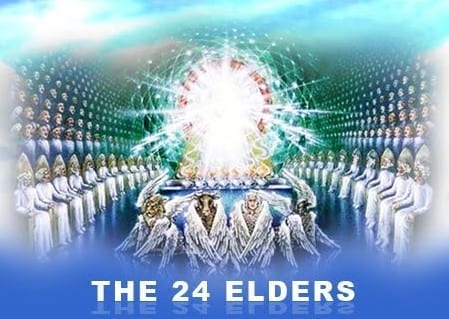
Twenty-Four Elders appear in Revelation 4:4, described as surrounding the Throne of God. Much debates exists about who the elders were: specific people/kings, the heads of churches or cities, or perhaps an allegory for different types of matter, elements, planets, or even our souls.
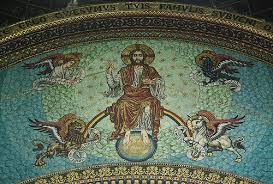
Also in the throne room that is described in Revelation 4: 8 are 4 ‘living creatures’ described as having six wings and with “eyes all over, front and back. The popular interpretation is that the creatures in Revelations are similar to those described by the prophet Ezekiel in the Old Testament and the most popular theories suggest that the living creatures are either angels or perhaps the gospel writers (Matthew, Mark, Luke, and John). Additionally, because of their many eyes, they are held to be all knowledgeable and it’s said that nothing escapes their notice.
Revelation 6 introduces us to the souls in white robes who had previously died for the faith. For an excellent discussion on these souls and who they may be see this article by Bible.org.
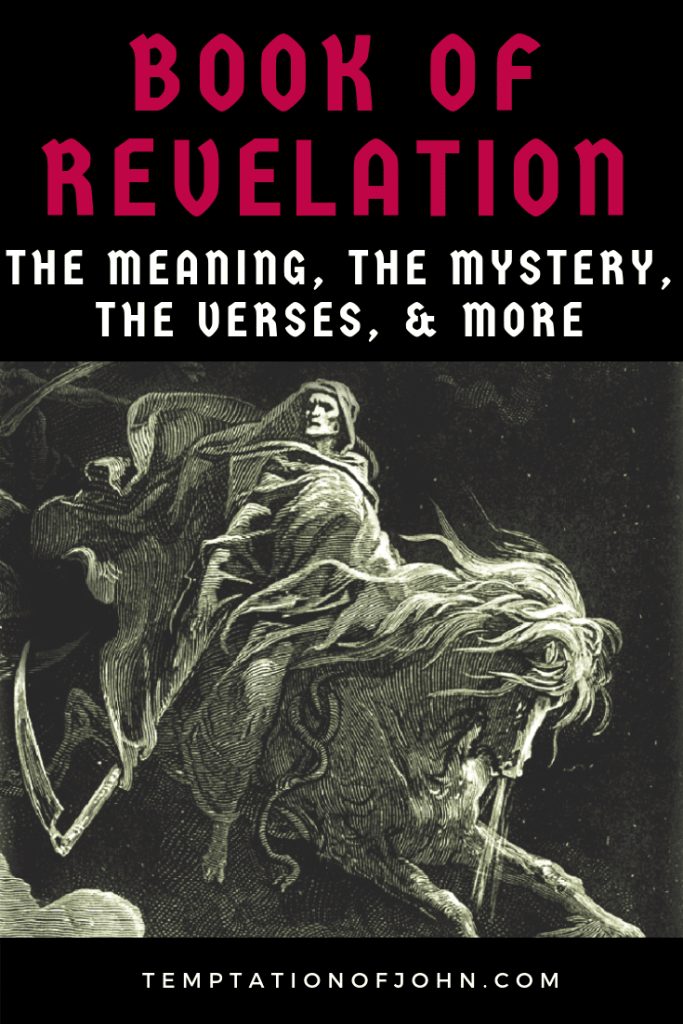
Possibly the most popular of all personalities in Revelation, the 4 Horsemen are introduced to us in Revelation 6 where we meet 4 beings riding on horses of various colors (red, black, white, and pale). At the most basic level they are said to represent Disease, War, Famine, and Death. Because some believe Revelation was an allegorical attack on the Roman empire, others believe the riders represent oppressions by that famed world power. Still others hold a different theory.
Four Horsemen of the Apocalypse, by Victor Vasnetsov, c1887
4 Angels holding the 4 Winds
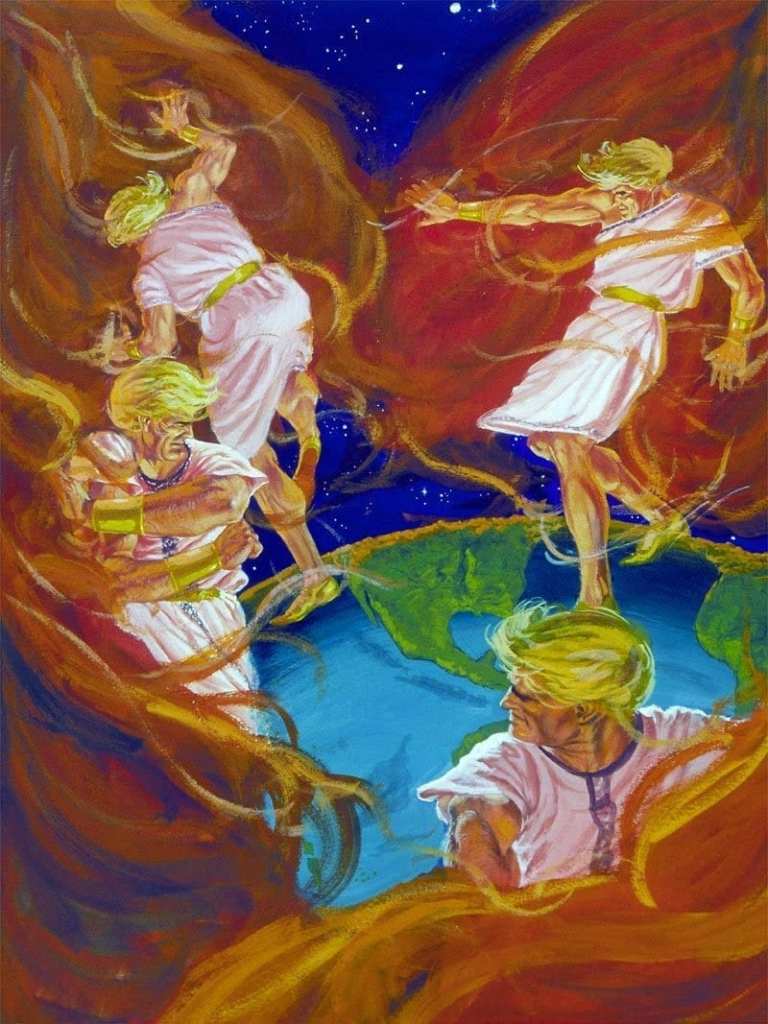
Revelation 7 showcases the 4 winds being held in check by 4 powerful angels. This event occurs just prior to all hell being unleashed onto the world (literally!) since the next few chapters see the breaking of the Seals, the blowing of Trumpets, and more (all associated with world catastrophes). Some suggest the angels holding back the winds is an allegory for God’s power holding back Satan’s and that the latter can only act when given the OK by God.
Another popular group from Revelation is the famed 144,000. The Book of Life holds the names of those 144,000 lucky people who are apparently marked to be able to avoid the catastrophes that the rest of the world will suffer in Revelation. These raptured people will be redeemed and taken to heaven where they will wait it out while the world is cleansed. Their fate is described in Revelation 7 and 14.
Revelation 8 is when the real action of the book heats up as famed 7 Seals begin to be broken and the Seven Angels begin to blow their trumpets. There is actually an EIGHT angel who pours a golden censer full of wrath upon the world just to add to the fun.
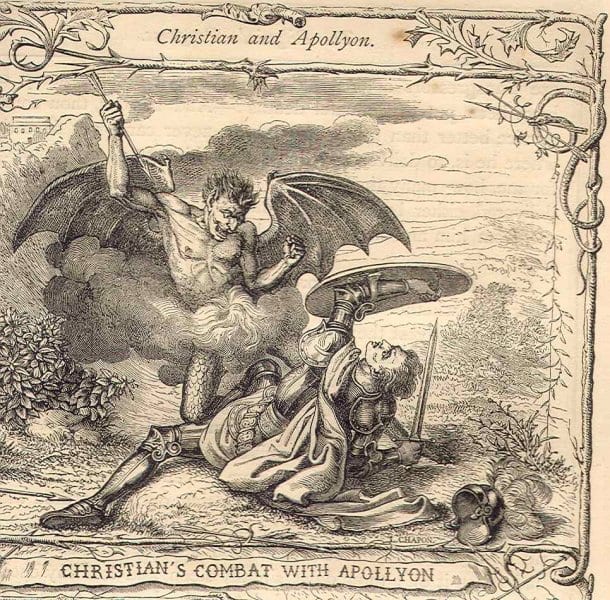
In Revelation 9 we meet Abaddon! He is also known as Apollyon The Destroyer. Some suggest this is Satan, others the devil’s chief demon, and still others the Angel of Death.
Revelation Chapter 10 is actually considered a kind of ‘interlude’ as the people of earth are given a slight reprieve from all the catastrophes caused by the breaking of the Seven Seals and the blowing of the Seven Trumpets. During this break in the action, John of Patmos is given the little scroll by the mighty angel – as instructed, John eats the ‘bitter’ scroll. This will become a source from which he can prophesy what he knows to all peoples and all nations.
This angel is also called the Mighty Angel of the 7 Thunders.
As to WHO the Mighty Angel is we don’t know. Some say Archangel Michael, others Archangel Gabriel, and still others Jesus Christ.
Johannes verschlingt das Buch “Might Angel and Little Scroll” c 1530
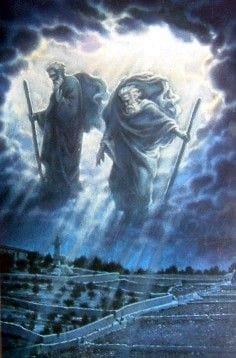
Although perhaps not as popular as other figures from Revelation, these two prophets are no less important. We meet them in Revelation 11:14 and their role is to prophecy to the world during the 1,260 days that God’s Temple is ‘being trampled upon’ by Satan’s minions.
As to WHO they are the debate ranges – the most popular theories are that they are Elijah and Enoch of Old Testament fame. This is the case in the Last Temptation of John books where the Two Witnesses play a prominent role.
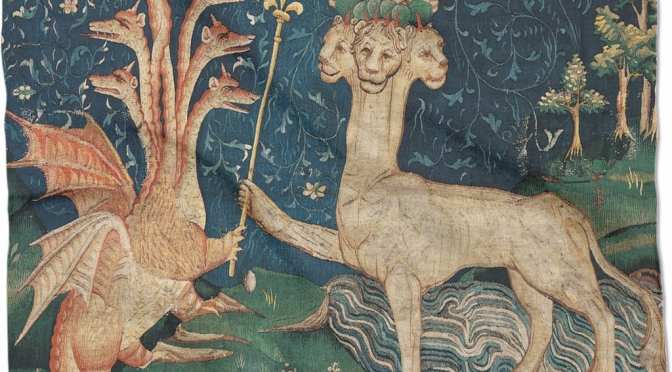
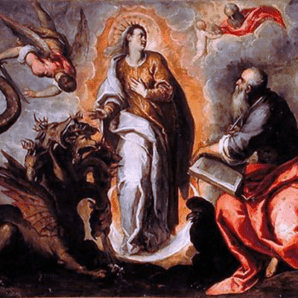
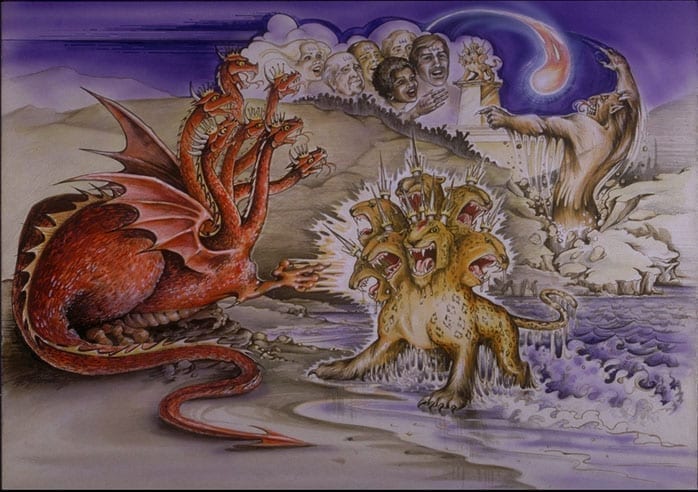
Revelation 12 introduces the Dragon – a version of ‘the serpent’ that has repeatedly been representative of Lucifer/Satan throughout other books of The Bible. Archangel Michael casts the dragon out of heaven and down to earth, where It then makes war upon the world.
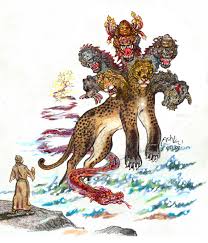
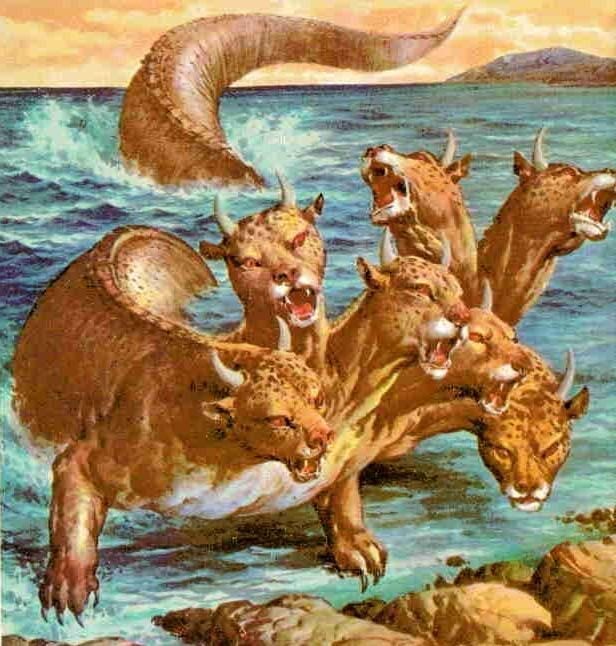
We meet the sea beast in Revelation 13 and 17. After the beast rises from the sea it is given ‘authority and power’ from the dragon. Most theories suggest the sea beast is representative of world governments and/or the old world order (i.e. the Roman government).
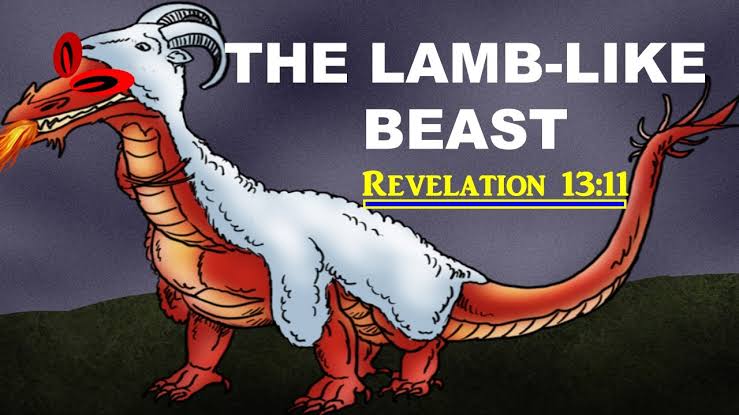
Also called The False Prophet, this beast is described in Revelation 13. Although not as famous as the dragon or the beast of the sea, the beast of the earth is no less important, for this is the beast who looks like a lamb but deceives like a dragon. Additionally, this beast will lead the world astray by causing people to get The Mark of the Beast.
Understanding the beast character is critical to grasping the meaning of Revelation. For additional discussions about the Beasts of Revelation see…
The woman who gives birth to a child in Revelation 12 is often misunderstood. She is not to be confused with the ‘other’ woman of Revelation (i.e. Mystery, the whore of Babylon), and her child is not the Antichrist. Despite the Dragon trying to eat the child at birth, the baby is instead taken up to God, while the woman flees into the wilderness and war breaks out in heaven.
Debates rage as to if the woman is The Virgin Mary, the Catholic Church, or another person, and the same goes for the identity of her child (is it Jesus, his teaching, the people of the church or the world).
Although we don’t know if the Mighty Angel of Revelation 10 is Michael, we DO know he appears in Revelation 12 since Michael’s feats of strength are detailed in The War of Heaven where the powerful archangel casts Satan (in the form of The Dragon) and his minions out of God’s kingdom.
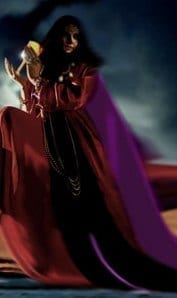
Another key figure in Revelation is the Whore of Babylon, AKA “Mystery, Babylon the Great, the Mother of Prostitutes and Abominations of the Earth.”
We meet this woman in Revelation 17 and her story continues through chapter 18. She is the woman clothed in scarlet who rides upon the Beast (of the sea).
The traditional view is that the whore is representative of Rome and many of the details which describe Mystery fit this theory.
To learn more about Mystery, check out these links:
Here are some NON-fiction books that will help you continue your research on Revelation…
For some fun reading, consider these popular FICTIONAL accounts that deal with the events of Revelation…
IX. What if the Book of Revelation was coming true TODAY?
The Antichrist has come.
What if the events detailed in The Book of Revelations were about to occur… this year?
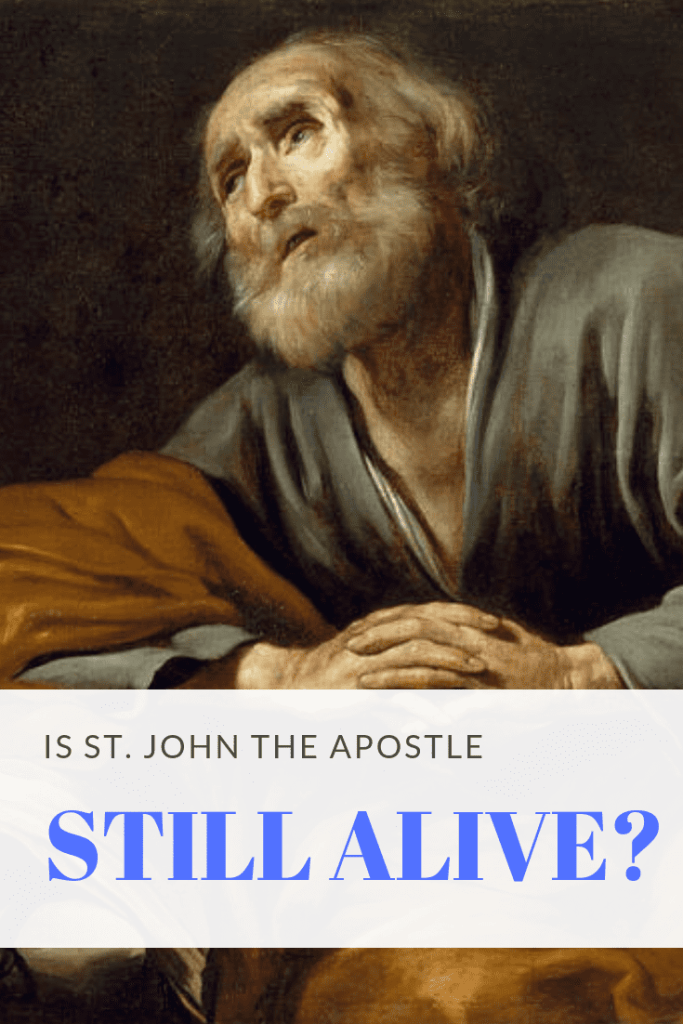
Could anyone save us from certain death? The answer is YES. Hard as it may be to believe, St. John the Apostle is still alive today – having been blessed with the Gift of Immortality so that he could survive to fight against the coming of The Antichrist. Unfortunately, over the course of the last 2,000 years John has lost is faith!
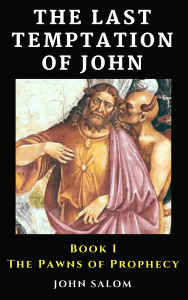
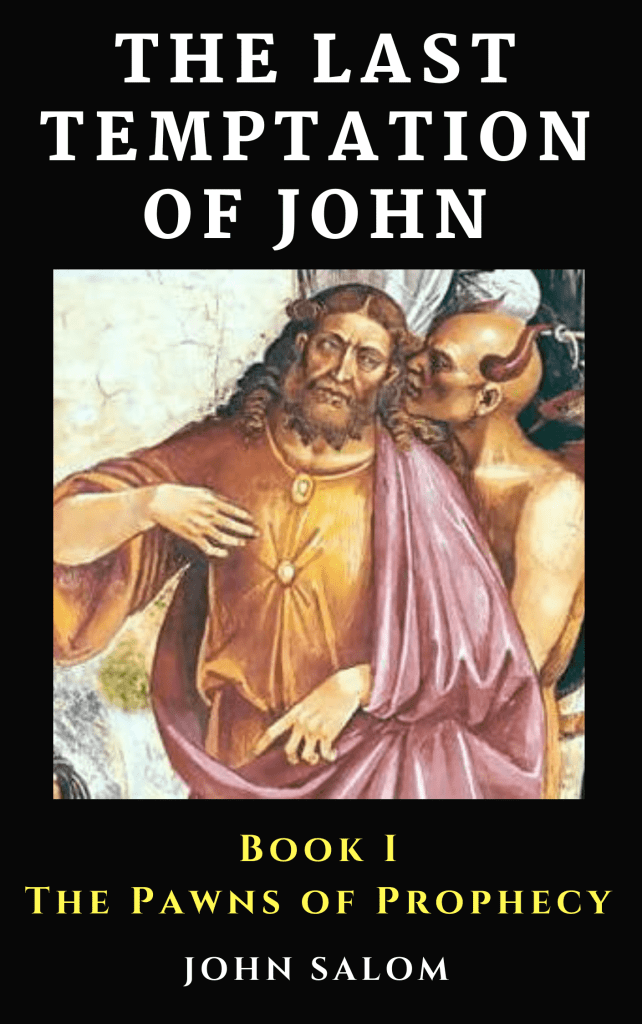
Can John recover his faith in time to stop Armageddon or will Satan’s Son achieve Ultimate Victory? The answer to that question and many more will be revealed in the thrilling new book series The Last Temptation of John.
Verses of Revelation – No study of the Book of Revelation would be complete without diving into the most famous verses from the text. We have another article about the Book of Revelations in a broader sense (discussing the meaning, the key symbols and characters, and even the debate over who really wrote the book), but here the focus is on the actual verses from this legendary book.
Here then are the 13 Most Popular Verses of The Book of Revelation…
Editor’s Note: The choice of which specific verses are considered the ‘most famous’ was decided by a review of search engine traffic volume as well as cross-references to other respected sites on this topic. Obviously not everyone may agree on the selection of these verses and if YOU have a different verse you’d like to recommend please let us know in the comments.
“This book is the record of the events that Jesus Christ revealed. God gave him this revelation in order to show to his servants what must happen very soon. Christ made these things known to his servant John by sending his angel to him, and John has told all that he has seen.”
“I looked, and there before me was a pale horse! Its rider was named Death, and Hades was following close behind him. They were given power over a fourth of the earth to kill by sword, famine and plague, and by the wild beasts of the earth.”
“I watched as he opened the sixth seal. There was a great earthquake. The sun turned black like sackcloth made of goat hair, the whole moon turned blood red…”
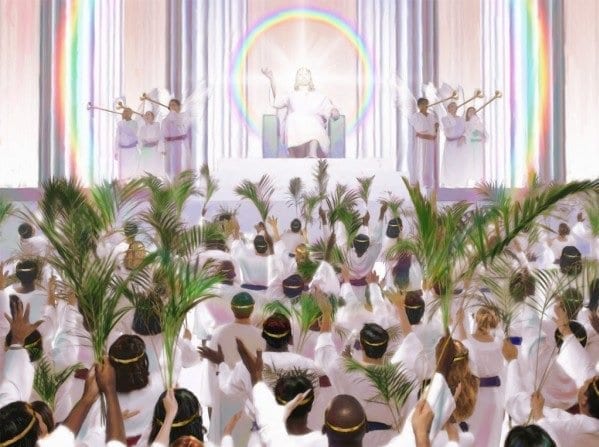
“After this I looked, and there before me was a great multitude that no one could count, from every nation, tribe, people and language, standing before the throne and before the Lamb. They were wearing white robes and were holding palm branches in their hands.”
“Then war broke out in heaven. Michael and his angels fought against the dragon, and the dragon and his angels fought back. But he was not strong enough, and they lost their place in heaven. The great dragon was hurled down—that ancient serpent called the devil, or Satan, who leads the whole world astray. He was hurled to the earth, and his angels with him.”
“The dragon stood on the shore of the sea. And I saw a beast coming out of the sea. It had ten horns and seven heads, with ten crowns on its horns, and on each head a blasphemous name. The beast I saw resembled a leopard, but had feet like those of a bear and a mouth like that of a lion. The dragon gave the beast his power and his throne and great authority.”
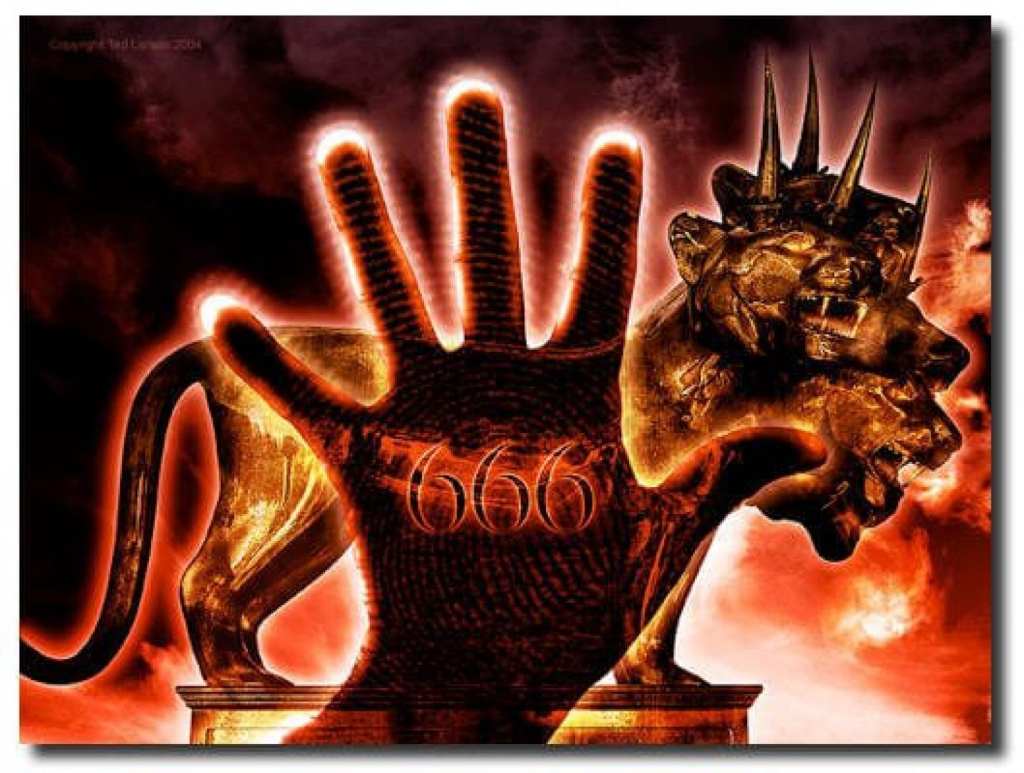
“It also forced all people, great and small, rich and poor, free and slave, to receive a mark on their right hands or on their foreheads, so that they could not buy or sell unless they had the mark, which is the name of the beast or the number of its name. This calls for wisdom. Let the person who has insight calculate the number of the beast, for it is the number of a man. That number is 666.”
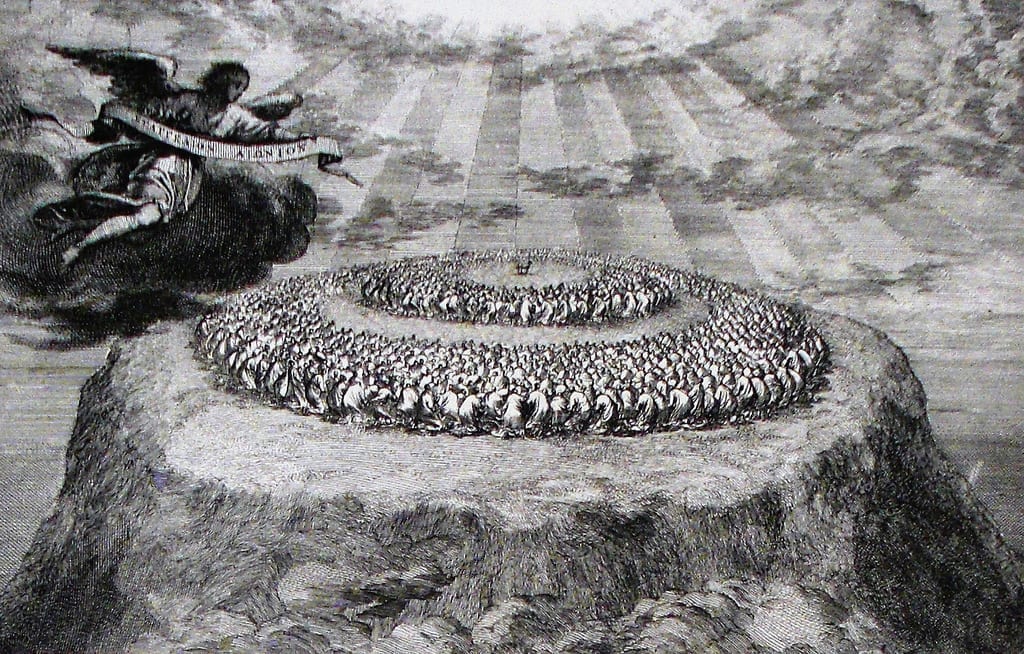
“Then I looked, and there before me was the Lamb, standing on Mount Zion, and with him 144,000 who had his name and his Father’s name written on their foreheads.”
“And I saw the dead, great and small, standing before the throne, and books were opened. Another book was opened, which is the Book of Life. The dead were judged according to what they had done as recorded in the books. The sea gave up the dead that were in it, and death and Hades gave up the dead that were in them, and each person was judged according to what they had done. Then death and Hades were thrown into the lake of fire. The lake of fire is the second death. Anyone whose name was not found written in the Book of Life was thrown into the lake of fire.”
“Then I saw a new heaven and a new earth, for the first heaven and the first earth had passed away, and there was no longer any sea. I saw the Holy City, the new Jerusalem, coming down out of heaven from God, prepared as a bride beautifully dressed for her husband. And I heard a loud voice from the throne saying, ‘Look! God’s dwelling place is now among the people, and he will dwell with them. They will be his people, and God himself will be with them and be their God. He will wipe every tear from their eyes. There will be no more death, or mourning or crying or pain, for the old order of things has passed away’.”
You May Also Like
The AntiChrist is Here – Today?
What if the events detailed in The Book of Revelation were about to occur… this year?
Could anyone save us from certain death? The answer is YES. Hard as it may be to believe, St. John the Apostle is still alive today – having been blessed with the Gift of Immortality so that he could survive to fight against the coming of The Antichrist. Unfortunately, over the course of the last 2,000 years John has lost is faith!
Can John recover his faith in time to stop Armageddon or will Satan’s Son achieve Ultimate Victory? The answer to that question and many more will be revealed in the thrilling new book series The Last TeLastTemptationofJohn-Bk1mptation of John.
Read it the trilogy today… if your faith is strong enough.














 The Last Temptation of John


