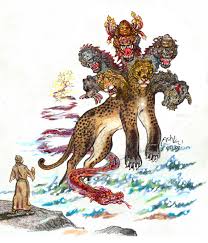
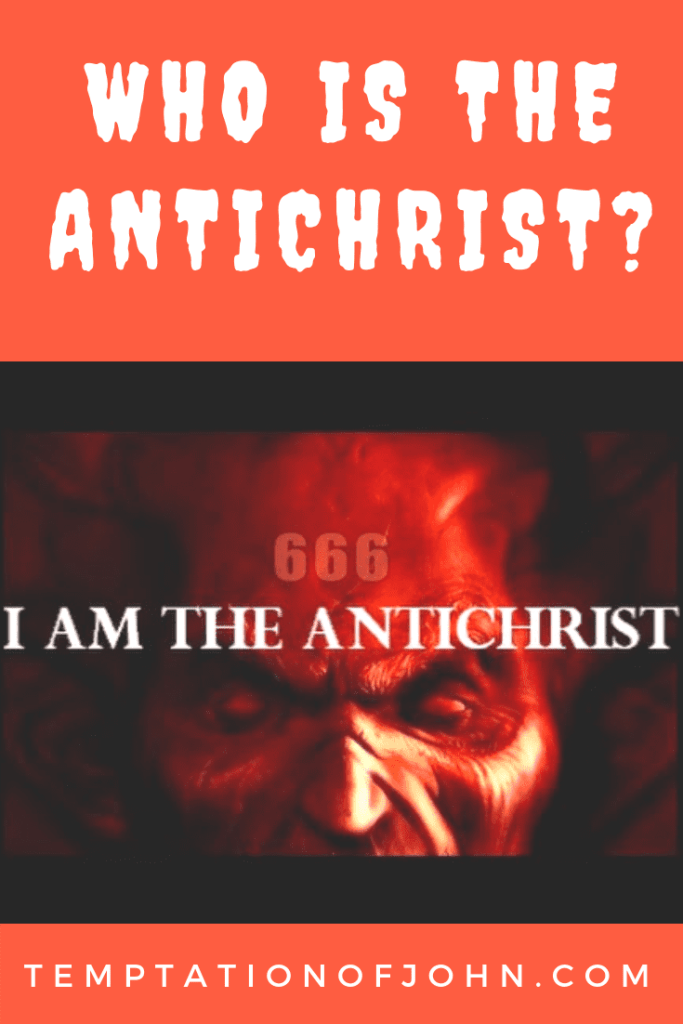
Few biblical figures evoke as much fear, fascination, and speculation as the Antichrist—the ultimate embodiment of evil in the Book of Revelation. Described as the Beast (Revelation 13), this end-times tyrant will deceive the world, wage war against God’s people, and establish a global dictatorship before Christ returns to defeat him.
For centuries, Christians have tried to identify who the Antichrist might be—from Roman emperors to modern political leaders. Some believe he will rise to power in a time of global crisis, wielding unmatched influence through politics, religion, and technology.
In this deep dive, we’ll explore:
What (or who) is the Antichrist?
Why do Christians fear his coming?
5 historical figures once believed to be the Antichrist
5 modern candidates who fit the profile
How should Christians respond to Antichrist speculation?
1. Who (or What) Is the Antichrist?
The term “Antichrist” appears only in the letters of John (1 John 2:18, 22; 4:3; 2 John 1:7), where it refers to anyone who denies Christ. However, in Revelation, the Antichrist is depicted as the Beast from the Sea (Revelation 13:1-10), a satanic world leader who:
5. How Should Christians Respond to Antichrist Speculation?
While it’s fascinating to speculate, the Bible warns against date-setting and paranoia. Instead, Christians should:
Focus on Christ’s Return (Acts 1:7 – “It is not for you to know times or seasons”).
Live Righteously (2 Peter 3:11 – “What sort of people ought you to be?”).
Test All Spirits (1 John 4:1 – Not every leader is the Antichrist).
Share the Gospel (Matthew 24:14 – The end will come after the Gospel is preached to all nations).
Conclusion: The Antichrist Is Coming—But Christ Has Already Won
The Antichrist remains one of the Bible’s most mysterious and feared figures. While history is full of tyrants and deceivers, the true Beast will be uniquely empowered by Satan to lead the world into rebellion against God.
Yet, Christians need not fear: “He who is in you is greater than he who is in the world” (1 John 4:4). No matter who rises to power, Christ will return to destroy the Antichrist and establish His eternal kingdom.
What do you think? Could one of these modern figures be the Antichrist, or is he still to come? Share your thoughts below!
The Book of Revelation has fascinated readers for nearly 2,000 years. In this article we’ll delve into the most popular topics related to this famous apocalyptic text. We’ll discuss the most famous verses, key symbols, and noteworthy characters of Revelation. We’ll debate if the Apostle John is really the author of Revelation. We’ll examine popular books that feature themes of Revelation. And we’ll even consider the question – what if the John’s Revelation was coming true today. It promises to be a wild ride – are you ready?
Editor’s Note: This article is a master guide that provides an introduction for each of the topics listed above. For those subjects that require more in-depth research, links to ‘feature articles’ are provided so you can learn even more! Additionally, throughout this article, you’ll see words highlighted in BLUE – all of these are hyperlinks to other quality websites whose content we have curated for you as reference material, specific Bible verses, and further discussion so you can continue your research.
[lwptoc]
I. Book of Revelation – Fast Facts
1-Who is the author of the Book of Revelation?
The author identifies himself as John of Patmos. The mainstream view is that this is the Apostle John, however not everyone agrees on this. (See more about this controversy in Section III below – “Debate: Did the Apostle John really write Revelation?”)
2-When was the Book of Revelation written?
The majority of early church fathers believed the Book of Revelation was written sometime between 64-96 AD. Modern scholars tend to pinpoint the date to 81-96 AD. Why 64AD? It was the year of the Great Fire of Rome – allegedly started by the Emperor Nero (but blamed on the Christians). Emperor Nero was the first historical figure to be proclaimed as the Antichrist and it was believed by many that the Beast of Revelation was none other than Nero himself. As for the 81-96 AD range – these dates comprise the reign of Emperor Domitian – allegedly the Roman ruler who exiled the Apostle John to the island of Patmos where the saint is thought to have written this book.
3-What are the other names for the Book of Revelation?
The Book of Revelation is also sometimes called The Revelation to John, The Apocalypse of John, The Revelation of Jesus Christ, The Apocalypse, or just Revelation.
Note that the word “Revelation” is singular and not pluralized in any of the titles.
The book is structured as a letter from John of Patmos writing to the Seven Churches of Asia. In the text, John describes his visions (i.e. his inspired revelations) of a coming apocalypse – a series of cataclysmic catastrophes that will rock the world – and warns his readers about the Antichrist – the incarnate of Satan’s Son who is destined to rule the world during Armageddon. Thankfully John concludes on a positive note – describing the inevitable victory of Good over Evil in the form of Jesus Christ’s glorious return to save the world.
Revelation – Key Definitions
If we truly want to understand what the Book of Revelation is about, we should probably define a couple key words. To begin with we need to know the definition of the word revelation. Next we’ll need to know what people mean when they talk about apocalyptic literature.
What is the definition of the word revelation?
If we want to delve into the meaning of the BOOK of Revelation we first need to start by knowing what the meaning of the WORD revelation is. To that end, Merriam-Webster and Dictionary.com give the meaning of the word revelation as follows:
an act of revealing or communicating divine truth
something that is revealed by God to humans
an act of revealing to view or making known
something that is revealed especially : an enlightening or astonishing disclosure
a pleasant often enlightening surprise
Meanwhile, Bible Study Tools talks about the meaning of revelation from a Biblical standpoint, defining a revelation as “an uncovering, a bringing to light of that which had been previously wholly hidden or only obscurely seen… The Scriptures are not merely the “record” of revelation; they are the revelation itself in a written form, in order to the accurate preservation and propagation of the truth.”
Now that we understand what a revelation is, let’s explore what people mean when they talk about apocalyptic literature.
What is Apocalyptic Literature?
Britannica has a great piece about this topic and defines apocalyptic literature as a “literary genre that foretells supernaturally inspired cataclysmic events that will transpire at the end of the world.” The discussion points out a few key elements of this type of writing:
It is a product of the Judeo-Christian tradition.
“Apocalyptic literature is characteristically pseudonymous.
It takes narrative form.
It employs esoteric language.
It expresses a pessimistic view of the present.
It treats the final events as imminent.”
There are well over 30 ancient texts that have been classified as apocalyptic literature, but the most famous are:
And yet, it is the Book of Revelation that is nigh synonymous with the word Apocalypse — and a single reading of the text is enough to let anyone understand why.
III. Debate: Did the Apostle John really write Revelation? (Feature Article)
Did the Apostle John really write The Book of Revelation?
The answer is not as easy as it seems. In this feature article we’ll explore who “John of Patmos” may be. I’ll give you the arguments in favor of St John being the author and also talk about why some experts believe there was “another John” behind this famous book. I’ll also give you my opinion on this age-old question which has now plagued Christians for nearly 2,000 years.
As noted already, the Book of Revelation can be found as the final book of the New Testament in most Christian Bibles. But it wasn’t always that way.
When was The Book of Revelation added to The Bible?
The earliest Christians didn’t have the modern Bible that we know today – in fact those of the first and second centuries often didn’t even agree on which books among early Christian literature should be recognized as ‘canon’ and which should be cast aside – such was the case with the Book of Revelation too. Although we don’t know the exact date the Revelation was formally included into early forms of The Bible, we can pinpoint down to the decade. Writings from early church fathers and various councils of elders discuss the book as follows:
In 348 AD Cyril of Jerusalem did NOT list Revelation as part of scripture.
In 363 the Council of Laodicea did NOT list Revelations as an accepted book.
Given these dates, we can say with some assurance that the Book of Revelation was accepted into formal Christian canon sometime between 364 AD and 367 AD.
Additionally it should be noted that the Book of Revelation was also later affirmed by the synods of Hippo (393 AD) and Carthage (397 AD) and the church elders Philastrius of Brescia (385 AD), Rufinus of Aquileia (404 AD), Jerome (414 AD), and Augustine (426 AD).
As an interesting aside, in addition to the challenges that the Book of Revelation faced in mainstream Christian circles, it should be noted that some Eastern Orthodox churches have never accepted it into their sacred canon.
What is the relationship of Revelation to The Old Testament?
It’s hard to overlook the fact that much of the content, symbols, and imagery of the Book of Revelation can be found in numerous books of the Hebrew Old Testament and other apocryphal literature from the time before Christ. For example, debates rage over the relationship of Revelation to all of the following Old Testament books.
This book is not part of mainstream Christian Bibles but interestingly enough IS accepted as canon by the Eastern Orthodox Church (even though some factions of that faith still don’t accept Revelation).
One thing is for sure, the author of Revelation was very familiar with the Hebrew Old Testament.
The importance of this fact is key for another reason — that the author of Revelation was so influenced by the Old Testament speaks to the author likely being Jewish. And what do we know about St John the Apostle?
He was a Jew from Galilee.
His mentor Jesus was also a Jew, and as an apocalyptic teacher Jesus was quoted many times over in preaching that ‘this generation will not pass away before these things come to pass’ (Matthew 24:34) and similar apocalyptic messages that related back to the Old Testament.
That Saint John was indoctrinated with a heavy dose of apocalyptic thinking is an easy connection to make.
Most importantly, these facts support the case for Saint John as the author of the Book of Revelation. (Keep this in mind when you read the feature article “Who Really Wrote Revelation?”
“The Apocalypse” by Master Bertram, c 1380 AD
V. The 13 Most Famous Verses from Revelation
(Feature Article)
No study of the Book of Revelation would be complete without diving into the most famous verses from the text. We have another feature article that explores this topic in detail and provides some great artwork to accompany the verses. Click here to read “The 13 Most Famous Verses from The Book of Revelation.”
In the interest of space we’ll merely list the most referenced verses from the book. They are:
Given that the Book of Revelation is at one and the same time an apocalyptic, prophetic, and futuristic text, it should come as no surprise that the book is filled with symbols and imagery laced with alternative meaning. Church elders and scholars have debated for nearly 2,000 years about what all the signs and symbols of Revelation mean. We have an in-depth article about this topic called “Understanding the Apocalyptic Imagery & Symbols from the Book of Revelation” that we encourage you to read, but in the meantime, here is a brief introduction to each of the key symbols.
3 Woes: world catastrophes that are triggered by the final 3 trumpets. The 3rd Woe also triggers the release of the 7 Bowls.
The Little Scroll – a ‘bitter’ scroll given to John by a Mighty Angel (Michael?) that is a source of prophetic knowledge about the coming apocalypse.
7 Bowls of Revelation: more disasters are unleashed upon our world as each of the Seven Angels pour out a bowl filled with God’s wrath.
NOTE: The relationship between the 7 Seals, 7 Trumpets, 7 Bowls, and 3 Woes is explored in detail in the feature article.
The New Jerusalem: the climax of Revelation occurs in Revelation 21 when a New Jerusalem emerges where the saved ones will dwell with God.
The River of Life: Revelation 22 describes the return of Eden and the final destruction of the curse of sin.
VII. The Main Characters of Revelation
The Book of Revelation is filled with a colorful cast of characters – some good, some evil, but all interesting. Here are the main characters from Revelation with links to learn more about each one…
The very first verse of Revelation tells us that the visions of the author are in fact the ‘testimony of Jesus Christ.’ Jesus is featured throughout Revelation and the book is the de facto story of Christ’s Second Coming.
Later in Revelation (example 5:5 Jesus is also called “The Conquering Lion of Judah“)
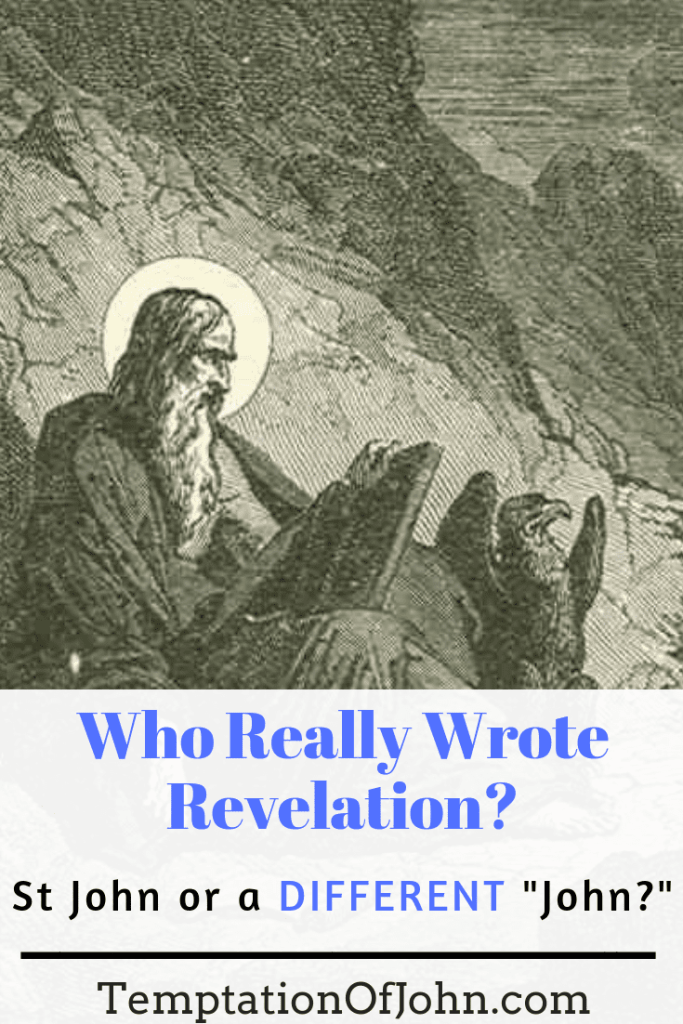
We meet John of Patmos in Revelation 1:9 where he identifies himself as the author of the Book of Revelation. John of Patmos is thus clearly an important figure for our research, and yet, we know so little about him. Is he Saint John the Apostle or another persona entirely? Check out this article to learn more: “Who Really Wrote Revelation?“
Gustav Dore’s “John of Patmos”
The Seven Angels of the 7 Churches
Revelation 1: 20 introduces the Seven Angels of the 7 Churches. As we discussed above, John gives a message to each angel at each of the churches in Revelation chapters 2 & 3. The angels are located at Ephesus, Smyrna, Pergamum, Thyatira, Sardis, Philadelphia, and Laodicea.
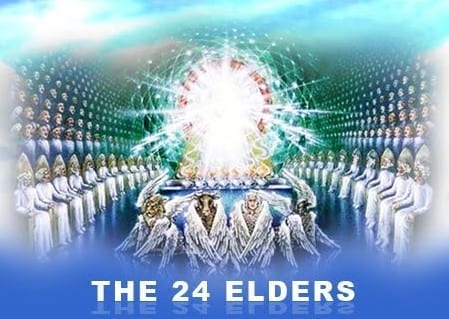
Twenty-Four Elders appear in Revelation 4:4, described as surrounding the Throne of God. Much debates exists about who the elders were: specific people/kings, the heads of churches or cities, or perhaps an allegory for different types of matter, elements, planets, or even our souls.
Also in the throne room that is described in Revelation 4: 8 are 4 ‘living creatures’ described as having six wings and with “eyes all over, front and back. The popular interpretation is that the creatures in Revelations are similar to those described by the prophet Ezekiel in the Old Testament and the most popular theories suggest that the living creatures are either angels or perhaps the gospel writers (Matthew, Mark, Luke, and John). Additionally, because of their many eyes, they are held to be all knowledgeable and it’s said that nothing escapes their notice.
Revelation 6 introduces us to the souls in white robes who had previously died for the faith. For an excellent discussion on these souls and who they may be see this article by Bible.org.
Possibly the most popular of all personalities in Revelation, the 4 Horsemen are introduced to us in Revelation 6 where we meet 4 beings riding on horses of various colors (red, black, white, and pale). At the most basic level they are said to represent Disease, War, Famine, and Death. Because some believe Revelation was an allegorical attack on the Roman empire, others believe the riders represent oppressions by that famed world power. Still others hold a different theory.
Four Horsemen of the Apocalypse, by Victor Vasnetsov, c1887
4 Angels holding the 4 Winds
Revelation 7 showcases the 4 winds being held in check by 4 powerful angels. This event occurs just prior to all hell being unleashed onto the world (literally!) since the next few chapters see the breaking of the Seals, the blowing of Trumpets, and more (all associated with world catastrophes). Some suggest the angels holding back the winds is an allegory for God’s power holding back Satan’s and that the latter can only act when given the OK by God.
Another popular group from Revelation is the famed 144,000. The Book of Life holds the names of those 144,000 lucky people who are apparently marked to be able to avoid the catastrophes that the rest of the world will suffer in Revelation. These raptured people will be redeemed and taken to heaven where they will wait it out while the world is cleansed. Their fate is described in Revelation 7 and 14.
Revelation 8 is when the real action of the book heats up as famed 7 Seals begin to be broken and the Seven Angels begin to blow their trumpets. There is actually an EIGHT angel who pours a golden censer full of wrath upon the world just to add to the fun.
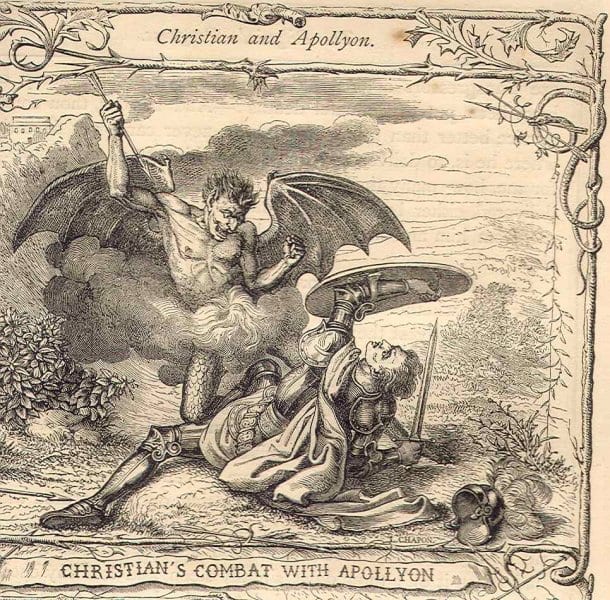
In Revelation 9 we meet Abaddon! He is also known as Apollyon The Destroyer. Some suggest this is Satan, others the devil’s chief demon, and still others the Angel of Death.
Revelation Chapter 10 is actually considered a kind of ‘interlude’ as the people of earth are given a slight reprieve from all the catastrophes caused by the breaking of the Seven Seals and the blowing of the Seven Trumpets. During this break in the action, John of Patmos is given the little scroll by the mighty angel – as instructed, John eats the ‘bitter’ scroll. This will become a source from which he can prophesy what he knows to all peoples and all nations.
This angel is also called the Mighty Angel of the 7 Thunders.
As to WHO the Mighty Angel is we don’t know. Some say Archangel Michael, others Archangel Gabriel, and still others Jesus Christ.
Johannes verschlingt das Buch “Might Angel and Little Scroll” c 1530
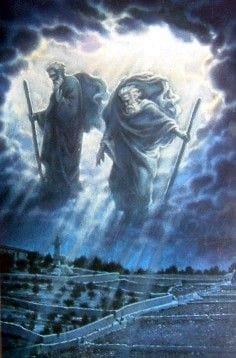
Although perhaps not as popular as other figures from Revelation, these two prophets are no less important. We meet them in Revelation 11:14 and their role is to prophecy to the world during the 1,260 days that God’s Temple is ‘being trampled upon’ by Satan’s minions.
As to WHO they are the debate ranges – the most popular theories are that they are Elijah and Enoch of Old Testament fame. This is the case in the Last Temptation of John books where the Two Witnesses play a prominent role.
Revelation 12 introduces the Dragon – a version of ‘the serpent’ that has repeatedly been representative of Lucifer/Satan throughout other books of The Bible. Archangel Michael casts the dragon out of heaven and down to earth, where It then makes war upon the world.
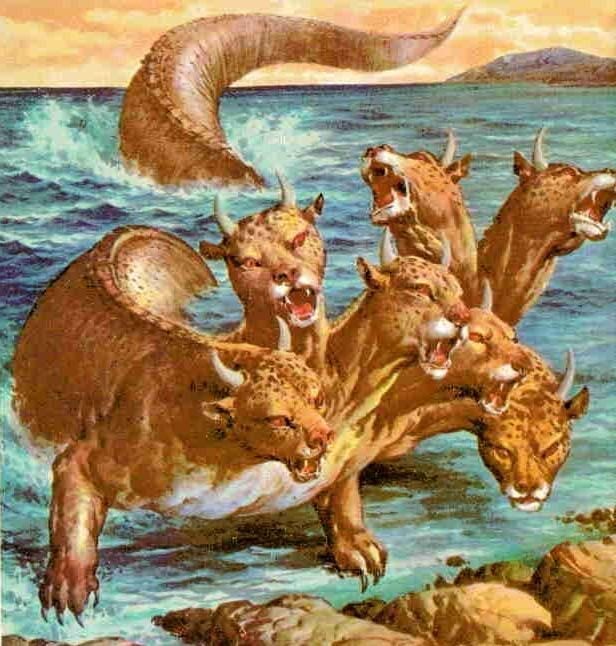
We meet the sea beast in Revelation 13 and 17. After the beast rises from the sea it is given ‘authority and power’ from the dragon. Most theories suggest the sea beast is representative of world governments and/or the old world order (i.e. the Roman government).
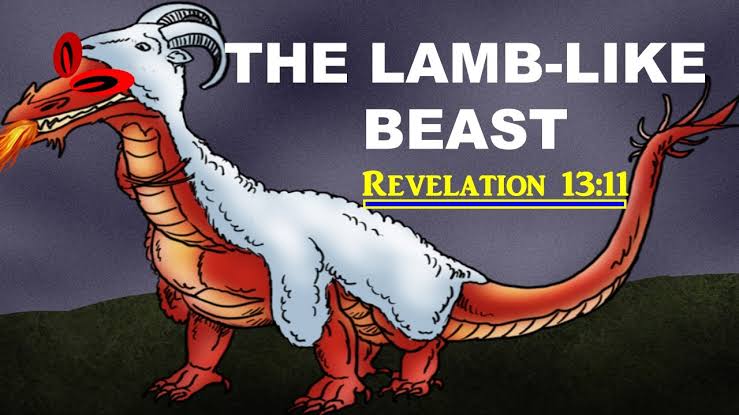
Also called The False Prophet, this beast is described in Revelation 13. Although not as famous as the dragon or the beast of the sea, the beast of the earth is no less important, for this is the beast who looks like a lamb but deceives like a dragon. Additionally, this beast will lead the world astray by causing people to get The Mark of the Beast.
Understanding the beast character is critical to grasping the meaning of Revelation. For additional discussions about the Beasts of Revelation see…
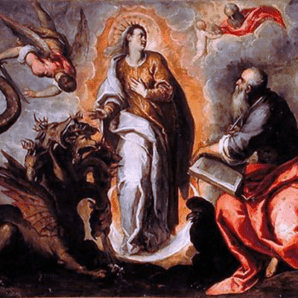
The woman who gives birth to a child in Revelation 12 is often misunderstood. She is not to be confused with the ‘other’ woman of Revelation (i.e. Mystery, the whore of Babylon), and her child is not the Antichrist. Despite the Dragon trying to eat the child at birth, the baby is instead taken up to God, while the woman flees into the wilderness and war breaks out in heaven.
Debates rage as to if the woman is The Virgin Mary, the Catholic Church, or another person, and the same goes for the identity of her child (is it Jesus, his teaching, the people of the church or the world).
Although we don’t know if the Mighty Angel of Revelation 10 is Michael, we DO know he appears in Revelation 12 since Michael’s feats of strength are detailed in The War of Heaven where the powerful archangel casts Satan (in the form of The Dragon) and his minions out of God’s kingdom.
Another key figure in Revelation is the Whore of Babylon, AKA “Mystery, Babylon the Great, the Mother of Prostitutes and Abominations of the Earth.”
We meet this woman in Revelation 17 and her story continues through chapter 18. She is the woman clothed in scarlet who rides upon the Beast (of the sea).
The traditional view is that the whore is representative of Rome and many of the details which describe Mystery fit this theory.
To learn more about Mystery, check out these links:
Here are some NON-fiction books that will help you continue your research on Revelation…
For some fun reading, consider these popular FICTIONAL accounts that deal with the events of Revelation…
IX. What if the Book of Revelation was coming true TODAY?
The Antichrist has come.
What if the events detailed in The Book of Revelations were about to occur… this year?
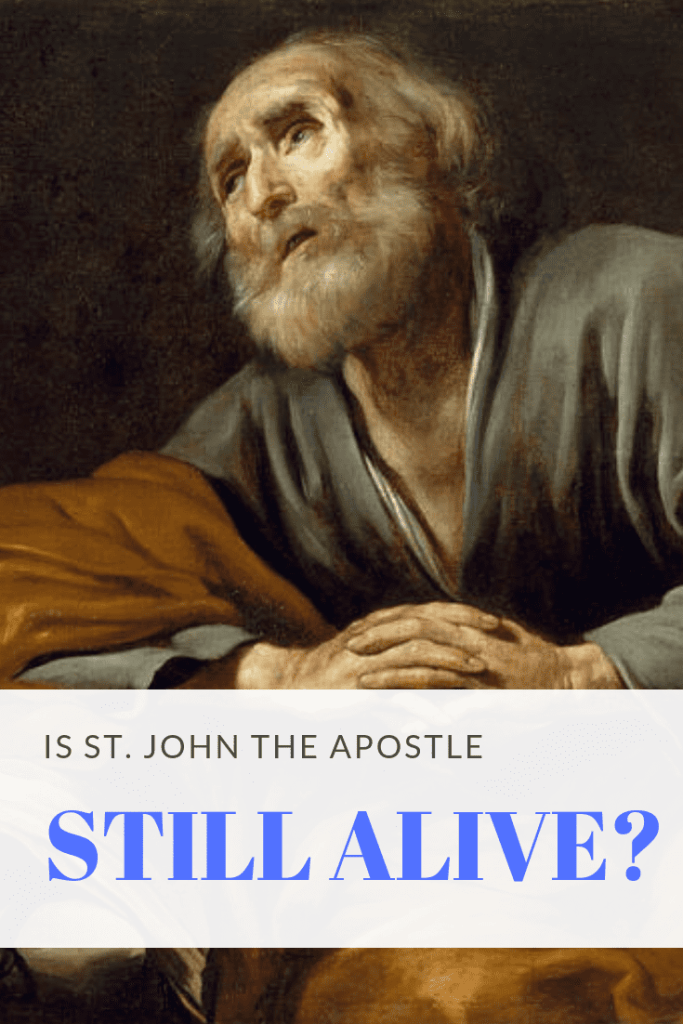
Could anyone save us from certain death? The answer is YES. Hard as it may be to believe, St. John the Apostle is still alive today – having been blessed with the Gift of Immortality so that he could survive to fight against the coming of The Antichrist. Unfortunately, over the course of the last 2,000 years John has lost is faith!
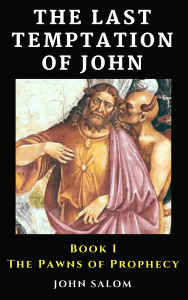
Can John recover his faith in time to stop Armageddon or will Satan’s Son achieve Ultimate Victory? The answer to that question and many more will be revealed in the thrilling new book series The Last Temptation of John.
Having just witnessed unwelcome memories from nearly 2,000 years ago I was ready for a break.
“Ha! ‘Surely Mary won’t wait around forever?’ Eh, Peter?” I quipped to myself as I remembered what my friend said and took another sip of my iced tea (yes it was a Long Island).
“Well, it seems we were wrong about that, for hell hath no fury like a woman scorned, right?”
Still on my porch, I snickered to myself with chagrin – for as I pondered the situation in hindsight it seemed that nobody got what they wanted:
Lazarus never did get Mary.
Jesus never accepted Mary’s advances.
I’m still here rotting in this worn out husk of a body.
All of our dreams have been dashed.
“Why have you cursed us like this, Lord?” And I threw my glass down on the porch – watching it smash into countless pieces, even as the remaining liquid quickly seeped through the floorboards. Overwhelmed with shame, I cried, “I am worn out calling for help, God. Will my life never end? Even if I end up in the land of gloom and shadow – even still I will go if it means I can only escape this so-called life!”
As if on cue, I noticed the radio was playing yet another one of my favorite songs – the Jim Reeves classic, “Am I that Easy to Forget?”
Guess I could find somebody, too. But I don’t want no one but you. How could you leave without regret? Am I that easy to forget?
I was about to let myself be drawn deeper into the song, when… “We interrupt this broadcast,” came the urgent words of the announcer, “with a special report about the assassination of UN Secretary General Ban Ki-Moon…”
“NO, not again – what about my Phillies game?”
I stewed as the Special Report was delivered — no less than thirty minutes of rigmarole about how, as yet, no one knew who had assassinated Ki-Moon (although I had a pretty good idea); that an emergency meeting of the UN had already taken place; and that William Henry Bates III (Bingo!) had already been elected as interim Secretary General.
After this, there was a short audio clip from Bates’ acceptance speech in which the beloved philanthropist explained that while his first inclination was to advise he was not worthy of such an honor, in fact he agreed to accept the nomination – at least on a short term basis – because he realized that the world needed him, and therefore he promised to do his best to lead the planet to prosperity.
Bates took the opportunity to remind people that he’d continue to work hard to help himself and others like him overcome their White Privilege disease, and as proof of his commitment to promoting BLM and Critical Race Theory goals he announced he was changing his name to the Muslim-inspired moniker Dr. Ghaz ‘al Ridwan Ma’bus. (Just like Teri had warned Alan about – although Teri missed the part about Bates taking on the “Dr.” title – apparently stealing a page from the puppet president Joe Biden’s wife’s playbook on how to give yourself fake credentials). Next this new Dr. Ma’bus explained how he would use his UN platform to protect the world from Climate Change disasters in the hopes that building a more sustainable world would eventually put an end to the never-ending cycle of pandemics that had plagued our planet since 2019.
Bates nee Ma’bus’ message was one of hope and freedom for all people in the world and he the more he talked the more he promoted himself as the People’s Savior.
Now as odd as this might sound, during the initial newscast I was quite dour – especially when Dr. Ma’bus was talking about the UN Agenda 2030 propaganda pawns like BLM, CRT, and Covid, and about his silly new name. Yet the more the Bates/Ma’bus audio clip was playing, the more I found myself getting inspired (just a bit) by Bill’s passion when he proclaimed himself to be our savior as Ghaz al’ Ridwan Ma’bus. It was a contagious sensation that I could not shake and soon enough a smile began to form beneath the scraggly curls of my beard the more I listened to Ma’bus smooth voice.
His voice beckoned me.
And then, as if the shackles of two thousand years of lethargy were suddenly released, I jumped up and looked to the Heavens. “Could this really be The Time?” I was actually hopeful. And in spite of myself, I began to praise, “When my soul is downcast within me, I will remember you. O Lord, have you returned to us in the person of the Muslim Savior Ghaz ‘al Ridwan Ma’bus?”
Meanwhile, Dr. Ma’bus continued to talk – encouraging the world to unite in brotherly love across every race and religion — and my Hope sprang even higher!
“Lord, are you him?” I desperately clutched my radio, hanging on the savior’s next words.
But then it happened, for as the applause from the crowd became so overwhelming, Ma’bus himself could no longer be heard.
“Noooooooo!” I collapsed in despair. “Don’t desert me again!”
Yet, my protests were to no avail. And when the regular newsman’s voice came back over the speaker, my newfound inspiration evaporated; once more I felt as if I was nothing more than a worthless sinner who had yet again been forgotten and abandoned.
And trudging along the porch, “Let the world take care of itself. Or let Bates’ Ma’bus persona do it. He doesn’t need me. You don’t need me, Lord. Nobody needs ME anymore.”
And with that, I went inside and closed the door – leaving even my Phillies to fend for themselves.
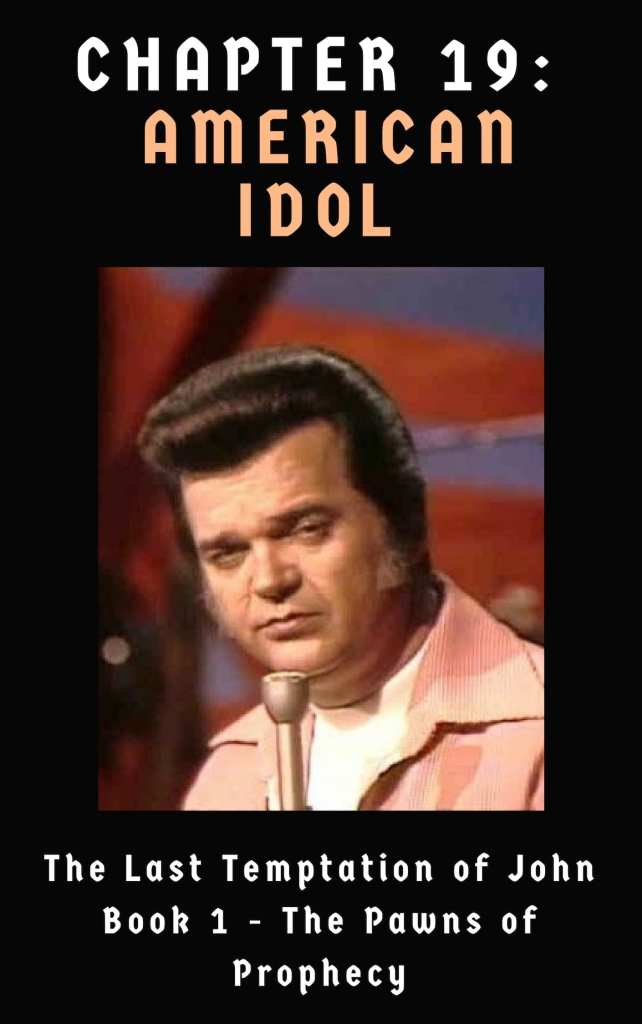
A few days later, I was sitting in a rocking chair on my back porch listening to Conway Twitty on my radio.
Somebody’s needin’ somebody the way I do. Somebody’s wantin’ somebody they can hold on to. To be loved by somebody that’s the way it should be. Oh, there’s got to be somebody somewhere waitin’ for me.
It was another scorcher of a day and I conspired against the heat by sipping on an ice cold lager – Beck’s to be exact – crisp, clean, and refreshing.
(Why are you so appalled that I drink so much? Don’t you know the saying “Let them drink and forget their worries?” Hey, I’m not making this stuff up – it’s in The Bible, read it for yourself).
Although nearly two weeks had passed, I still hadn’t replaced the TV that was damaged during the break-in. As a result, I was forced to listen to my Phillies games over the radio. Since the game wasn’t on for another hour, I was whiling away the time listening to some music – naturally I sang along.
“…Hurtin’ inside, going through emotions,” I bellowed out, terribly off-key, “It’s so hard to live. So many feelings, so lonely, when they got so much to give…” Closing my eye as the tune came to a close, I raised my glass, “To be loved by somebody, that’s the way it should be. Oh there’s got to be somebody waitin’ for me…
A <force> pulled gently against me, but I resisted, “No — I will not repent! And I will NOT be silent!” I condemned myself. “I will complain at the bitterness of my soul. Why did You, the God of all creation, credit Job’s words as Faith when he raged against You, yet I remain despised?”
Getting more frustrated, “Damn it all to Hell! Damn all of you; especially you, Mary — it’s all your fault!”
And in a flash, I was lost in memories – unwanted memories from nearly two thousand years ago…
“Damn rain.” I growled, pulling the shutters closed against the cold. In my mind’s eye I was back in the upper room of a rundown apartment building where me and my friends were planning to celebrate the Passover Feast later that evening.
(I was speaking in Aramaic but for our purposes I’ll translate).
Turning to the group, I continued, “It’s the month of Nissan for Yahweh’s sake! Why’s it gotta be so damn cold? I thought we were coming to Jerusalem to be able to enjoy ourselves, don’t you all remember our triumphal entry just a few days ago?
“Of course we do.” Said my brother James.
“Yeah, well since then it’s been pretty rotten.” My lamentation continued.
There was a large table in the middle of the room and around this Peter, my brother James, and a few other men continued preparing the board for our approaching feast. Even still, Peter chimed in, “John, I feel your pain. But calm down, you know as well as I that The Master could tell the winds to cease and the Sun to shine if he so desired.”
“Then why doesn’t he?” I opened the shutters again and looked at the dusty streets below – yearning in anticipation.
“Don’t worry, He’ll be here.” Another man walked over and placed his hand on my shoulder as I continued searching. “He wouldn’t have us do all this and not show up, right?”
“Who knows anymore, Matthew?” I pulled the shutters closed again with a bang. “Ever since Magdala started traveling with us, it seems like SHE is calling the shots now. Does He have to always listen to her advice?”
(Looking back, I guess you could say that I never really liked Mary. Oh well).
“She does seem to always know the right thing to do.” Matthew replied. “Look how the people have responded lately. Why, even the Sadducees are afraid to touch us!”
“But why? How?” I countered. “I know that He dispelled those seven demons from her, but what makes Mary so different from the countless other peons that He did miracles for? She’s just a girl from Magdala for Moses’ sake! Why is she allowed to travel with us, when He always told others to go their own way after He healed them?”
“Because Mary continues to prophecy.” Advised a large man who joined in our conversation. “Only now, rather than speak in the demon tongue, Jesus believes Mary is speaking the words of Yahweh Himself.”
(Funny, I forgot about that. Back then, I was NOT the one with the visions – it was Mary. I never did understand why that all changed?)
“Andrew is right, John. And so far you can’t argue with her results.” Matthew smiled at me. “After all, Mary IS often correct in what she sees. I mean, here we are in Jerusalem, man! Celebrating the Passover in a place that the Pharisees said we would never be able to come back to. And all because Mary told The Master about Bartimaeus’ blindness and that man’s parents were so grateful when The Master cured him that they let us use one of their rental rooms for our Meal this evening…for free – even though this town is packed with pilgrims, and Bartimaeus’ parents could have rented this room for some big coin. Surely that is amazing, neh?”
“Don’t the rest of us count for something?” I retorted. “After all, most of us have been with him for three years or more, yet she’s been around for less than a year. I asked to sit at his right and James at his left — the rest of you practically crucified us for that — and he denied us anyway. Yet Magdala does whatever she pleases and none of you care.”
“Whatever, Matthew, you do that. But I’m serious — what IS going on with her?”
“Do you think there’s a romantic connection?” Andrew asked.
“Unthinkable!” I was quick to reply, not wanting to believe what I most feared.
“Would it be so bad if Jesus and Magdala did unite?” Matthew asked.
“Surely it would diminish our ministry.” Peter surmised.
“I’m not so sure.” Matthew countered. “Think about this, friend — we have come a long way under His direction, but as Judas says, now is the time for action. The people thirst for change. And with Mary’s vision and Jesus’ inspired oration, we could move forward with The Messiah Mission and finally wrest power from the current usurpers.”
“Think of the glory we would all share in,” Peter agreed, “if OUR faction ruled Jerusalem.”
“As good as that sounds,” James spoke up, “I have to agree with my brother. We all know that Jesus is The Son of Yahweh – the Divine Incarnate. There can be no way that he would allow himself to be defiled by a woman.”
“But he is also a man.” Andrew replied. “Surely his flesh has needs.”
(Now let me make one thing clear here — as far as I know, Jesus never did anything untoward with Mary – thankfully. However I still believe that she was his downfall with all her mind games).
“He is a man in appearance only.” Peter rebutted. “He is without sin. He has been tempted by Satan himself – remember what he told us – he was tempted worse than we could ever imagine for forty days in the desert – without faltering. No, friends, I tell you the truth, our Jesus cannot be defiled by anything or anyone in this world.”
“But Mary has been purified by The Master.” Andrew reasoned. “Perhaps this makes her acceptable to him.”
“Who knows? Perhaps you are correct.” Peter replied. “But I believe even if Jesus purified Magdala when he cast out those demons, nonetheless, she is still a human like the rest of us and thus she will always carry Adam’s stain on her. Yet The Master is different – he is pure, he was born without Sin — always has been, always will be.”
(Ha, hear that, Mary? You could never be good enough for Him).
Silence reigned as we all pondered what would become of our club now that Mary of Magdala was gaining more influence within the group and threatening to take our Master away from us – it wasn’t a pretty sight…
Matthew was the first to break the awkward silence, “What you say makes sense, Peter. I can’t see our master, who is so pure of mind and body, accepting a union with a woman who was once possessed by demons and who still carries the mark of Adam’s sin upon her. And yet how can we be sure?”
“Why can’t John ask him?” Andrew offered.
“What? Why me?” I resisted.
“Come on, John.” My brother James coaxed. “You know he loves you best. He tells you everything.”
“Not anymore!” I snapped. “Now she’s his confidante. But this is nothing new because for a while it was Judas too, remember? And speaking of Judas — what’s going on with him? Even though he’s still with us, he’s not been too engaged with our plans lately.”
(Wow! Guess I was correct in that assessment, huh?)
“Yeah, I’m worried about Judas too.” Matthew said softly. “Maybe we should find out what’s bothering him? Perhaps I’ll sit beside him at dinner tonight and ask him.”
“It won’t help, Matthew. Remember, Judas is a Zealot.” Peter reminded them. “He wants Jesus to take power by force, but I get the feeling that’s just not going to happen.”
“Then what are we all doing here in Jerusalem?” Andrew asked. “Waiting for the Pharisees to come and arrest us? I mean, did you see that performance in the Temple today? If Jesus keeps insulting them, they’ll have all of our heads!”
“Let them come and try it!” I grumbled while my brother got riled up as well.
“Be that as it may, brothers,” Peter stopped us in our tracks. “Back to our problem — is there anything else we can do to perhaps minimize Mary’s influence?”
“Lazarus likes Mary.” Matthew tittered. “Perhaps we could get those two to spend more time together?”
(If only Lazarus hadn’t been such a bumbling fool and tried to play Mr. Cool by keeping a secret from Mary, he would have taken her off our hands way back then and maybe things would have been different. Oh, you don’t know that story, yet? Don’t worry, we’ll get to that, too).
“Really?” Andrew asked. “How do you know?”
“Have you seen the way Lazarus is around Magdala?” Matthew replied. “He’s practically a Bar Mitzvah Boy – all wide-eyed and ready to showcase his manhood.”
“Yes, but Mary was there when Lazarus was raised back to life,” Andrew added. “I think it was rather unsettling for her, so I don’t see the two of them getting together.”
“If nothing else, it can’t hurt to include Lazarus more in our affairs.” Peter concluded. “At least, Lazarus might take up some of Mary’s time and leave The Master more with us – so things can get back to normal. After all, if Jesus really is not going to accept Mary’s advances, surely she won’t wait around forever, right?”
With that my Sight snapped back to the present, yet alas my troubles today were only beginning…












 The Last Temptation of John