Tag Archives: Immortality

Fulcanelli: The Last Alchemist Who Vanished Into Legend

Introduction: The Greatest Mystery of 20th-Century Alchemy

Fulcanelli is the most enigmatic alchemist of the modern era—a man who allegedly completed the Magnum Opus, discovered the Philosopher’s Stone, and then vanished without a trace. His true identity remains unknown, his life shrouded in myth, and his disappearance fuels speculation that he achieved literal or spiritual immortality.

This article explores:

  • Who Was Fulcanelli? (Theories on His Identity)
  • His Alchemical Works & Hidden Knowledge
  • The Mystery of His Disappearance
  • Did He Achieve Immortality? (And Where Is He Now?)
  • His Legacy in Modern Esotericism

1. Who Was Fulcanelli? The Theories

Fulcanelli was the pseudonym of a French alchemist who appeared in the early 20th century. His real identity is debated, but candidates include:

Possible Identities

CandidateEvidence
Jules Violle (Physicist)Similar writing style, scientific knowledge.
Jean-Julien Champagne (Artist)Illustrated Fulcanelli’s books; deep esoteric ties.
Pierre Dujols (Occult Bookseller)Taught alchemy; mentored Fulcanelli’s students.

The Pupil Who Revealed Him: Eugène Canseliet

Fulcanelli’s most famous student, Eugène Canseliet, claimed to have met him after his supposed “disappearance” in 1926, looking decades younger.

“Fulcanelli was not a man; he was an intelligence who used a body.”
Jacques Bergier, The Morning of the Magicians

Further Reading:


2. Fulcanelli’s Alchemical Works

1. Le Mystère des Cathédrales (1926)

  • Argues that Gothic cathedrals (like Notre-Dame) are encoded alchemical texts.
  • Links Christian symbolism to the Great Work.
    📜 Read excerpts: Sacred-Texts Archive

2. Les Demeures Philosophales (1930)

  • Explores alchemical secrets in French architecture.
  • Suggests medieval builders hid esoteric formulas in stone.

Video Resource:


3. The Disappearance: Did He Achieve Immortality?

The 1926 Vanishing

Fulcanelli allegedly told Canseliet:

“I am leaving. You will not see me again. I go to a far country.”

Afterwards, he disappeared without a trace.

The 1953 “Return”?

Canseliet claimed to have met Fulcanelli in Spain in 1953, looking 30 years younger.

Theories on His Fate

  1. Physical Immortality – He found the Elixir of Life and still walks among us.
  2. Ascension – He transcended to a higher plane of existence.
  3. Secret Society – He joined a hidden esoteric order (like the Priory of Sion).
  4. Hoax – He never existed; a myth created by Canseliet.

Further Reading:


4. Is Fulcanelli Still Alive Today? Speculations

If He Achieved Immortality…

  • He might be living incognito, guiding esoteric circles secretly.
  • Working in advanced science (cold fusion, quantum physics).
  • Observing humanity’s evolution from the shadows.

If He Ascended…

  • Exists as a “light being” (like Hermes Trismegistus).
  • Communicates through synchronicities (like Jung’s “collective unconscious”).

The Most Esoteric Theory

  • He became a “time traveler”—alchemy as a portal to other dimensions.

Video Resource:


5. Fulcanelli’s Legacy

Influence on Modern Alchemy

  • Inspired modern hermeticists like Julius Evola.
  • Fueled Nazi occult research (the SS reportedly sought him).

Pop Culture Appearances

  • “The Morning of the Magicians” (1960s occult boom).
  • “Fulcanelli: The Alchemist” (Documentary).

Further Reading:


Conclusion: The Man Who Became a Legend

Fulcanelli remains the ultimate alchemical mystery—a man who either conquered death or became pure myth. Whether he walks among us, exists in another realm, or was simply a brilliant hoax, his teachings challenge us to ask:

“Is immortality possible? And if so, what would we do with it?”

Additional Resources:


Alchemy as a Philosophy: The Quest for Divine Knowledge and Transformation

Alchemy is often misunderstood as a primitive form of chemistry, a misguided pursuit of turning lead into gold. Yet, at its core, alchemy is far more profound—it is a philosophical and spiritual tradition that seeks the purification of the soul, the understanding of cosmic unity, and the transformation of base existence into divine perfection. Many of the ancient and medieval world’s greatest philosophical minds were deeply immersed in alchemical thought, seeing it not merely as a laboratory practice but as a metaphysical journey.

The Philosophical Foundations of Alchemy

Hellenistic Alchemy and Greek Philosophy

The origins of Western alchemy can be traced to Hellenistic Egypt, particularly Alexandria, where Greek philosophy merged with Egyptian metallurgical knowledge and mystical traditions. Several key philosophical schools influenced alchemical thought:

  1. Pythagoreanism – The Pythagoreans believed in the mathematical harmony of the cosmos, where numbers held divine significance. This idea resonated with alchemists, who saw numerical symbolism in their work, such as the sacred Tetractys (1 + 2 + 3 + 4 = 10) representing the four classical elements.
  2. Platonism – Plato’s theory of Forms suggested that the material world is a shadow of a higher, perfect reality. Alchemists sought to uncover these hidden truths, believing that metals and matter could be refined to their purest, most divine state.
  3. Stoicism – The Stoics emphasized the Logos, the rational principle governing the universe. Alchemists adopted this idea, viewing their work as aligning with nature’s hidden laws.
  4. Gnosticism – Gnostic dualism (the struggle between spirit and matter) deeply influenced alchemy, framing the Great Work as a liberation of the divine spark trapped in material existence.

Aristotle’s Four Elements and Alchemical Thought

Aristotle’s theory of the four elements—earth, air, water, and fire—was foundational to alchemical philosophy. He posited that each element had its natural place in the cosmos and would return there if undisturbed. However, alchemists interpreted these elements not just as physical substances but as principles of existence:

  • Earth represented solidity and stability.
  • Water symbolized fluidity and dissolution.
  • Air stood for volatility and expansion.
  • Fire embodied transformation and purification.

As the Swiss psychologist Carl Jung later observed, these elements were archetypal symbols representing psychological and spiritual states rather than mere chemical properties. The alchemist’s goal was to transmute these elements within the self, achieving inner harmony and enlightenment.

Alchemy as Spiritual Transformation

The Union of Opposites: Solve et Coagula

One of the central tenets of alchemical philosophy is the conjunction of opposites (conjunctio oppositorum). The process of Solve et Coagula (dissolve and coagulate) represents the breaking down of impure matter and its reassembly into a perfected form. This mirrors the spiritual journey:

  • Solve – The dissolution of ego, ignorance, and material attachments.
  • Coagula – The reintegration of the self into a higher, enlightened state.

This concept appears in many esoteric traditions, including Taoism’s Yin and Yang and Hermeticism’s “As above, so below.”

The Philosopher’s Stone: Symbol of Perfection

The Philosopher’s Stone was not merely a substance to transmute metals but a metaphor for ultimate wisdom and immortality. It represented:

  • Physical perfection – The ability to purify base metals into gold.
  • Spiritual enlightenment – The attainment of divine knowledge.
  • Immortality – The transcendence of death, either literally (as in elixirs of life) or symbolically (as in spiritual rebirth).

Famous alchemists like Hermes Trismegistus (mythical founder of Hermeticism) and Paracelsus (Renaissance physician-alchemist) wrote extensively on the Stone’s symbolic meaning.

Alchemy’s Legacy in Modern Thought

Though modern science dismissed alchemy’s material claims, its philosophical and psychological insights endure:

  • Jungian Psychology – Carl Jung saw alchemy as a projection of the unconscious mind, where the alchemical process mirrored individuation (the integration of the self).
  • Esoteric Traditions – Rosicrucianism, Freemasonry, and Theosophy preserved alchemical symbolism.
  • Popular Culture – From Harry Potter’s Sorcerer’s Stone to Fullmetal Alchemist, alchemy remains a powerful metaphor for transformation.

Further Reading & Resources

For those seeking deeper knowledge, explore:

Conclusion: The Eternal Quest

Alchemy, at its heart, is not about gold but about gnosis—divine knowledge. It teaches that transformation is possible, whether in matter, mind, or spirit. As the Emerald Tablet proclaims:

“That which is below is like that which is above, and that which is above is like that which is below.”

The true alchemist seeks not just to change lead into gold but to transmute the self into something greater—a being in harmony with the cosmos.


Alchemy & The Last Temptation of John Books

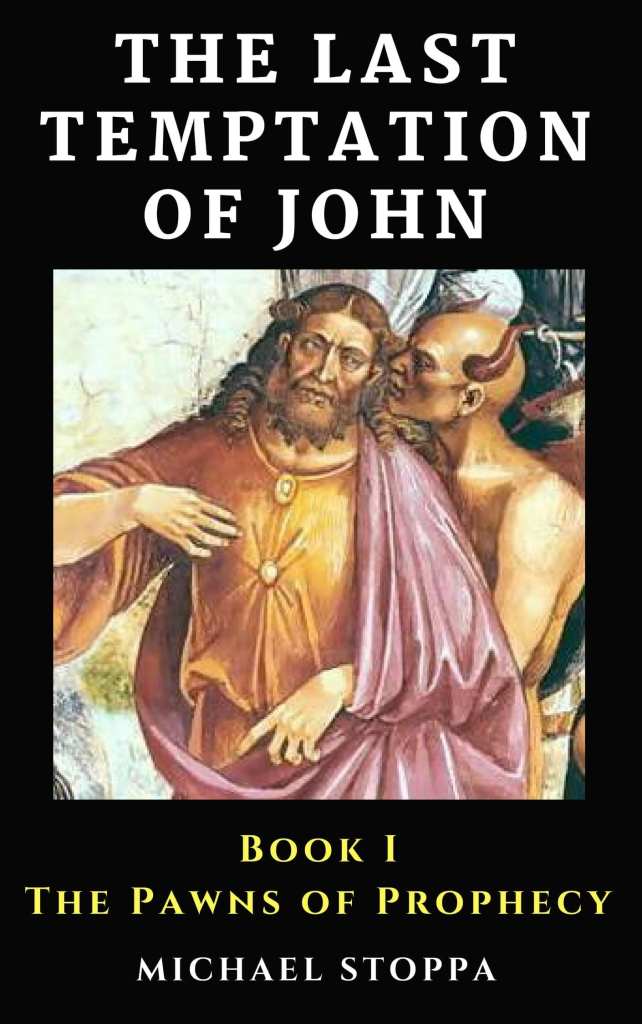
Although the trilogy known as the Last Temptation of John is not solely focused on alchemy, the craft plays an important role in the series because the main character (St John the Apostle) is an unhappy immortal whose primary goal in life is to find a way to die. Unable to discover a normal way to die, John turns to alchemy to find a solution. His curious quest takes him on a journey that involves The Philosopher’s Stone, Quintessence, Azoth, and of course The Magnus Opus. Will he successfully complete his alchemical goals? 

Read The Last Temptation of John to find out..

Immortality — Ugh (11)

Book I: Chapter 11
June 11

OK, out with it – let’s hear your questions. I can tell that you won’t let me move on with my tale unless I start answering some of your nagging questions so let’s get it over with. 

Am I immortal?

Yes. Alan, Miriam, and I are all immortal – we have been since He made us that way – nearly two thousand years ago. It’s a bitch. Trust me.

Take today for instance – here I am just sitting in my bed trying to get some sleep and shake this drunken haze. Yet I can’t get any peace because He keeps sending me more revelations. Enough already!

Being immortal is just not all it’s cracked up to be.

I know Alan and Miriam may feel different, but what do they know?

Oh sure, there was a time when I had a different opinion, but those days were long gone — two thousand years on this planet will do that to a guy.

Well, now that the cat’s out of the bag, I suppose I’ll have to tell you a few more things to keep you from bombarding me with questions…

Here’s a few more tidbits about my life – take them for what you will.

Obviously I haven’t always lived in upstate Pennsylvania; I was actually born half a world away and some two millennia past. And although I’m a persona unknown to most of the world now, long ago I was actually rather famous. Let’s see how quickly you can figure it out…

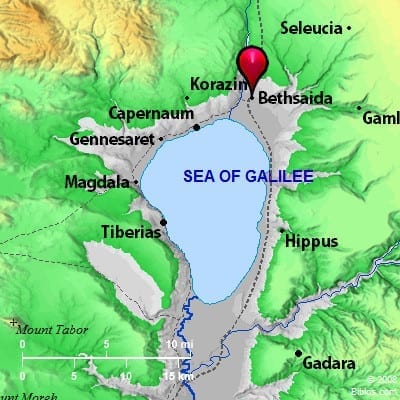
My father’s name was Zebedee and my mom was Mary Salome. My family was Jewish and originally lived in the Bethsaida region around the Lake of Gennesaret in what is now modern day Israel.

My mother was actually a sister of Mary, the mother of Jesus of Nazareth – yes, that means I was Jesus’s cousin.

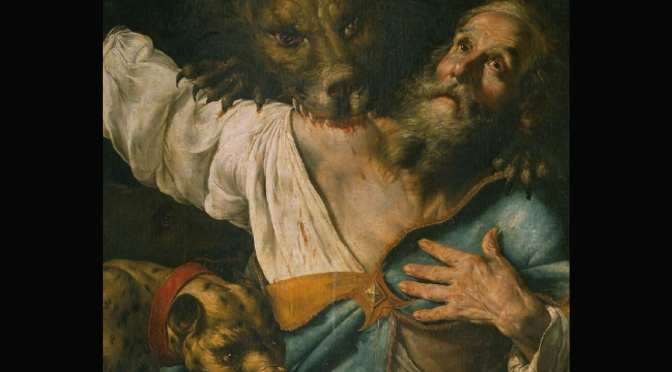
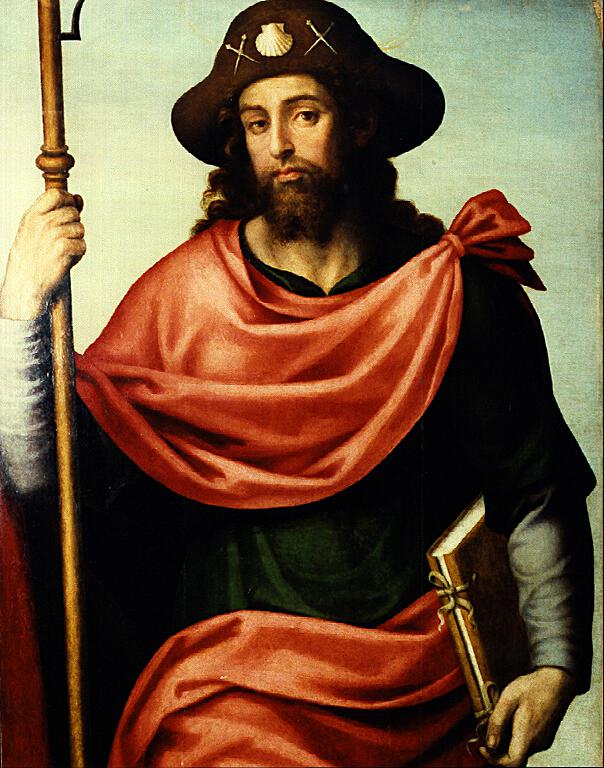
I also had a rather famous brother too – a man who later became known as Saint James The Greater. I’m kinda proud of my older brother so obviously I have to show you a picture of him too.

Click to learn more about my brother

To say James and I were close is an understatement – back in the day we tore it up and were known by all as The Sons of Thunder. Sure we got into a bit of trouble, but it was all in good fun. 

Meanwhile, my dad had a fishing business that James and I helped him with it. The business was profitable enough to allow me to afford my own house and it even gave me a bit of status (I was a personal friend of the Jewish high priest at the time – hey, if you give anyone enough money, they’ll be your friend, right?).   

Now Jesus and I we also cousins of another famous preacher – the legendary Jewish apocalyptist known as John The Baptist.

The Baptizer was the first great speaker I had ever met and I actually found myself captivated by all his talk about how “the Kingdom of Heaven was at hand” and what it meant for me and my fellow Jews.

(I wouldn’t fall for all that talk now, mind you, but back then it sounded rather good).

In any case, at the time Jesus and I were both looking for something meaningful to do with our lives (fishing just wasn’t exciting enough) so we decided to follow The Baptizer around for awhile.

Eventually Jesus became a pretty hardcore apocalyptic teacher himself and he too began evangelizing. Since I was closer to Jesus, I left The Baptizer’s group and followed Jesus around for a bit. But soon enough Jesus’s group ran out of money and reality set in, so we had to give it up — I went back home to my boring life in the fishing business, while Jesus wandered off into the desert to find himself.

I honestly thought that was the end of my time as a disciple (of anybody) and I was happy just living the life of a village fisherman. However, about a year later, Jesus came back home – and he was now a changed man.

Jesus claimed he’d a revelation that he was the Son of God!

Perhaps just as importantly, he also had a new plan for his evangelical work: expansion via recruitment.

He asked me and my brother James to join him and leave our fishing business to instead become “Fishers of Men.”

We took the bait and helped Jesus find more recruits. It was a wild success – we travelled around like rock stars for awhile and after that I was pretty much by Jesus’ side from there on out – until Jesus was crucified that is!

As you can imagine Jesus’s death at the hands of his jealous adversaries was quite an ordeal – events certainly didn’t work out as I thought they were going to when Jesus first roped me into the experience and when he was murdered so unexpectedly it left myself and the other disciples in a bit of shock. We had no idea what to do next and most of us were just trying to lay low for awhile in order to save our own skins. 

Thankfully Jesus proved he was the Son of God when he rose from the dead just three days after his crucifixion and that, as I’m sure you can imagine, was rather inspiring.

On fire for his message, I took it upon myself to continue his Christ’s mission. In fact, I later wrote about my time with Jesus in a book called The Gospel of John. Watch it today on Amazon Prime (everybody has that now, right?)

Looking back now I regret the decision to get caught up with Jesus — it was all just a crazy idea. Back then I was young and stupid. Oh sure there was something charismatic about Jesus – even more so than The Baptizer.

But Jesus clearly said that he would return.

And he said that he was going to do so during our lifetimes back then.

So where the hell is he? And what’s taking him so damn long?

That’s right. I said it. 

You wanted to know what has me so upset. Well now you know. 

Happy?

Continue Reading…