Introduction
The Book of Revelation, the final book of the Bible, has captivated Christians for nearly 2,000 years. Its vivid imagery, apocalyptic visions, and prophetic warnings about the end of the world have inspired countless interpretations, debates, and even fears. From theologians to conspiracy theorists, people have long sought to decode its symbols—the Four Horsemen, the Antichrist, the Mark of the Beast (666), and the Battle of Armageddon.
In today’s world, with global conflicts, pandemics, economic instability, and rapid technological advancements, many Christians see striking parallels between current events and Revelation’s prophecies. This article explores why Revelation fascinates believers, examines key themes, and considers how modern events might (or might not) align with its predictions.
1. What Is the Book of Revelation?
Authorship and Context
Traditionally attributed to the Apostle John while exiled on the island of Patmos (Revelation 1:9), Revelation is a blend of apocalyptic literature, prophecy, and epistle. Written around AD 95 during Roman persecution, it was meant to encourage suffering Christians with the promise of God’s ultimate victory over evil.
Literary Style
Revelation is highly symbolic, drawing from Old Testament prophets like Daniel, Ezekiel, and Zechariah. Its visions include:
- The Seven Seals (Revelation 6) – Judgments unleashed on the earth.
- The Seven Trumpets (Revelation 8-11) – Catastrophic events signaling God’s wrath.
- The Seven Bowls (Revelation 16) – Final plagues before Christ’s return.
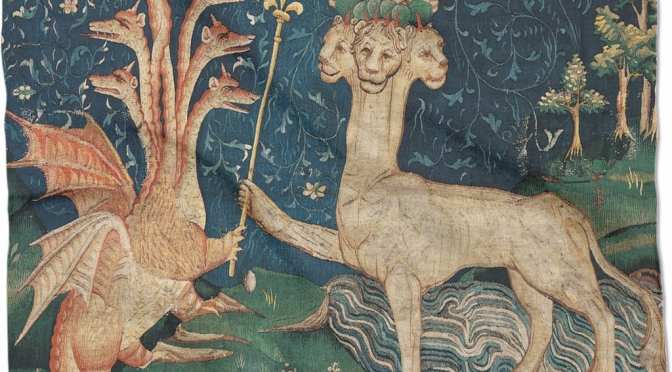
- The Beast and the False Prophet (Revelation 13) – Figures of deception and tyranny.
- The New Jerusalem (Revelation 21-22) – The glorious eternal kingdom of God.
2. Why Are Christians So Fascinated by Revelation?
A. The Promise of Ultimate Victory
At its core, Revelation is a book of hope. Despite chaos, evil, and suffering, it assures believers that God wins. Christ returns (Revelation 19), defeats Satan (Revelation 20), and establishes a new heaven and earth (Revelation 21). This promise resonates deeply in times of crisis.
B. The Mystery of Prophecy
Humans are naturally drawn to mysteries, and Revelation is full of them:
- Who (or what) is the Antichrist?
- Is the Mark of the Beast (666) a literal mark, or symbolic?
- When will the Rapture happen? (Though the word “rapture” isn’t in Revelation, many associate it with 1 Thessalonians 4:17.)
This intrigue fuels endless speculation, books, and sermons.
C. The Urgency of the End Times
Jesus said, “Watch therefore, for you do not know the hour” (Matthew 24:42). Many Christians believe we are living in the “last days,” making Revelation feel urgently relevant.
3. Current Events and Revelation’s Prophecies
Could today’s headlines be fulfilling biblical prophecy? Let’s examine some key areas where people see connections.
A. Wars and Rumors of Wars (Revelation 6:1-4)
- The First Horseman (White Horse) is often seen as false peace or conquest.
- The Second Horseman (Red Horse) represents war.
With ongoing conflicts in Ukraine, Israel, and global tensions, some believe we are seeing the precursors to a larger, apocalyptic war (possibly Armageddon, Revelation 16:16).
B. Famine and Economic Collapse (Revelation 6:5-6)
- The Third Horseman (Black Horse) signifies famine and economic hardship.
- Rising food shortages, inflation, and supply chain disruptions make this imagery feel eerily relevant.
C. Pestilence and Death (Revelation 6:7-8)
- The Fourth Horseman (Pale Horse) brings death by “sword, famine, pestilence, and wild beasts.”
- The COVID-19 pandemic, along with other diseases, has led many to wonder if this is a fulfillment.
D. The Rise of a Global Government (Revelation 13)
- The Beast (often interpreted as a tyrannical world leader) and the False Prophet (a deceptive religious figure) may point to:
- Increasing globalism (United Nations, World Economic Forum).
- Digital currency and surveillance (could this relate to the Mark of the Beast?).
E. The Role of Technology (Revelation 13:16-18)
- The Mark of the Beast (666) is speculated to be a biometric implant, digital ID, or cryptocurrency.
- With AI, facial recognition, and cashless societies advancing, some see this as a potential fulfillment.
4. Caution: Should We Try to Predict the End Times?
While it’s tempting to map current events directly onto Revelation, Jesus Himself said:
“But concerning that day and hour no one knows, not even the angels of heaven, nor the Son, but the Father only.” (Matthew 24:36)
Possible Interpretations of Revelation:
- Preterist View – Much of Revelation was fulfilled in the 1st century (e.g., fall of Jerusalem, Roman persecution).
- Historicist View – Revelation outlines church history up to the present.
- Futurist View – Most prophecies are yet to be fulfilled in a literal end-times scenario.
- Idealist View – Revelation is symbolic of the ongoing struggle between good and evil.
Balance is key: While we should be aware of the times, we must avoid sensationalism or date-setting.
5. The Ultimate Message of Revelation: Hope in Christ
Despite its terrifying imagery, Revelation’s central message is hope:
- Christ is coming back (Revelation 22:12).
- Evil will be judged, and God’s people will be vindicated.
- A new, perfect world is coming (Revelation 21:4 – “He will wipe away every tear…”).
Rather than fearing the future, Christians are called to:
- Stay faithful (Revelation 2-3 – Letters to the Churches).
- Live with urgency, sharing the Gospel.
- Trust in God’s sovereignty, no matter how chaotic the world becomes.
Conclusion: Why Revelation Matters Today
The Book of Revelation remains fascinating because it speaks to humanity’s deepest fears and hopes. In a world of uncertainty, it offers a divine perspective: God is in control, evil will not triumph, and a glorious future awaits those who trust in Christ.
While we may see shadows of prophecy in today’s events, our focus should not be on decoding every symbol but on living faithfully, watching prayerfully, and proclaiming the Gospel boldly until Christ returns.
Are we in the end times? Maybe. But the real question is: Are we ready?
What do you think? Do current events align with Revelation’s prophecies, or should we be cautious in drawing connections? Share your thoughts in the comments!
Further Reading:
- The Late Great Planet Earth (Hal Lindsey)
- Revelation: A Shorter Commentary (G.K. Beale)
- The Book of Revelation (N.T. Wright’s interpretations)
Scripture References:
- Revelation 1:1-3 – The blessing of reading Revelation.
- Revelation 22:20 – “Surely I am coming soon. Amen. Come, Lord Jesus!”
 The Last Temptation of John