Introduction
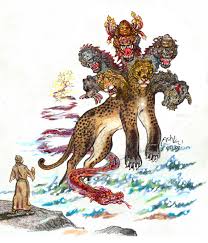
Few biblical figures evoke as much fear, fascination, and speculation as the Antichrist—the ultimate embodiment of evil in the Book of Revelation. Described as the Beast (Revelation 13), this end-times tyrant will deceive the world, wage war against God’s people, and establish a global dictatorship before Christ returns to defeat him.
For centuries, Christians have tried to identify who the Antichrist might be—from Roman emperors to modern political leaders. Some believe he will rise to power in a time of global crisis, wielding unmatched influence through politics, religion, and technology.
In this deep dive, we’ll explore:
- What (or who) is the Antichrist?
- Why do Christians fear his coming?
- 5 historical figures once believed to be the Antichrist
- 5 modern candidates who fit the profile
- How should Christians respond to Antichrist speculation?
1. Who (or What) Is the Antichrist?
The term “Antichrist” appears only in the letters of John (1 John 2:18, 22; 4:3; 2 John 1:7), where it refers to anyone who denies Christ. However, in Revelation, the Antichrist is depicted as the Beast from the Sea (Revelation 13:1-10), a satanic world leader who:
- Rises to global power (Revelation 13:7).
- Performs deceptive miracles (Revelation 13:13-14).
- Demands worship (Revelation 13:8).
- Enforces the Mark of the Beast (666) (Revelation 13:16-18).
He is closely tied to the False Prophet (Revelation 19:20), who promotes his agenda, and the Dragon (Satan, Revelation 12:9), who empowers him.
Key Traits of the Antichrist:
- Charismatic but deceptive (Daniel 8:23-25).
- A political and religious unifier (Revelation 17:12-13).
- Persecutes believers (Revelation 13:7).
- Seeks to replace God (2 Thessalonians 2:3-4).
2. Why Do Christians Fear the Antichrist?
The Antichrist represents the ultimate enemy of Christ and His followers. Here’s why his coming is so terrifying:
A. He Will Deceive the World
- Jesus warned of “false Christs and false prophets” (Matthew 24:24).
- The Antichrist will perform lying signs and wonders (2 Thessalonians 2:9-10).
B. He Will Bring Persecution
- The Bible predicts a time of great tribulation (Matthew 24:21).
- Many believe Christians will face martyrdom under his rule (Revelation 13:7).
C. He Will Control the Global Economy
- The Mark of the Beast (666) suggests a financial and spiritual loyalty test (Revelation 13:16-17).
- Those who refuse will be cut off from buying or selling.
D. He Will Be a Master Manipulator
- The Antichrist will likely emerge during a time of crisis, offering peace and security (1 Thessalonians 5:3).
- Many will follow him blindly, believing he is a savior.
3. 5 Historical Figures Once Believed to Be the Antichrist
Throughout history, many leaders have been accused of being the Antichrist. Here are five of the most famous:
1. Nero (Roman Emperor, AD 54-68)
- Why? Brutally persecuted Christians; some scholars believe “666” (Revelation 13:18) refers to Nero’s name in Hebrew numerology.
- Connection: The early church saw him as a prototype of the Antichrist.
- Source: Nero as the Beast – Bible Study
2. Pope Boniface VIII (13th Century)
- Why? Medieval reformers accused him of blasphemy and corruption, claiming he fit the “man of sin” in 2 Thessalonians 2.
- Connection: His feud with King Philip IV of France led to accusations of usurping Christ’s authority.
- Source: Pope Boniface VIII & Antichrist Speculation – History.com
3. Napoleon Bonaparte (19th Century)
- Why? His military conquests and self-deification (he crowned himself emperor) made many fear he was the Beast.
- Connection: Some saw his rise and fall as mirroring Revelation’s prophecies.
- Source: Napoleon and the Antichrist – Christianity Today
4. Adolf Hitler (20th Century)
- Why? His genocidal tyranny, occult interests, and global impact made him a prime candidate.
- Connection: His Nazi regime was seen as a satanic counterfeit kingdom.
- Source: Hitler and the Antichrist – Jewish Virtual Library
5. Henry Kissinger (20th Century)
- Why? His role in global politics and the 1973 oil crisis led some to link him to the “false peacemaker” of Revelation.
- Connection: Hal Lindsay’s The Late Great Planet Earth suggested Kissinger fit the profile.
- Source: Kissinger as Antichrist – End Times Speculation
4. 5 Modern Candidates Who Fit the Antichrist Profile
Today, several figures are speculated to be potential Antichrists due to their power, influence, and global reach.
1. Klaus Schwab (World Economic Forum Founder)
- Why? Promotes “The Great Reset”, a globalist agenda some fear could lead to economic control (Mark of the Beast).
- Connection: His call for digital IDs and AI governance aligns with fears of a technocratic dictatorship.
- Source: The Great Reset and Bible Prophecy – Prophecy News Watch
2. Pope Francis (Leader of the Catholic Church)
- Why? Some Protestants believe the papacy itself is the Antichrist system, citing historic Reformation views.
- Connection: His interfaith efforts and global influence spark fears of a one-world religion.
- Source: Is the Pope the Antichrist? – GotQuestions
3. Bill Gates (Tech Billionaire)
- Why? His desire for world DEpopulation, sketchy history with controversial vaccines, and digital ID raise concerns about the Mark of the Beast.
- Connection: If digital ID becomes mandatory, could they fulfill Revelation 13?
- Source: too many to list!
4. Vladimir Putin (Russian President)
- Why? His imperial ambitions and war in Ukraine fit the “King of the North” prophecy (Daniel 11).
- Connection: Some believe he could be a precursor to the Antichrist’s rise.
- Source: Putin in Bible Prophecy – Charisma News
5. A Future AI Superintelligence
- Why? If AI gains autonomous power, could it become the ultimate deceptive force?
- Connection: The image of the Beast (Revelation 13:15) might be a digital or AI construct.
- Source: AI and the Antichrist – WND
5. How Should Christians Respond to Antichrist Speculation?
While it’s fascinating to speculate, the Bible warns against date-setting and paranoia. Instead, Christians should:
- Focus on Christ’s Return (Acts 1:7 – “It is not for you to know times or seasons”).
- Live Righteously (2 Peter 3:11 – “What sort of people ought you to be?”).
- Test All Spirits (1 John 4:1 – Not every leader is the Antichrist).
- Share the Gospel (Matthew 24:14 – The end will come after the Gospel is preached to all nations).
Conclusion: The Antichrist Is Coming—But Christ Has Already Won
The Antichrist remains one of the Bible’s most mysterious and feared figures. While history is full of tyrants and deceivers, the true Beast will be uniquely empowered by Satan to lead the world into rebellion against God.
Yet, Christians need not fear: “He who is in you is greater than he who is in the world” (1 John 4:4). No matter who rises to power, Christ will return to destroy the Antichrist and establish His eternal kingdom.
What do you think? Could one of these modern figures be the Antichrist, or is he still to come? Share your thoughts below!
Further Reading:
- The Antichrist and the Mark of the Beast – Bible Gateway
- Historical Antichrist Theories – Christianity.com
- Modern Antichrist Candidates – Prophecy Updates
Scripture References:
- Revelation 13 – The Beast’s rise.
- 2 Thessalonians 2:1-12 – The “man of lawlessness.”
- 1 John 2:18 – Many antichrists, but one ultimate Antichrist.
 The Last Temptation of John