Tag Archives: Albedo

The Magnum Opus: Alchemy’s Great Work of Transformation

Introduction: The Ultimate Alchemical Quest

The Magnum Opus (Latin for “Great Work”) is the pinnacle of alchemical pursuit—a sacred process of material and spiritual perfection. More than just turning lead into gold, it represents the transmutation of the self, the purification of the soul, and the attainment of divine wisdom.

For centuries, alchemists across Europe, the Islamic world, and Asia sought to complete the Great Work, believing it would grant:
The Philosopher’s Stone (transmutation & immortality).
The Elixir of Life (healing & eternal youth).
Divine Enlightenment (union with the cosmic mind).

This article explores:

  • The Stages of the Magnum Opus
  • Key Alchemists & Their Interpretations
  • Sacred Texts & Manuscripts
  • Scientific & Psychological Perspectives
  • The Burning Question: Did Anyone Ever Complete It?

1. The Four Stages of the Magnum Opus

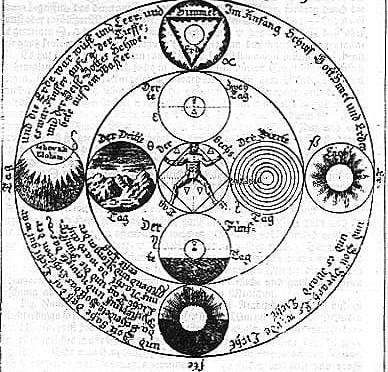
The Great Work was traditionally divided into four color-coded stages, each representing a phase of transformation:

1. Nigredo (Blackening) – Putrefaction

  • Symbolism: Death, decay, the “dark night of the soul.”
  • Process: Breaking down impure matter (or ego) to its raw state.
  • Alchemical Act: Calcination (burning away impurities).

2. Albedo (Whitening) – Purification

  • Symbolism: Washing, lunar energy, the purified self.
  • Process: Cleansing the material (or soul) to a pristine state.
  • Alchemical Act: Sublimation (rising above base nature).

3. Citrinitas (Yellowing) – Illumination

  • Symbolism: Solar awakening, wisdom, the dawning of gold.
  • Process: Infusing the purified matter with divine light.
  • Alchemical Act: Fermentation (spiritual nourishment).

4. Rubedo (Reddening) – Perfection

  • Symbolism: The Philosopher’s Stone, resurrection, divine union.
  • Process: Final unification of opposites (soul + spirit).
  • Alchemical Act: Coagulation (solidifying perfection).

“Make the fixed volatile, and the volatile fixed, and you will have the Stone.”
Hermes Trismegistus, The Emerald Tablet

Further Reading:


2. Key Alchemists & Their Visions of the Great Work

AlchemistContribution
Hermes TrismegistusMythical founder; laid groundwork in Emerald Tablet.
Maria the Jewess (1st-3rd c.)Early alchemist; invented the bain-marie for gentle heating.
Zosimos of Panopolis (3rd-4th c.)Wrote on spiritual alchemy; linked Great Work to dreams.
Nicolas Flamel (14th c.)Claimed to complete the Work with his wife, Pernelle.
Isaac Newton (17th c.)Secretly sought the Stone through lab experiments.

Video Resource:


3. Sacred Texts of the Magnum Opus

1. The Emerald Tablet

  • Core axiom: “As above, so below.”
  • Link: Full Text

2. The Rosarium Philosophorum (1550)

  • A visual guide to the Great Work with symbolic illustrations.
  • Link: Online Manuscript

3. The Twelve Keys of Basil Valentine

  • Step-by-step instructions for creating the Stone.
  • Link: Free PDF

4. Scientific & Psychological Interpretations

Chemistry’s View

  • The Great Work mirrored early lab processes:
  • Distillation (separating essences).
  • Alloying metals (gold-like amalgams).
  • Modern parallels: Nuclear transmutation, nanotechnology.

Jung’s Perspective

Carl Jung saw the Magnum Opus as a metaphor for individuation:

  • Nigredo = Shadow work.
  • Rubedo = Wholeness of the Self.

“Alchemy is the psychology of the Middle Ages.”
Carl Jung

Further Reading:


5. Did Anyone Ever Complete the Magnum Opus?

Legendary Claims

  1. Nicolas Flamel – Allegedly succeeded with his wife, achieving immortality. His tomb was later found empty.
  2. Fulcanelli (20th c.) – Mysterious French alchemist said to have vanished after completing the Work.

The Truth?

  • No verifiable proof exists, but some alchemists may have:
  • Discovered medical tinctures (Paracelsus’ laudanum).
  • Achieved spiritual enlightenment (via inner alchemy).
  • Modern “successors”:
  • Chemists (synthesizing gold in particle accelerators).
  • Mystics (using meditation as the “inner Great Work”).

Video Resource:


Conclusion: The Eternal Work Continues

The Magnum Opus was never just about gold—it was about transforming the self and the universe. Whether through lab experiments, meditation, or art, the Great Work remains humanity’s quest for perfection.

“The Stone is within you; the Work is within you. Begin where you are.”
Anonymous Alchemist

Additional Resources:

Alchemy as Religion: The Sacred Science of Spiritual Transformation

Alchemy is often studied as a proto-science or a philosophical tradition, but at its core, it has always been a profoundly religious and mystical pursuit. Many alchemists saw their work not just as laboratory experiments but as a divine revelation, a sacred art that mirrored the soul’s journey toward perfection.

From its roots in Hermeticism and Gnosticism to its associations with esoteric Christianity, Kabbalah, and even the “black arts,” alchemy has always straddled the line between science, magic, and religion. This article explores:

  • Alchemy as a Spiritual Path: The Quest for Divine Union
  • The Religious Symbolism of the Great Work
  • Alchemy’s Ties to Esoteric Traditions (Hermeticism, Gnosticism, Kabbalah)
  • The Dark Side of Alchemy: Links to the Black Arts and Occult Magic
  • Modern Religious Alchemy: From Jungian Psychology to New Age Mysticism

1. Alchemy as a Spiritual Path: The Quest for Divine Union

Unlike modern chemistry, which focuses solely on material transformations, alchemy was a sacred science—a means of attaining gnosis (divine knowledge) and reuniting with the divine.

The Alchemist as a Priest of Nature

Alchemists saw themselves as mediators between heaven and earth, performing rituals that mirrored God’s act of creation. Their laboratories were temples, and their experiments were prayers in action.

“The alchemist is the priest of the divine art, working in the laboratory of the soul.”
Anonymous Rosicrucian Text

The Three Stages of Spiritual Alchemy

  1. Nigredo (Blackening) – Purification through suffering (the “dark night of the soul”).
  2. Albedo (Whitening) – Illumination and spiritual awakening.
  3. Rubedo (Reddening) – Divine union, the marriage of spirit and matter.

These stages parallel Christian mysticism, Buddhist enlightenment, and Hindu moksha.

Further Reading:


2. The Religious Symbolism of the Great Work

The Magnum Opus (Great Work) was not just about making gold—it was about the soul’s redemption.

Key Religious Motifs in Alchemy

  • The Philosopher’s Stone – Symbolized Christ, the perfected man, or the awakened Buddha.
  • The Rebis (Hermaphrodite) – The union of male (sulfur) and female (mercury), representing divine androgyny.
  • The Ouroboros (Serpent Eating Its Tail) – Eternal return, the cycle of death and rebirth.

Alchemy and the Bible

Many alchemists believed their art was hidden in Scripture:

  • The Book of Genesis – The separation of light from darkness as the first alchemical act.
  • The Transfiguration of Christ – Symbolized the ultimate transmutation.
  • The Apocalypse – The final purification of the world.

Video Resource:


3. Alchemy’s Ties to Esoteric Traditions

Alchemy did not exist in a vacuum—it was deeply entwined with mystical and occult traditions.

Hermeticism: The Foundation of Alchemical Religion

The Emerald Tablet of Hermes Trismegistus (“As above, so below”) became the cornerstone of alchemical thought, linking macrocosm (universe) and microcosm (man).

Gnosticism: The Divine Spark Trapped in Matter

Gnostic alchemists sought to free the spirit from the prison of the material world, much like the Gnostic demiurge myth.

Kabbalah: The Tree of Life and Alchemy

Jewish alchemists like Abraham Eleazar merged Kabbalistic teachings with alchemy, mapping the Sephiroth (divine emanations) onto chemical processes.

Further Reading:


4. The Dark Side of Alchemy: Links to the Black Arts and Occult Magic

Not all alchemy was pious—some branches delved into necromancy, demonology, and forbidden knowledge.

The Faustian Bargain: Alchemists and the Occult

Legends like Dr. Faustus and Gilles de Rais blurred the line between alchemy and diabolical pacts.

The “Forbidden” Alchemy of the Middle Ages

  • Homunculi – Artificial life created through dark rituals.
  • Necromantic Elixirs – Using human remains in potions.
  • Goetia (Demonic Magic) – Some grimoires included alchemical recipes.

Video Resource:


5. Modern Religious Alchemy: From Jung to New Age Mysticism

Alchemy never truly died—it evolved into psychology, occultism, and New Age spirituality.

Carl Jung: Alchemy as Psychology

Jung saw alchemy as a map of the unconscious, with symbols representing archetypes of the soul.

New Age Alchemy: Spiritual Transmutation Today

Modern seekers use meditation, energy work, and psychedelics as “inner alchemy.”

Alchemy in Secret Societies

Groups like the Rosicrucians, Freemasons, and Golden Dawn preserved alchemical rites.

Further Reading:


Conclusion: The Eternal Religion of Transformation

Alchemy was—and still is—a living religion of the soul, a path of divine fire and sacred metals. Whether through prayer, meditation, or the crucible, its message remains:

“Transform yourself, and you transform the world.”

Additional Resources:


I am the Quintessence! (2)

Book III: Chapter 2
July 26

This is the Time!

I am about to finally do it — my terrible life is about to end!

“Let Fire and Azoc suffice.” <Power> was all around me as I spoke the words of the Greek master Aristeus while at last I neared the completion of the Magnus Opum.  “The Golden Key rules all, it alone shall open what has been shut — the great Gift of the Divine.”

Alone in my workshop, I was not longer just John of Salome; instead I was Azoth – Penultimate Master of Alchemy!

I am Azoth

Standing before a small altar in front of the furnace near the rear of my garage, I felt the heat biting at my back. With the oven door open, flames were licking forth, tasting the air – tongues of yellow and red continuously snaked out and more than a few flares came into contact with my body — yet to no effect.

After working for nearly two weeks without rest, I had (again) completed the first three steps of The Great Work – during the Negrido I had purified myself by using fire to burn my iniquity away from the inside out; later I had attained further enlightenment via the Albedo, and after that I’d quickly worked through the Citrinitas stage (opening my soul to the solar dawn of creation). Therefore as it stood now, at this stage of the rite, my physical body was beyond harm from anything in the natural world – for, as Azoth, I had again reached the beginning of Rubedo  — wherein I endeavored to achieve….

The unification of the limited with the unlimited – in the hopes of breaking the bonds of Death and achieving a <oneness> with God himself!

This was not the first time, I had reached this stage of The Great Work.

Yet always before my experiments had ended in failure.

This time, however I vowed things would turn out differently.

Thankfully, for the past two weeks God had not forced any visions upon me, allowing me the freedom to continue my work. I was now more convinced than ever that my only hope in breaking the bonds that held me captive in this forsaken life was via the completion of the Magnus Opum. And so, I had once more transformed myself into Azoth and I had been busy working through the Rites of The Great Work ever since.

“By Life, the Beginnings of things are known. Air is the Life of things, therefore the Beginning of things.” I continued my chant, my voice growing deeper, richer, more alive. “To catch Air is to use the Golden Key of Nature, a window to Heaven’s Aeythr!” And here I raised my arms on high, drawing Air and Aethyr into myself – even as the flames nearly engulfed me!

A sudden stillness settled upon the room as I lowered my arms. After the incantation, I turned my attention back to the altar below and specifically to three large tomes open before me. Two were sacred texts of Alchemy – one from Aristeus, written centuries before Christ’s birth, while the other contained the scientific works of Apollonius of Tyana, a contemporary of mine (during what would have been my original lifetime). Although far from the only references that I used to conduct my experiments, these two authors held the most esteem in my eyes.

As for the third book, it was written in my own hand and nearly twice the size of the other two books combined – for it contained the sum of MY knowledge on the subject of Alchemy – every thought, every experiment, every inkling or idea which I ever had for the past millennia or more during which I had worked The Rites, all of it was written within this book.

My book on Alchemy was a living thing

I made cursory checks of Aristaeus and Apollonius – scanning through their instructions on the Rite; yet in truth, I cast but a hasty glance at each, for I had read their texts so many times I knew them by heart and I knew there was nothing more they could teach me.

Therefore, it was to the larger volume – to my own work — that I now turned; flipping through its pages, I searched for that one piece of knowledge that had always eluded me, seeking the <key> by which I could finally complete The Great Work.

For I now knew that the secret lay within MY own words – of this I was absolutely certain – and yet, I just didn’t know WHERE within the journal’s thousands of pages that key piece of knowledge might be.

Riffling through my notes, I muttered as I read…

Spirit of the Air comes out of the rays of the Sun and the Moon without which none can live…

“No. Not it.” And I turned ahead a couple hundred pages…

Consider that you must have a permanent Water, that which congeals in the Fire and is joined with the perfect bodies… After this, give in to the Spirit made from the Air…

“I’ve done this before too!” I was frustrated.

But then, as a new thought emerged, I quickly flipped back halfway through my book, turning over so many pages that I had to use both hands to move such a weight of paper.

After finding the place I sought, I pondered, “Is there more to Air than I have ever imagined?”

Suddenly I  moved to the very end of the  text, to a blank page, and scrawled…

Air. It is breathed by all living things, yet it is not the life of all – why? Unless… unless… you would go back to the First Chaos from which God formed all things!

“Ah, it is ONLY from the First Chaos that one can draw the Truth.” I spoke aloud. Then back to my book, I continued writing…

Aristeus was wrong! Verily, I do agree with him that every species of beings has its own species of Air, its own Lifeforce. Yet, he makes no mention as to the Principle of each being and I now say this is the real key! For regardless of the species, is not the <Essence> of each altogether ‘Aerial?’

Again, I began to flit backwards through my manual, searching… seeking… at last going back to very first few pages – to a time when I wrote well over a thousand years past!

…Air is truly Divine, it is the subject of the search of all philosophers — for therein resides Life!

“And so it goes – there IS a difference between the Air which we breathe, and the Aerial substance which is within the Soul.” I was flabbergasted. “Oh, the time I have wasted – to discover that which I had known all along!”

That’s when I realized that for centuries I had been making The Great Work so much harder than it had to be.

Now, as I stood there, I finally understood that it was the very essence of Simplicity.

Working hard to contain my enthusiasm, I looked down upon my altar, wherein sat a silver bowl filled with mercury — within the interior of the dish, the color of the elixir mixed so well with the metal of the bowl that it was impossible to tell where the viscous mineral ended and the vessel began. Yet hanging over the lip of the dish were twelve golden keys of various shapes and sizes, all of them piercing into the mercurial soup. Reaching down, now picked up the Second Key, now brimming with confidence.

Holding the key aloft, I admired it. Silver droplets cascaded down – yet not a single one reached the floor, for flames from the furnace flashed out and consumed them as they fell – surrounding me in a wreath of Fire.

“The Golden Key shall open the Door.” I chanted, <power> once more filling my words. “Air catches Aire. Matter from the Earth is the same as that which is in Heaven. This is the infallible Truth!”

<Rroom-boom-bOOM-BOOM-BOOM!!> 

Thunder rolled suddenly outside – yet rather than startle me, it only caused me to cackle in delight, for I was at last certain that I had discovered the <key> to completing the Rubedo.

In my very soul I could feel that <Oneness> was close.

Lightening continued to crack, yet I roared above the din, “I seek the Simple, an <essence> universal to all!  I have been purified by The Fires of Corruption, I have been quenched by The Waters of Life, my body is of the detestable Earth, yet my Soul is from the Aire, and above all, I am The Quintessence!!!”

“Deliver me!”

“Deliver me now!!”

And then, of a sudden, I was no more!


Read More

Book III Table of Contents