Tag Archives: 666

The Beast of Revelation: Who Is the Antichrist and Why Does the World Fear Him?

Introduction

Few biblical figures evoke as much fear, fascination, and speculation as the Antichrist—the ultimate embodiment of evil in the Book of Revelation. Described as the Beast (Revelation 13), this end-times tyrant will deceive the world, wage war against God’s people, and establish a global dictatorship before Christ returns to defeat him.

For centuries, Christians have tried to identify who the Antichrist might be—from Roman emperors to modern political leaders. Some believe he will rise to power in a time of global crisis, wielding unmatched influence through politics, religion, and technology.

In this deep dive, we’ll explore:

  1. What (or who) is the Antichrist?
  2. Why do Christians fear his coming?
  3. 5 historical figures once believed to be the Antichrist
  4. 5 modern candidates who fit the profile
  5. How should Christians respond to Antichrist speculation?

1. Who (or What) Is the Antichrist?

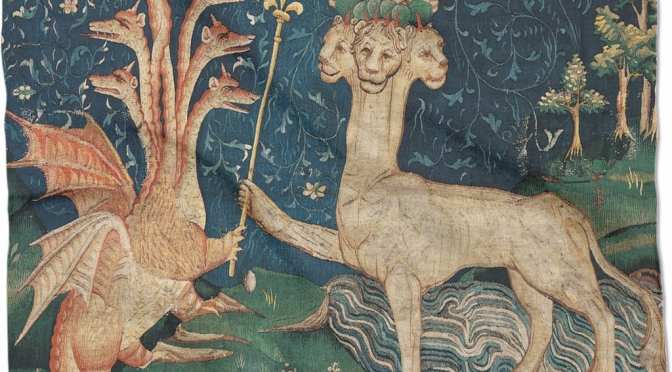
The term “Antichrist” appears only in the letters of John (1 John 2:18, 22; 4:3; 2 John 1:7), where it refers to anyone who denies Christ. However, in Revelation, the Antichrist is depicted as the Beast from the Sea (Revelation 13:1-10), a satanic world leader who:

  • Rises to global power (Revelation 13:7).
  • Performs deceptive miracles (Revelation 13:13-14).
  • Demands worship (Revelation 13:8).
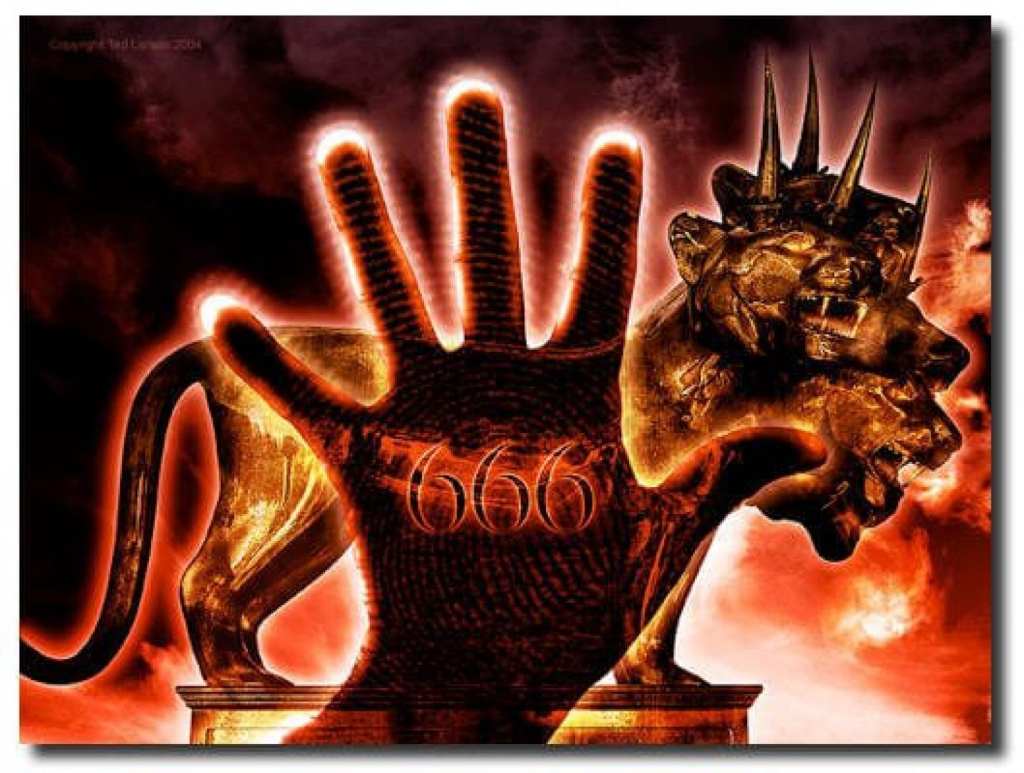
  • Enforces the Mark of the Beast (666) (Revelation 13:16-18).

He is closely tied to the False Prophet (Revelation 19:20), who promotes his agenda, and the Dragon (Satan, Revelation 12:9), who empowers him.

Key Traits of the Antichrist:

  • Charismatic but deceptive (Daniel 8:23-25).
  • A political and religious unifier (Revelation 17:12-13).
  • Persecutes believers (Revelation 13:7).
  • Seeks to replace God (2 Thessalonians 2:3-4).

2. Why Do Christians Fear the Antichrist?

The Antichrist represents the ultimate enemy of Christ and His followers. Here’s why his coming is so terrifying:

A. He Will Deceive the World

  • Jesus warned of “false Christs and false prophets” (Matthew 24:24).
  • The Antichrist will perform lying signs and wonders (2 Thessalonians 2:9-10).

B. He Will Bring Persecution

  • The Bible predicts a time of great tribulation (Matthew 24:21).
  • Many believe Christians will face martyrdom under his rule (Revelation 13:7).

C. He Will Control the Global Economy

  • The Mark of the Beast (666) suggests a financial and spiritual loyalty test (Revelation 13:16-17).
  • Those who refuse will be cut off from buying or selling.

D. He Will Be a Master Manipulator

  • The Antichrist will likely emerge during a time of crisis, offering peace and security (1 Thessalonians 5:3).
  • Many will follow him blindly, believing he is a savior.

3. 5 Historical Figures Once Believed to Be the Antichrist

Throughout history, many leaders have been accused of being the Antichrist. Here are five of the most famous:

1. Nero (Roman Emperor, AD 54-68)

  • Why? Brutally persecuted Christians; some scholars believe “666” (Revelation 13:18) refers to Nero’s name in Hebrew numerology.
  • Connection: The early church saw him as a prototype of the Antichrist.
  • Source: Nero as the Beast – Bible Study

2. Pope Boniface VIII (13th Century)

  • Why? Medieval reformers accused him of blasphemy and corruption, claiming he fit the “man of sin” in 2 Thessalonians 2.
  • Connection: His feud with King Philip IV of France led to accusations of usurping Christ’s authority.
  • Source: Pope Boniface VIII & Antichrist Speculation – History.com

3. Napoleon Bonaparte (19th Century)

  • Why? His military conquests and self-deification (he crowned himself emperor) made many fear he was the Beast.
  • Connection: Some saw his rise and fall as mirroring Revelation’s prophecies.
  • Source: Napoleon and the Antichrist – Christianity Today

4. Adolf Hitler (20th Century)

5. Henry Kissinger (20th Century)

  • Why? His role in global politics and the 1973 oil crisis led some to link him to the “false peacemaker” of Revelation.
  • Connection: Hal Lindsay’s The Late Great Planet Earth suggested Kissinger fit the profile.
  • Source: Kissinger as Antichrist – End Times Speculation

4. 5 Modern Candidates Who Fit the Antichrist Profile

Today, several figures are speculated to be potential Antichrists due to their power, influence, and global reach.

1. Klaus Schwab (World Economic Forum Founder)

  • Why? Promotes “The Great Reset”, a globalist agenda some fear could lead to economic control (Mark of the Beast).
  • Connection: His call for digital IDs and AI governance aligns with fears of a technocratic dictatorship.
  • Source: The Great Reset and Bible Prophecy – Prophecy News Watch

2. Pope Francis (Leader of the Catholic Church)

  • Why? Some Protestants believe the papacy itself is the Antichrist system, citing historic Reformation views.
  • Connection: His interfaith efforts and global influence spark fears of a one-world religion.
  • Source: Is the Pope the Antichrist? – GotQuestions

3. Bill Gates (Tech Billionaire)

  • Why? His desire for world DEpopulation, sketchy history with controversial vaccines, and digital ID raise concerns about the Mark of the Beast.
  • Connection: If digital ID becomes mandatory, could they fulfill Revelation 13?
  • Source: too many to list!

4. Vladimir Putin (Russian President)

  • Why? His imperial ambitions and war in Ukraine fit the “King of the North” prophecy (Daniel 11).
  • Connection: Some believe he could be a precursor to the Antichrist’s rise.
  • Source: Putin in Bible Prophecy – Charisma News

5. A Future AI Superintelligence

  • Why? If AI gains autonomous power, could it become the ultimate deceptive force?
  • Connection: The image of the Beast (Revelation 13:15) might be a digital or AI construct.
  • Source: AI and the Antichrist – WND

5. How Should Christians Respond to Antichrist Speculation?

While it’s fascinating to speculate, the Bible warns against date-setting and paranoia. Instead, Christians should:

  1. Focus on Christ’s Return (Acts 1:7 – “It is not for you to know times or seasons”).
  2. Live Righteously (2 Peter 3:11 – “What sort of people ought you to be?”).
  3. Test All Spirits (1 John 4:1 – Not every leader is the Antichrist).
  4. Share the Gospel (Matthew 24:14 – The end will come after the Gospel is preached to all nations).

Conclusion: The Antichrist Is Coming—But Christ Has Already Won

The Antichrist remains one of the Bible’s most mysterious and feared figures. While history is full of tyrants and deceivers, the true Beast will be uniquely empowered by Satan to lead the world into rebellion against God.

Yet, Christians need not fear: “He who is in you is greater than he who is in the world” (1 John 4:4). No matter who rises to power, Christ will return to destroy the Antichrist and establish His eternal kingdom.

What do you think? Could one of these modern figures be the Antichrist, or is he still to come? Share your thoughts below!


Further Reading:

Scripture References:

  • Revelation 13 – The Beast’s rise.
  • 2 Thessalonians 2:1-12 – The “man of lawlessness.”
  • 1 John 2:18 – Many antichrists, but one ultimate Antichrist.
The Book of Revelation: Why Christians Are Fascinated by Its Mysteries and Prophecies

Introduction

The Book of Revelation, the final book of the Bible, has captivated Christians for nearly 2,000 years. Its vivid imagery, apocalyptic visions, and prophetic warnings about the end of the world have inspired countless interpretations, debates, and even fears. From theologians to conspiracy theorists, people have long sought to decode its symbols—the Four Horsemen, the Antichrist, the Mark of the Beast (666), and the Battle of Armageddon.

In today’s world, with global conflicts, pandemics, economic instability, and rapid technological advancements, many Christians see striking parallels between current events and Revelation’s prophecies. This article explores why Revelation fascinates believers, examines key themes, and considers how modern events might (or might not) align with its predictions.


1. What Is the Book of Revelation?

Authorship and Context

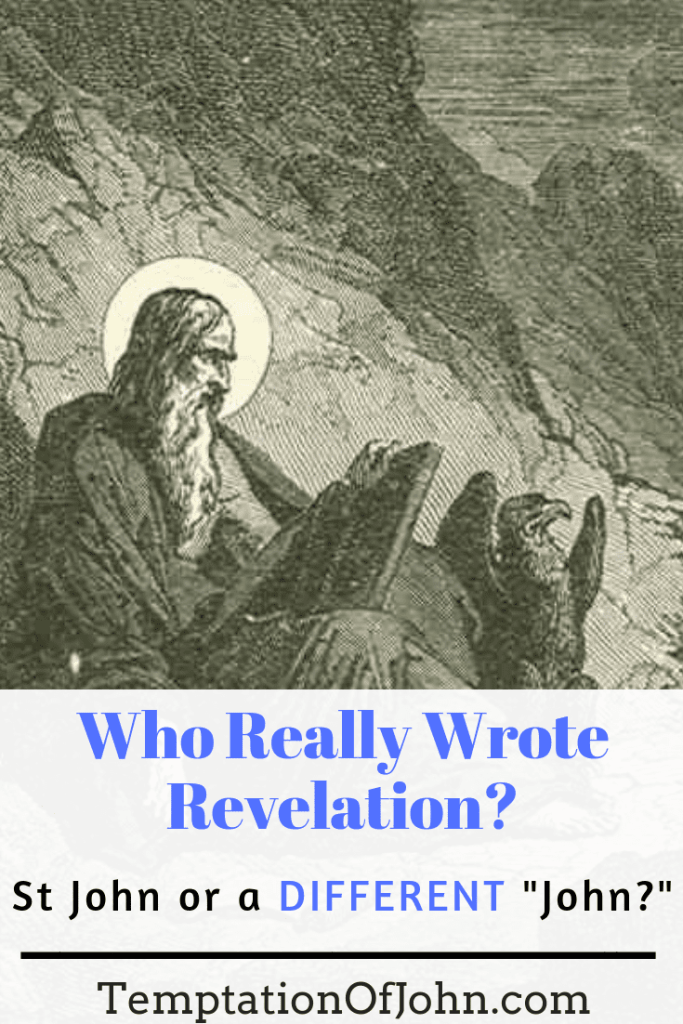
Traditionally attributed to the Apostle John while exiled on the island of Patmos (Revelation 1:9), Revelation is a blend of apocalyptic literature, prophecy, and epistle. Written around AD 95 during Roman persecution, it was meant to encourage suffering Christians with the promise of God’s ultimate victory over evil.

Literary Style

Revelation is highly symbolic, drawing from Old Testament prophets like Daniel, Ezekiel, and Zechariah. Its visions include:

  • The Seven Seals (Revelation 6) – Judgments unleashed on the earth.
  • The Seven Trumpets (Revelation 8-11) – Catastrophic events signaling God’s wrath.
  • The Seven Bowls (Revelation 16) – Final plagues before Christ’s return.
  • The Beast and the False Prophet (Revelation 13) – Figures of deception and tyranny.
  • The New Jerusalem (Revelation 21-22) – The glorious eternal kingdom of God.

2. Why Are Christians So Fascinated by Revelation?

A. The Promise of Ultimate Victory

At its core, Revelation is a book of hope. Despite chaos, evil, and suffering, it assures believers that God wins. Christ returns (Revelation 19), defeats Satan (Revelation 20), and establishes a new heaven and earth (Revelation 21). This promise resonates deeply in times of crisis.

B. The Mystery of Prophecy

Humans are naturally drawn to mysteries, and Revelation is full of them:

  • Who (or what) is the Antichrist?
  • Is the Mark of the Beast (666) a literal mark, or symbolic?
  • When will the Rapture happen? (Though the word “rapture” isn’t in Revelation, many associate it with 1 Thessalonians 4:17.)

This intrigue fuels endless speculation, books, and sermons.

C. The Urgency of the End Times

Jesus said, “Watch therefore, for you do not know the hour” (Matthew 24:42). Many Christians believe we are living in the “last days,” making Revelation feel urgently relevant.


3. Current Events and Revelation’s Prophecies

Could today’s headlines be fulfilling biblical prophecy? Let’s examine some key areas where people see connections.

A. Wars and Rumors of Wars (Revelation 6:1-4)

  • The First Horseman (White Horse) is often seen as false peace or conquest.
  • The Second Horseman (Red Horse) represents war.
    With ongoing conflicts in Ukraine, Israel, and global tensions, some believe we are seeing the precursors to a larger, apocalyptic war (possibly Armageddon, Revelation 16:16).

B. Famine and Economic Collapse (Revelation 6:5-6)

  • The Third Horseman (Black Horse) signifies famine and economic hardship.
  • Rising food shortages, inflation, and supply chain disruptions make this imagery feel eerily relevant.

C. Pestilence and Death (Revelation 6:7-8)

  • The Fourth Horseman (Pale Horse) brings death by “sword, famine, pestilence, and wild beasts.”
  • The COVID-19 pandemic, along with other diseases, has led many to wonder if this is a fulfillment.

D. The Rise of a Global Government (Revelation 13)

  • The Beast (often interpreted as a tyrannical world leader) and the False Prophet (a deceptive religious figure) may point to:
  • Increasing globalism (United Nations, World Economic Forum).
  • Digital currency and surveillance (could this relate to the Mark of the Beast?).

E. The Role of Technology (Revelation 13:16-18)

  • The Mark of the Beast (666) is speculated to be a biometric implant, digital ID, or cryptocurrency.
  • With AI, facial recognition, and cashless societies advancing, some see this as a potential fulfillment.

4. Caution: Should We Try to Predict the End Times?

While it’s tempting to map current events directly onto Revelation, Jesus Himself said:

“But concerning that day and hour no one knows, not even the angels of heaven, nor the Son, but the Father only.” (Matthew 24:36)

Possible Interpretations of Revelation:

  1. Preterist View – Much of Revelation was fulfilled in the 1st century (e.g., fall of Jerusalem, Roman persecution).
  2. Historicist View – Revelation outlines church history up to the present.
  3. Futurist View – Most prophecies are yet to be fulfilled in a literal end-times scenario.
  4. Idealist View – Revelation is symbolic of the ongoing struggle between good and evil.

Balance is key: While we should be aware of the times, we must avoid sensationalism or date-setting.


5. The Ultimate Message of Revelation: Hope in Christ

Despite its terrifying imagery, Revelation’s central message is hope:

  • Christ is coming back (Revelation 22:12).
  • Evil will be judged, and God’s people will be vindicated.
  • A new, perfect world is coming (Revelation 21:4 – “He will wipe away every tear…”).

Rather than fearing the future, Christians are called to:

  • Stay faithful (Revelation 2-3 – Letters to the Churches).
  • Live with urgency, sharing the Gospel.
  • Trust in God’s sovereignty, no matter how chaotic the world becomes.

Conclusion: Why Revelation Matters Today

The Book of Revelation remains fascinating because it speaks to humanity’s deepest fears and hopes. In a world of uncertainty, it offers a divine perspective: God is in control, evil will not triumph, and a glorious future awaits those who trust in Christ.

While we may see shadows of prophecy in today’s events, our focus should not be on decoding every symbol but on living faithfully, watching prayerfully, and proclaiming the Gospel boldly until Christ returns.

Are we in the end times? Maybe. But the real question is: Are we ready?


What do you think? Do current events align with Revelation’s prophecies, or should we be cautious in drawing connections? Share your thoughts in the comments!

Further Reading:

  • The Late Great Planet Earth (Hal Lindsey)
  • Revelation: A Shorter Commentary (G.K. Beale)
  • The Book of Revelation (N.T. Wright’s interpretations)

Scripture References:

  • Revelation 1:1-3 – The blessing of reading Revelation.
  • Revelation 22:20 – “Surely I am coming soon. Amen. Come, Lord Jesus!”

13 Most Famous Verses of Revelation

Verses of Revelation – No study of the Book of Revelation would be complete without diving into the most famous verses from the text. We have another article about the Book of Revelations in a broader sense (discussing the meaning, the key symbols and characters, and even the debate over who really wrote the book), but here the focus is on the actual verses from this legendary book.

Here then are the 13 Most Popular Verses of The Book of Revelation… 

Editor’s Note: The choice of which specific verses are considered the ‘most famous’ was decided by a review of search engine traffic volume as well as cross-references to other respected sites on this topic. Obviously not everyone may agree on the selection of these verses and if YOU have a different verse you’d like to recommend please let us know in the comments. 

Revelation 1: 1-2

Revelation 1: 1-2

“This book is the record of the events that Jesus Christ revealed. God gave him this revelation in order to show to his servants what must happen very soon. Christ made these things known to his servant John by sending his angel to him, and John has told all that he has seen.” 

Gustav Dore’s “John of Patmos”

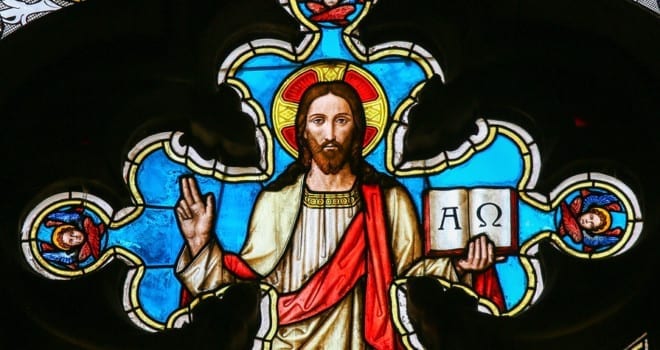
Revelation 1: 8

Revelation 1: 8 

“I am Alpha and Omega, the beginning and the ending, saith the Lord, which is, and which was, and which is to come, the Almighty.”


Revelation 3: 20

Revelation 3: 20

“Here I am! I stand at the door and knock. If anyone hears my voice and opens the door, I will come in and eat with that person, and they with me.”

“Christ at the Door Knocking” by William Holman Hunt c 1853

Revelation 6: 8

Revelation 6: 8

“I looked, and there before me was a pale horse! Its rider was named Death, and Hades was following close behind him. They were given power over a fourth of the earth to kill by sword, famine and plague, and by the wild beasts of the earth.”

Gustav Dore’s Pale Rider

Revelation 6: 12

Revelation 6: 12

“I watched as he opened the sixth seal. There was a great earthquake. The sun turned black like sackcloth made of goat hair, the whole moon turned blood red…”


Revelation 7: 9

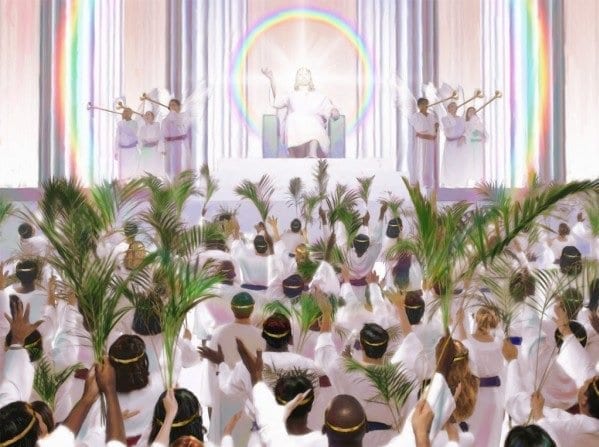
Revelation 7: 9

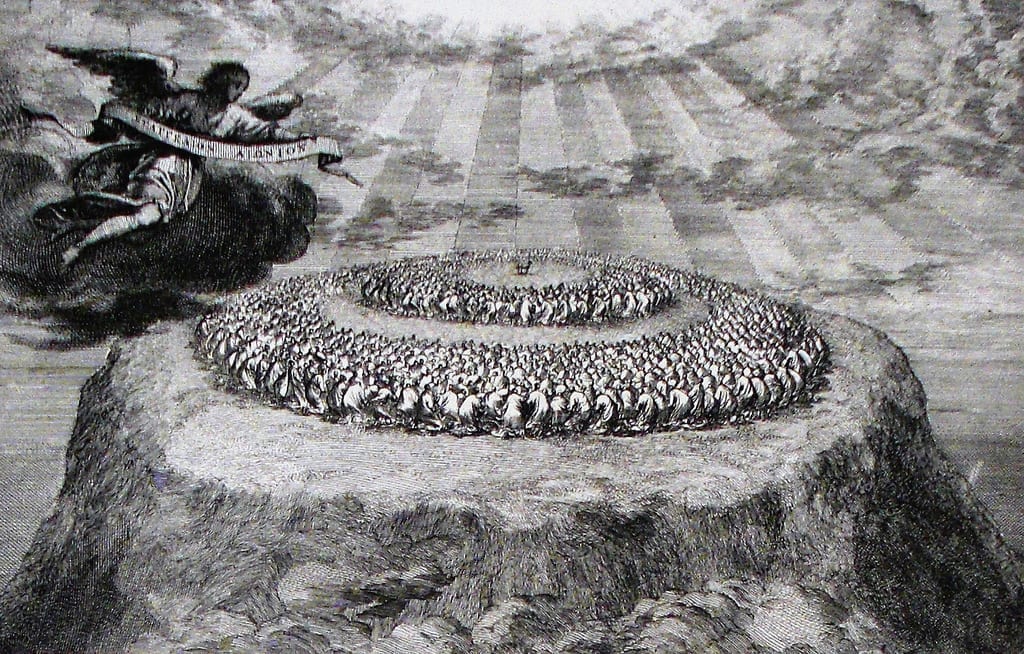
“After this I looked, and there before me was a great multitude that no one could count, from every nation, tribe, people and language, standing before the throne and before the Lamb. They were wearing white robes and were holding palm branches in their hands.”


Revelation 9: 11

Revelation 9: 11

“They had as king over them the angel of the Abyss, whose name in Hebrew is Abaddon and in Greek is Apollyon (that is, Destroyer).”

John Bunyan’s “Christian vs Abaddon” c 1850

Revelation 12: 7-9

Revelations 12: 7-9

“Then war broke out in heaven. Michael and his angels fought against the dragon, and the dragon and his angels fought back. But he was not strong enough, and they lost their place in heaven. The great dragon was hurled down—that ancient serpent called the devil, or Satan, who leads the whole world astray. He was hurled to the earth, and his angels with him.”

Luca Giordano’s “The Fall of the Rebel Angels”

Revelation 13: 1-2

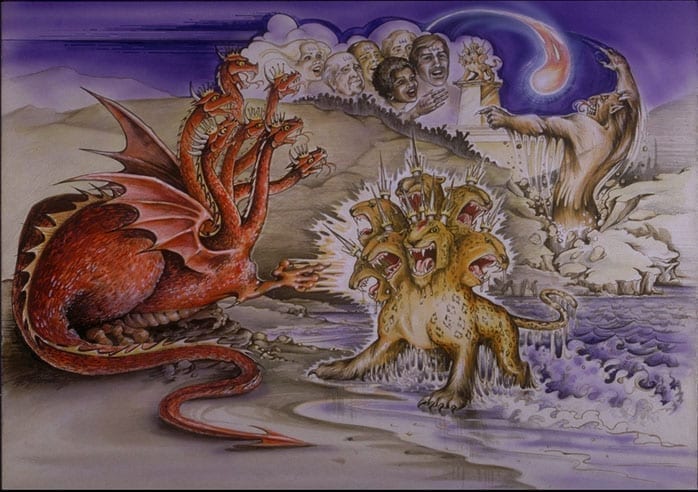
Revelation 13: 1-2

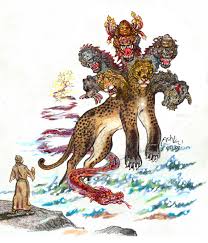
“The dragon stood on the shore of the sea. And I saw a beast coming out of the sea. It had ten horns and seven heads, with ten crowns on its horns, and on each head a blasphemous name. The beast I saw resembled a leopard, but had feet like those of a bear and a mouth like that of a lion. The dragon gave the beast his power and his throne and great authority.”


Revelation 13: 16-18

Revelation 13: 16-18 

“It also forced all people, great and small, rich and poor, free and slave, to receive a mark on their right hands or on their foreheads, so that they could not buy or sell unless they had the mark, which is the name of the beast or the number of its name. This calls for wisdom. Let the person who has insight calculate the number of the beast, for it is the number of a man. That number is 666.” 


Revelation 14: 1

Revelation 14: 1

“Then I looked, and there before me was the Lamb, standing on Mount Zion, and with him 144,000 who had his name and his Father’s name written on their foreheads.”


Revelation 20: 12-15

Revelation 20: 12-15

“And I saw the dead, great and small, standing before the throne, and books were opened. Another book was opened, which is the Book of Life. The dead were judged according to what they had done as recorded in the books. The sea gave up the dead that were in it, and death and Hades gave up the dead that were in them, and each person was judged according to what they had done. Then death and Hades were thrown into the lake of fire. The lake of fire is the second death. Anyone whose name was not found written in the Book of Life was thrown into the lake of fire.”


Revelation 21: 1-4

Revelation 21: 1-4 

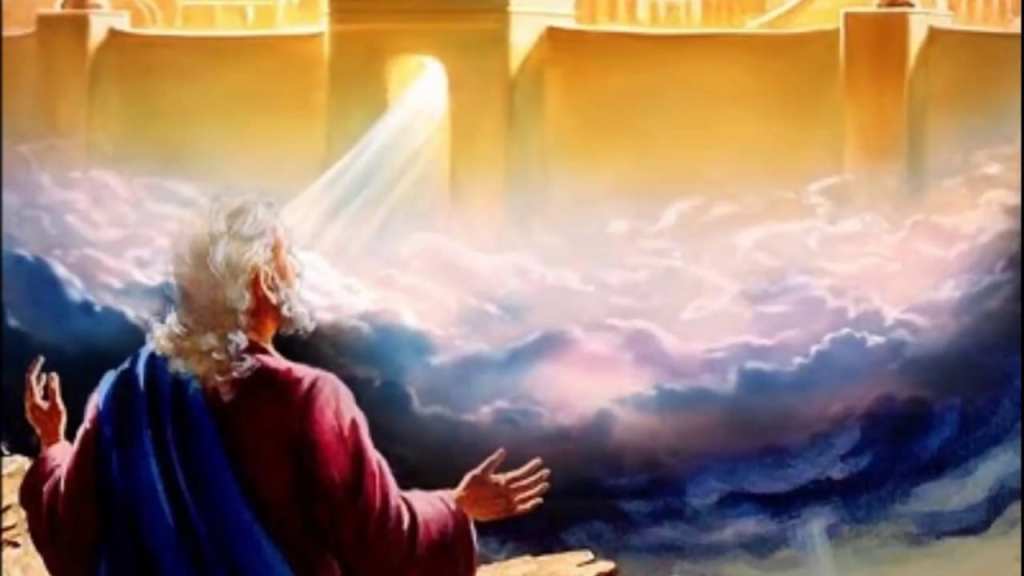
“Then I saw a new heaven and a new earth, for the first heaven and the first earth had passed away, and there was no longer any sea. I saw the Holy City, the new Jerusalem, coming down out of heaven from God, prepared as a bride beautifully dressed for her husband. And I heard a loud voice from the throne saying, ‘Look! God’s dwelling place is now among the people, and he will dwell with them. They will be his people, and God himself will be with them and be their God. He will wipe every tear from their eyes. There will be no more death, or mourning or crying or pain, for the old order of things has passed away’.”


You May Also Like


The AntiChrist is Here – Today?

What if the events detailed in The Book of Revelation were about to occur… this year?

Could anyone save us from certain death? The answer is YES. Hard as it may be to believe, St. John the Apostle is still alive today – having been blessed with the Gift of Immortality so that he could survive to fight against the coming of The Antichrist. Unfortunately, over the course of the last 2,000 years John has lost is faith!

Can John recover his faith in time to stop Armageddon or will Satan’s Son achieve Ultimate Victory? The answer to that question and many more will be revealed in the thrilling new book series The Last TeLastTemptationofJohn-Bk1mptation of John.

Read it the trilogy today… if your faith is strong enough.