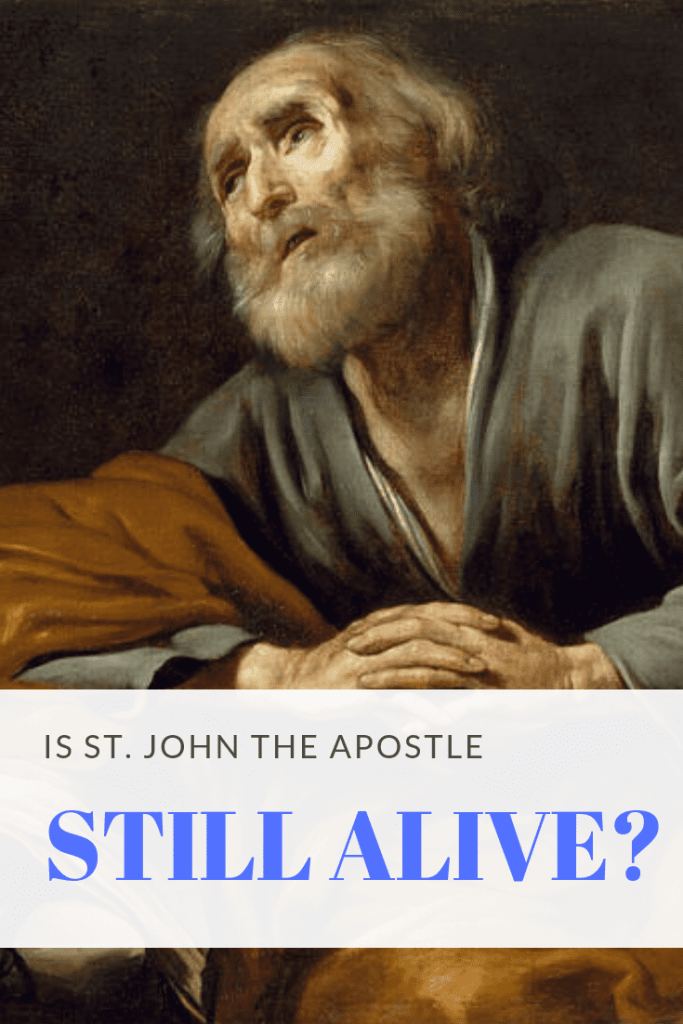
Is St. John Still Alive? It’s a question that’s been asked by Christians for nearly 2,000 years.
In this article, we’ll examine what caused this legend to start, talk about the evidence that supports it, discuss the possibility that John is immortal (and why), and also talk about how Saint John died (assuming he did) and where John’s tomb is. Finally, (for those that think John is still alive) we’ll also talk about what his mission may be.
Did Saint John die? That, my friends is the question. Now let’s get some answers!
1. Who was John of Salome?
John, the younger brother of James,son of Zebedee and Salome, was a fishermen in Galilee during the time of Jesus Christ’s missionary work. Together with his brother, John was one of the first persons called by Jesus to join his group of disciples. John and his brother went on to become part of Jesus’s inner circle, were named as two of the legendary Twelve Apostles, and after Jesus’s death and resurrection, John, James, and others went on to change the world by creating and spreading the new faith of Christianity.
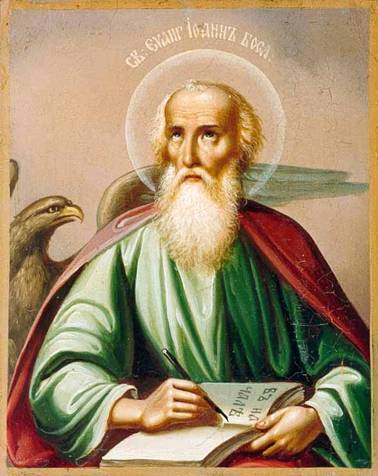
As for John himself, he is credited with writing The Gospel of John, the two Epistles of John, and the Book of Revelation that are all part of the accepted canon of The Bible we have today. His writing and evangelical work throughout Palestine and Rome caused untold numbers to convert to Christianity and the fruits of his labors are beyond measure.
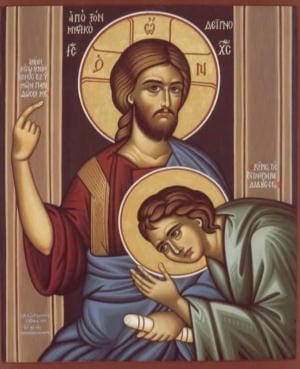
Always close to Jesus, John is often pictured near Christ in classic art and in The Bible he is repeatedly mentioned as one of the three apostles (along with his brother James and Peter) who were the closest associates of Jesus. Because of his favoritism by Jesus, John was known as John the Beloved.
In fact, John became so famous in Christian lore that he picked up a slew of other monikers over the years. He and his brother James were called Boangeres which translated to ‘sons of thunder’ because of their alleged quick tempers. John himself was also known by many other names including: John of Zebedee, John the Revelator, John the Divine, and John the Theologian. It’s possible he was also the same person as the Christian writers known as John the Evangelist,John the Presbyter, and John the Elder. As the accepted author of Revelation, he is also presumed to be John of Patmos. And, as is most relevant to this article, he was (is?) sometimes called Saint John the Immortal.
“Saint” John
For all his efforts, John of Salome was one of the first ‘saints’ of the Christian Faith. Because he was made a saint during the early days of the religion (pre-congregation) we don’t have records that tell us the day he was made a saint, however we do know his Feast Days.
For Catholics and Western Christians, the Feast of St John is December 27. For Eastern Orthodox Christians, he is celebrated on September 26.
2. Why Do People Believe John Didn’t Die?
Saint John – the ‘beloved’ apostle of Jesus who was allegedly responsible for writing multiple books of the Bible and instrumental in helping to get the Christian Religion started.
You mean the guy that lived over 2,000 years ago? You want me to believe he is still alive today?
Actually – YES.
And before you say preposterous, I would respectfully ask that you at least consider the EVIDENCE in favor of this claim.
3. Evidence from Christian Literature Supporting St. John’s Immortality
Perhaps the most respected evidence that supports the possibility that Apostle John may still be alive today comes to us from the Gospel of John.
Here the author himself wrote about his potential immortality in John, Chapter 21: 21-23.
In this scene, Peter is talking to Jesus after his resurrection and John is following them at a distance. Jesus has just told Peter about the latter’s manner of death. Peter then asks how John will die. To which Jesus responds…
“If I want John to remain alive until I return, what is that to you? You must follow me.”
John 21:21-23 was such a powerful case for the immortality of John that allegedly even the other apostles and Jesus’ disciples at that time believed St. John would not die and that instead John would remain alive until Jesus’ Second Coming.
II. Book of The Mormon
Further evidence about the possibility that St. John is still alive comes from the Book of Mormon, Chapter 28: 4-7.
(Editor’s Note: I am not a Mormon nor am I here to debate the worthiness of the Mormon religion, I’m simply giving you applicable verbiage that relates to the subject at hand – AKA that St John may still be alive today. You can make your own decisions).
With an open mind, consider these verses in which Jesus is speaking directly to the other disciples about John…
“…Blessed is John, for he shall never taste of death; but he shall live to behold all the doings of the Father unto the children of men, even until all things shall be fulfilled according to the will of the Father, when I shall come in my glory with the powers of heaven. And he shall never endure the pains of death; but when I shall come in my glory he shall be changed in the twinkling of an eye from mortality to immortality; and then shall he be blessed in the kingdom of my Father.”
III. Doctrine and Covenants
Additional evidence that Apostle John is still alive comes from another Mormon text — the Doctrine and Covenants, Section 7: 1-3.
Once more it’s a scene in which Jesus is talking to Peter and John and we get more verbiage from Jesus himself that he wants John to remain alive until he returns.
Consider for yourself this alleged conversation between Jesus and his beloved apostle John which is clearly an expansion of the text from the Gospel of John: 21-23. As with John’s Gospel, the scene is told from the point of view of the author which is again St. John himself…
“And the Lord said unto me: John, my beloved, what desirest thou? For if you shall ask what you will, it shall be granted unto you.”
And I said unto him: “Lord, give unto me power over death, that I may live and bring souls unto thee.”
And the Lord said unto me: “Verily, verily, I say unto thee, because thou desirest this thou shalt tarry until I come in my glory, and shalt prophesy before nations, kindreds, tongues and people.”
And for this cause the Lord also said unto Peter: “If I will that he tarry till I come again, what is that to thee? For he desired of me that he might bring souls unto me, but thou desiredst that thou mightest speedily come unto me in my kingdom. I say unto thee, Peter, this was a good desire; but my beloved John has desired that he might do more, or a greater work yet among men than what he has before done. Yea, he has undertaken a greater work; therefore I will make him as flaming fire and a ministering angel; he shall minister for those who shall be heirs of salvation who dwell on the earth…”
John’s Gospel of The Secret Supper, which is filled with blockbuster revelations about numerous topics and it is so salacious that , I’ll leave it to you to discover one on your own.
You can get a copy of The Gospel of The Secret Supper in The Gnostic Bible. The Gospel of the Secret Supper is located in Section Seven – Cathar Literature.
Beyond just John’s apocryphal text, the Gnostic Bible is a massive, 800-page book that includes gnostic texts such as the Gospel of Thomas, the Gospel of Judas, and the highly heretical Reality of the Rulers that attempts to turn the story of Genesis upside down. If you decide to buy it – you’ve been warned.
4. Why is Apostle John Still Alive? Are there other immortals too?
I’ve been pondering the question of John’s immortality for years. Asking questions such as…
If Jesus made the Apostle John immortal what is John doing now?
How would John feel about being stuck on this world for over 2,000 years?
Why did Jesus want John to remain alive until the Second Coming? What is John’s secret mission?
Are there other people who Jesus made immortal too?
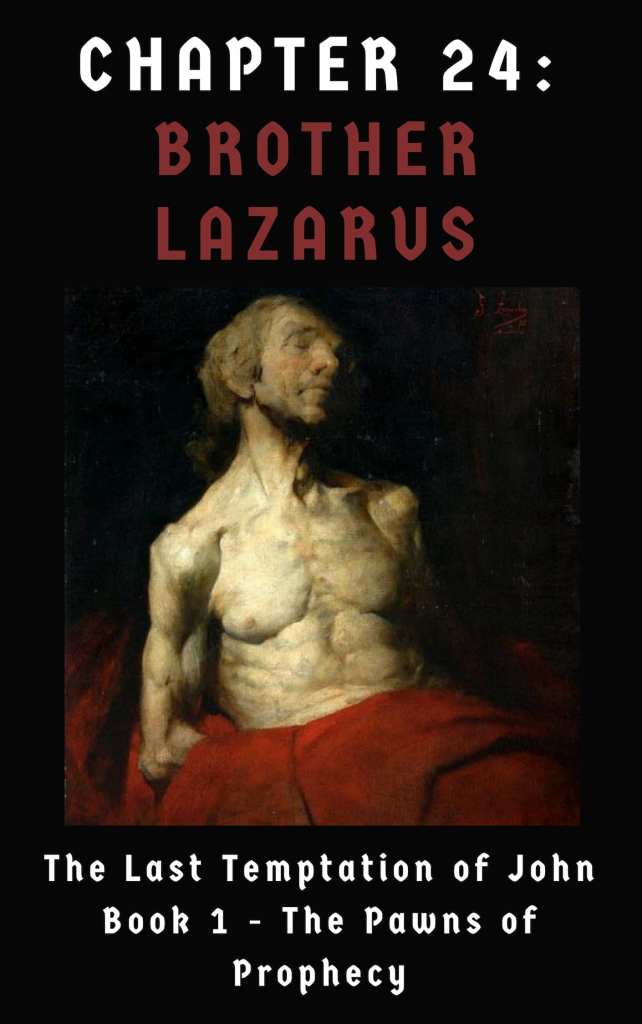
If Jesus raised Lazarus from the dead, how did Lazarus die again?
Whatever happened to Mary Magdalene? Is she immortal too?
The more I explored these questions, the more convinced I became enamored by the idea that not only was St. John alive but that maybe Lazarus and Mary were too. I became so inspired by the possibility of it all that I wrote a FICTIONAL “What If?” story about it.
So what would John’s story be if he was alive today?
Let’s find out…
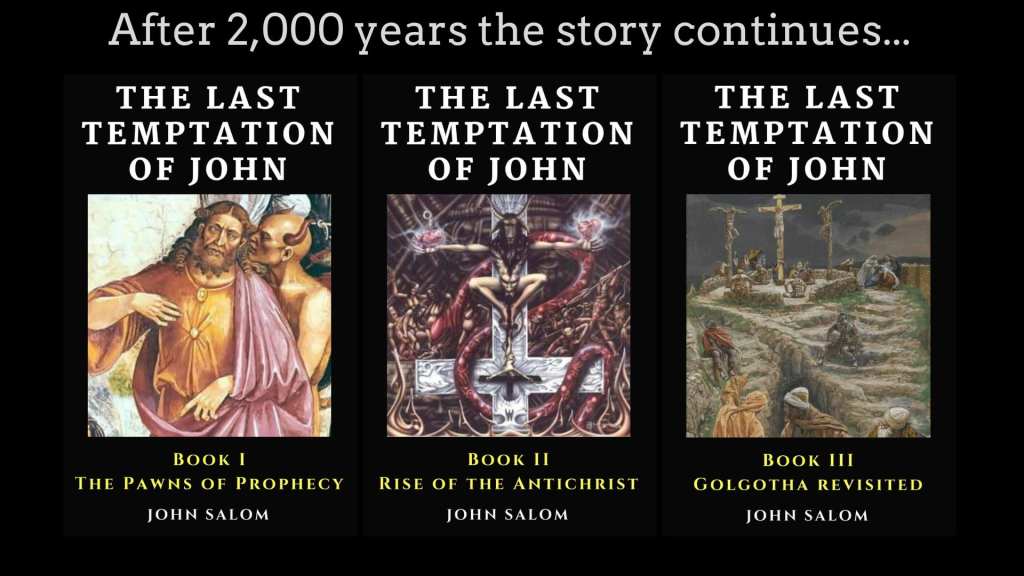
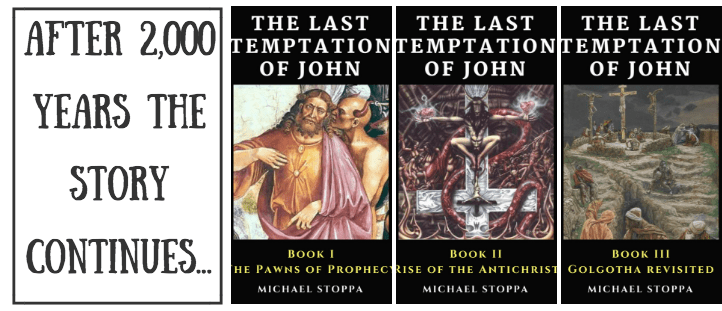
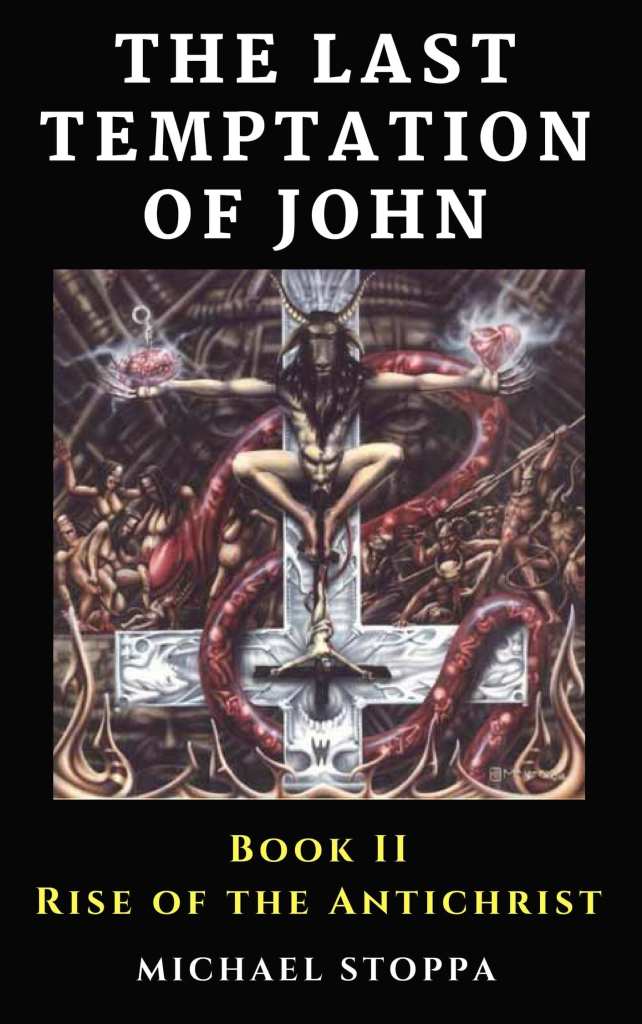
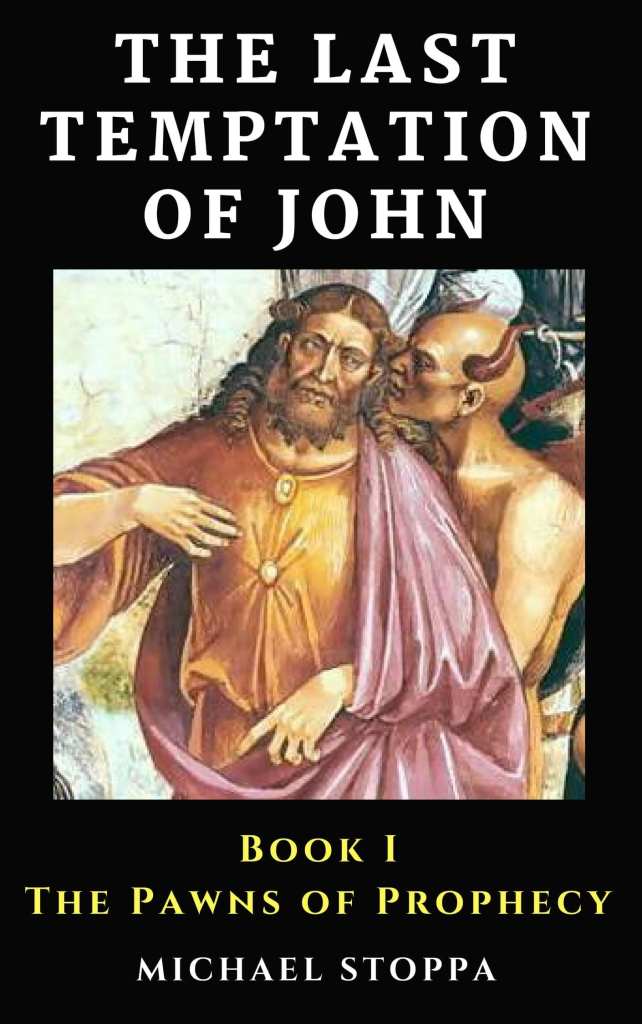
The Last Temptation of John – Book Summary
The Antichrist has come.What if the events detailed in The Book of Revelations were about to occur… this year?
Could anyone save us from certain death? The answer is YES. Hard as it may be to believe, St. John the Apostle is still alive today – having been blessed with the Gift of Immortality so that he could survive to fight against the coming of The Antichrist. Unfortunately, over the course of the last 2,000 years John has lost is faith!
Can John recover his faith in time to stop Armageddon or will Satan’s Son achieve Ultimate Victory? The answer to that question and many more will be revealed in the thrilling new book series The Last Temptation of John.
Read the trilogy today… if your faith is strong enough. If nothing else, assuming you have a sense of humor, it’s good for a few laughs. 🙂
5. How did Apostle John Die?
Well obviously if the events detailed in my book The Last Temptation of John are true (and the Antichrist has risen) then we’re hoping St. Johh did NOT die, right? After all, if the horrific events detailed in John’s Book of Revelation are about to occur today then we need St. John and his fellow immortals to fight on our behalf!
And if nothing else, the possibility that Apostle John is still alive today makes for an interesting subject for a book, neh? 🙂
But for those of you who don’t buy St. John’s immortality and you believed he died and is buried, then perhaps you’ll enjoy this…
The inscription on his tomb where Saint John is (allegedly) buried…
Then again, how do we know if John is actually inside? 🙂
6. Links to Learn More
I’m certainly not the only person to write about the possibility that Apostle John may still be alive today. Here are various references to learn more about the topic – some present arguments in favor of John being immortal, others argue against it. I’ll leave to YOU to decide for yourself.
Alchemy – is it a science, a religion, a philosophy, or… something more?
In this Guide to Alchemy, we’ll explore the definition of Alchemy and talk about alchemy’s influence on science, religion, medicine, and beyond. We’ll also look at some of more popular symbols of alchemy, the Alchemical Elements, and review books about alchemy by famous alchemists. Finally we’ll review how alchemy fits into the world created by author John Salom’s for his Last Temptation of John books.
1. Alchemy Definition
Definitions of Alchemy are as varied as the concept itself. Here are some of the more popular ways to define alchemy.
1-Cambridge defines alchemy as “a type of chemistry, especially in the Middle Ages, that dealt with trying to find a way to change ordinary metals into gold and with trying to find a medicine that would cure any disease.” It’s interesting that such a prestigious organization would give us the most basic of definitions – one wonders, is the renowned university misdirecting us from the real purpose of Alchemy? 🙂
2. Miriam Webster takes things a bit further, giving the definition of alchemy as “a medieval chemical science and speculative philosophy aiming to achieve the transmutation of the base metals into gold, the discovery of a universal cure for disease, and the discovery of a means of indefinitely prolonging life. Alchemy is also a power or process that changes or transforms something in a mysterious or impressive way (or) an inexplicable or mysterious transmuting.”
3. Wikipedia gives us even more nuance: “Alchemy (from Arabic: al-kīmiyā) was an ancient branch of natural philosophy, a philosophical and protoscientific tradition practiced throughout Europe, Africa, and Asia, originating in Hellenistic Egypt (primarily Alexandria) between the 4th and 3rd centuries BCE. It aims to purify, mature, and perfect certain objects.” Keep in mind that the ‘objects’ that were sought to be perfected could be the human body, mind, and spirit.
Interesting Note: In the Last Temptation of John Books, the character John claims to have studied alchemy for over 1,700 years.
2. Origins of Alchemy
When readers from the Western World think about Alchemy it’s typically the branch of alchemy that was practiced during the Medieval Age of European History – the branch usually associated with the alchemical goal of using the Philosopher’s Stone to try to turn lead into gold. And yet, the origins of alchemy go back MUCH farther and the goals are much deeper.
In fact it is suspected that there are at least THREE different branches of alchemy that (allegedly) developed independently across the globe – in China, in India, and in the Mediterranean areas of the Middle East and Europe. I say ‘allegedly’ developed independently because when you delve deeper into the respective goals of each of these branches certain similar threads start to become apparent which causes one to at least have to wonder if perhaps there is a connection to a common source for the true origin of alchemy for all branches – AKA the roots of an Alchemy Tree that produced the various branches of alchemy we know today.
Alchemy in China
Numeroussources point to the beginning of alchemy in China around the 4th or 5th century BC. Whereas the overt purpose of Western Alchemy was the transmutation of base metals into gold, Chinese Alchemy is reported to have been more focused on the overt goal of finding the Grand Elixir of Immortality. And while Chinese alchemists did apparently seek ways to turn base metals into gold, but it wasn’t necessarily to use the gold for wealth, instead they used the gold as part of their quest for immortality by INGESTING the metal. In fact, Chinese alchemists and their followers ingested various metals, stones, and other substances (mercury, jade, cinnabar, sulpher, arsenic, etc) in an attempt to find the long sought after Elixir of Immortality – drinkable gold was high on their desired list because it was a non-tarnishing material that was believed to keep the body in a pure state. As you might imagine, drinking all these toxic substances led to numerous cases of “Chinese Alchemical Elixir Poisoning” and as such the practice eventually faded from the main stream of the science.
Chinese alchemy developed deep roots with Taoism and the mastery of the Qi energy source as well as the obvious associations with Chinese medicines.
Chinese alchemists are credited with having a hand in the development of black powder (i.e gunpowder), fireworks, and associated with acupuncture and moxibustion, in addition to the ever continuing quest for longevity.
Alchemy in India
It’s harder to pinpoint when alchemy originated in the Indian subcontinent of Asia – with some sources pointing as far back as 1500 BC, others to the 4th Century BC and others not until the Common Era, but most tend to agree that alchemy in India was closely tied to the Hindu Religion, the concept of Rasa (fluid, juice, essence/sap of life), and a focus on transmuting various substances in order to ingest them as forms of Elixers of Life in order to purify the mind and body via the concept of Rasayana (the path of the essence of life). There are deep connections to the Sanskrit and the god Shiva and goddess Devi. Mercury, sulfur, and gold were part of the Indian alchemy system along with many other substances and compounds.
Alchemy in the Mediterranean (Middle East and Europe) – AKA “Western Alchemy”
Most people reading this will probably be familiar with Western Alchemy since that has featured prominently in western literature. This form of alchemy is said to have originated in Babylonia or Egypt around 2,000 BC, or perhaps Greece in the 6th Century BC or Hellenistic Egypt in the 4th century BC and that it then spread outward to the Middle East and Europe (with some speculation that this form also spread to India and Asia as well as the root form but others that alchemy in India and Asia developed independently of the Greek/Egyptian form). Regardless of when it originated (which I believe was even earlier than 2,000 BC because of various conspiracy theories I buy in to), Western Alchemy continues to captivate us.
With a deep connection to Hermeticism and that philosophy’s focus on the relationships between the Divine, the Cosmos, the Mind, and Nature, Western Alchemy is most often associated with Metallurgy, the manipulation of the Classical Elements (Earth, Air, Fire, Water, and Aethyr), the use of the Philosopher’s Stone to trasmutate base metals into gold (although I believe this was a ruse to divert attention away from the true goal of the Philospher’s Stone), and the pursuit of perfecting the Magnus Opum (connecting the Soul to the Divine).
In the Last Temptation of John books, we know John lived all over the world under a variety of (famous) alchemy identities. This also includes spending over 200 years in India during one of the peaks of that country’s highest highs in alchemy knowledge. Although we don’t know about the identities John lived under in India or China, we do know about those personas he assumed in and around the Mediterranean alchemy world – see below to learn more.
3. Alchemy as a Science
Alchemy can be seen as a science for numerous reasons. To begin with many of the world’s first chemists, doctors, and philosophers were also alchemists. Numerous references consider alchemy as the precursor to modern chemist (remember alchemy had it’s own periodic-style chart of elements), as a form of protochemistry (alchemy was one of the first sciences to consistently use laboratory experiments working with chemical substances), and as being focused on the quest for purity (for example the transmutation of lead into gold) via the use of the scientific method of experimentation.
If science is the focus on the ‘body’ of alchemy, and philosophy is its spirit, then the religion of alchemy is its soul. Those who took the philosophy of alchemy to the next level, made alchemy their de facto religion – seeking to use alchemy not just to reach their highest potential, but to become and, dare I say, even to absolve themselves of the stain of Original Sin. Alchemists often talk of the soul having been divided by the Fall. One sources claiming that alchemists believed that “only by purifying [oneself] could he find that divine spark within oneself and accepting it as a part of their existence [and] be reunited with God.”
In fact it’s suspected by some that the popular belief that alchemy’s main goal was to turn lead into goal was in fact nothing more than a ruse to protect alchemist’s from their true goal – “the transformation of man from his natural evils into a partaker of the Divine.” Why the ruse? Remember, for Western Alchemy at least, much of the area and era during which they lived was controlled by the Catholic Church – an entity that jealously guarded its control over the hearts and minds of the people that made up their congregations and often viciously persecuted anyone who threatened their jurisdiction (see. The Inquisition of Alchemists) – by using a bit of misdirection and making The Church believe they were trying to merely turn lead into gold (and undoubtedly promising to donate a portion of the proceeds), alchemists deflected spying eyes from their true purposes.
Interesting Note: In the Last Temptation of John books, the main character is none other than the Apostle John who has been ‘cursed’ (his words) with immortality. John has lost his original faith (Judaism) and worked through many others (Christianity, Catharism, etc), only to be continually disappointed. During his long life, John has worked the craft of Alchemy for over 1700 years – exploring its many facets as a philosophy, science, and ultimately as his religion – although his goals involving the ‘higher concepts’ of alchemy are a bit different than what you’ve read about here…
6. Key Concepts in Alchemy
I. Hermeticism (AKA “Hermetism”)
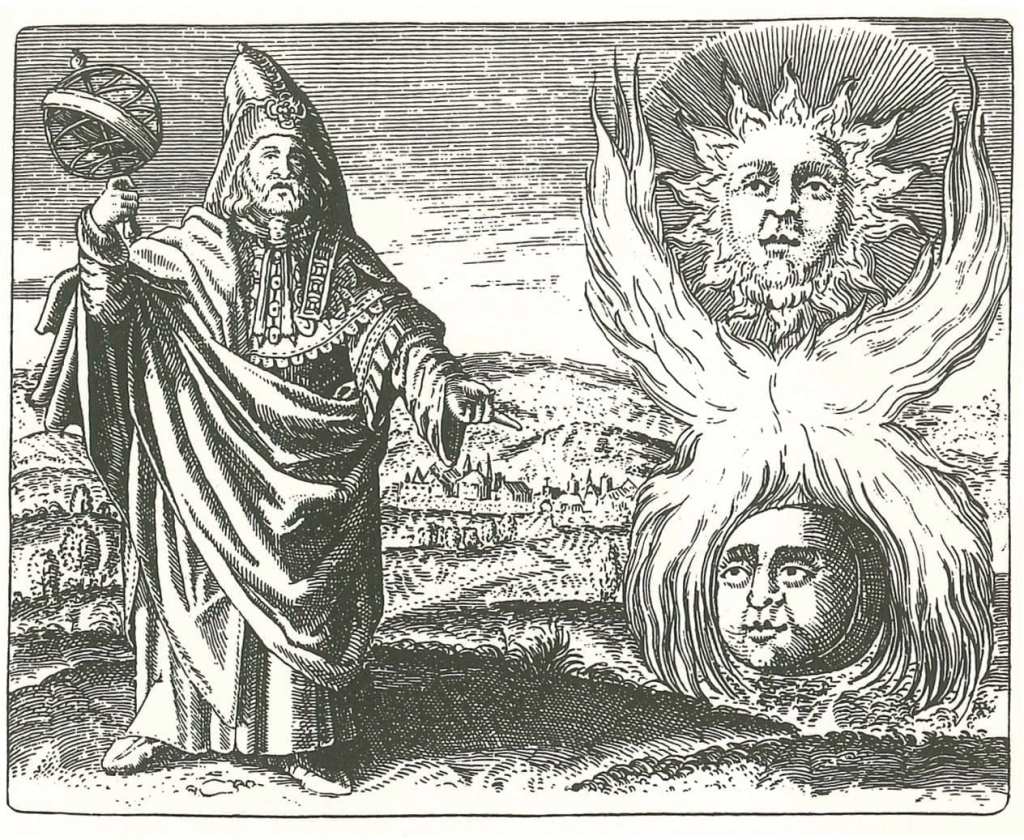
Earlier we asked the question about Alchemy – “is it a religion, a philosophy, or something else?” and the same could be said of Hermeticism. We’ll called it a theology since its followers called it the “Prisca Theologia” (claiming that Hermeticisism is one true theology which threads through all religions, and that it was given directly by God to ancient man”). Hermetism is based on the teachings of the mystical Hermes Trismegistus, a figure whose history is just as mysterious as the theology he started – is Hermes Trismegistus a mortal man, a god, a combination of god + man, a combo of multiple gods (namely the Greek God Hermes and the Egyptian god Thoth), or something altogether different (ancient alien perhaps? Haha)? There is no clear answer to that question and we don’t really know when Hermes Trismegistus even lived (some claiming that he was a contemporary or even a teacher of the Jewish Patriarch Abraham which, if true, would date him about 2500 years before Christ).
Regardless of these mysteries, let’s focus on the teaching of Hermes Trismegistus that became the pillars of the hermetic theology. Hermeticism is a vast expanse of knowledge but for our purposes we’ll hone in on this overarching concept…
“There is a transcendent God, or Absolute, in which we and the entire universe participate” and that man can learn how to purify nature (and thereby himself) such that he can become one with “The All.”
A complete discussion of Hermeticism is clearly beyond the scope of this article (after all Hermes Trismegistus is credited with over 10,000 texts to his name!), but as relates to Hermetic Alchemy we should touch on a few more key concepts:
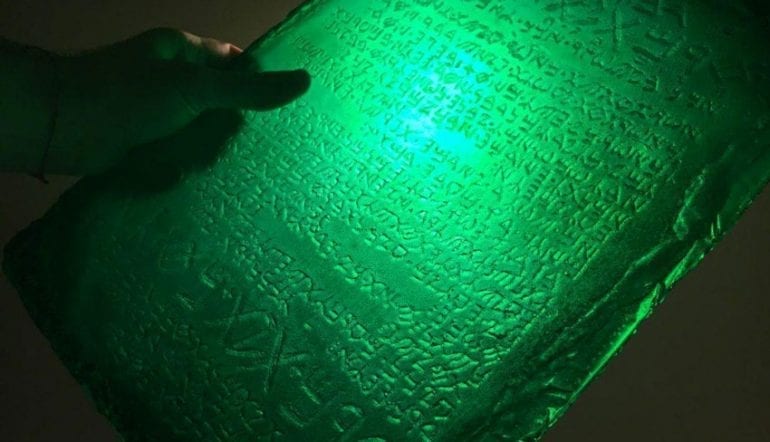
a. The Emerald Tablet: (AKA “Tabula Smaragdina”) reported to be the source of the philosophical phrase “As Above, So Below…”
The Emerald Tablet (as translated by Sir Isaac Newton) reads:
Tis true without lying, certain & most true. That which is below is like that which is above & that which is above is like that which is below to do the miracles of one only thing And as all things have been & arose from one by the meditation of one: so all things have their birth from this one thing by adaptation. The Sun is its father, the moon its mother, the wind hath carried it in its belly, the earth is its nurse. The father of all perfection in the whole world is here. Its force or power is entire if it be converted into earth. Separate thou the earth from the fire, the subtle from the gross sweetly with great industry. It ascends from the earth to the heaven & again it descends to the earth & receives the force of things superior & inferior. By this means you shall have the glory of the whole world & thereby all obscurity shall fly from you. Its force is above all force. For it vanquishes every subtle thing & penetrates every solid thing. So was the world created. From this are & do come admirable adaptations whereof the means (or process) is here in this. Hence I am called Hermes Trismegist, having the three parts of the philosophy of the whole world That which I have said of the operation of the Sun is accomplished & ended.
b. Corpus Hermeticum
An 18-chapter sacred text of the Hermetic Religion – it is purported to document a dialogue between God and Hermes in which God shares His wisdom with Hermes who in turn shares it with his followers.
c. The 3 Parts of the Wisdom of the Universe
A hermetic practitioner seeks to learn how to perfect 3 “crafts.” These are:
The Craft of Alchemy (the operation of the Sun).
The Craft of Astrology (the operation of the Stars).
The Craft of Theurgy (the operation of the gods AKA ‘magic’).
The perfection of these three crafts is thought to grant the hermetic all the wisdom of the universe, which, when known is believed to open the door for the practitioner to attain a higher consciousness and ultimately achieve a Oneness with The Divine.
Such is the ultimate goal of The Great Work (see below).
Interesting Note: In the Last Temptation of John books, we know John has used The Emerald Tablet, but not much is said about Hermes Trimegistus, the Corpus Hermeticum, or the Wisdom of the Universe.
Or so the legend goes – but is there really more to the Philosopher’s Stone than just the promise of untold riches?
Consider for yourself…
The Philosopher’s Stone was also known as The Stone of the Philosopher’s, Materia Prima, Lapis Philosophorum, The White Stone by the River,Chrysopoeia, Magisterium, Spiritus Mundi, Stone of the Wise, Diamond of Perfection, and even The Sword in the Stone.
It’s true that the Philosopher’s Stone was most famous for it’s supposed function of turning BASE metals (lead, iron, tin, copper, mercury) into PRECIOUS metals (silver and gold) – at least that’s what alchemists told non-alchemists.
Remember, many alchemists (particularly in Europe during the Middle Ages) practiced their craft under the baleful eye of The Catholic Church. Telling the ever-hungry-for-money Church that they could one day offer them untold amounts of silver and gold allowed alchemists to pursue their experiments (and hide their possible true intention for using The Stone).
In fact, many people now suspect that the real purpose of the Philosopher’s Stone was to…
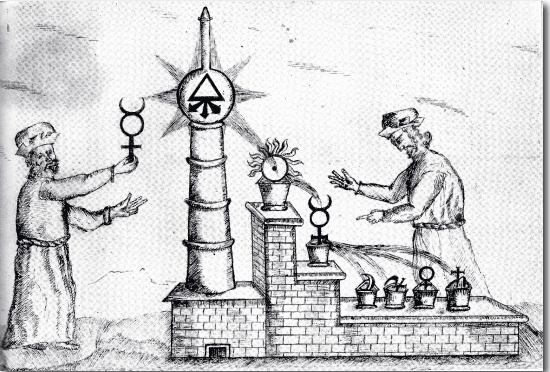
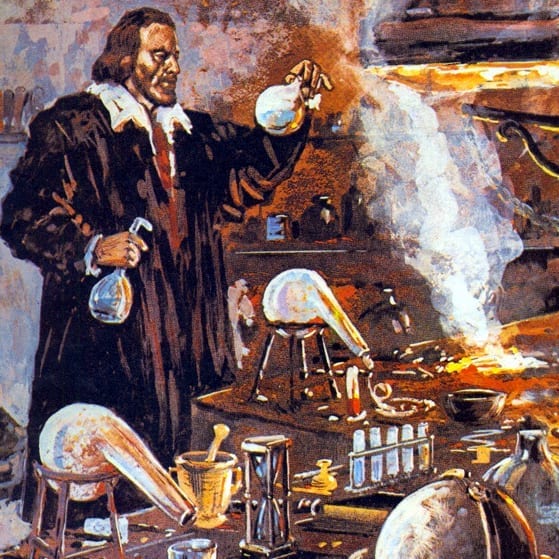
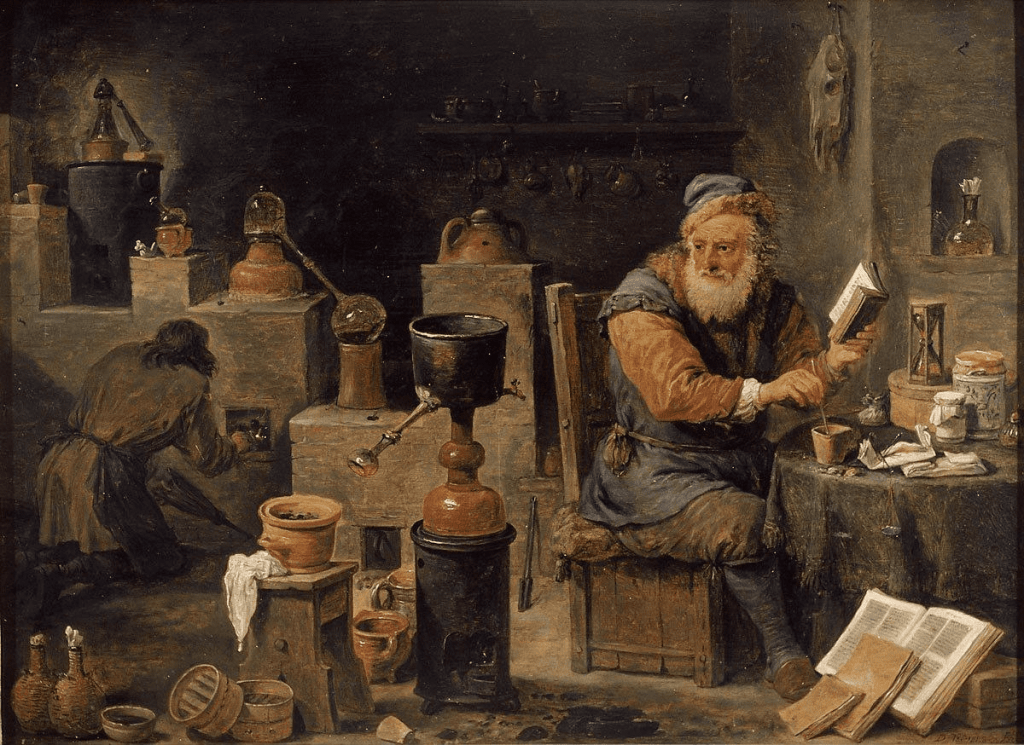
Featured here is Mr. Hauck’s drawing of the alchemist’s workshop in which the Philosopher’s Stone is setup.
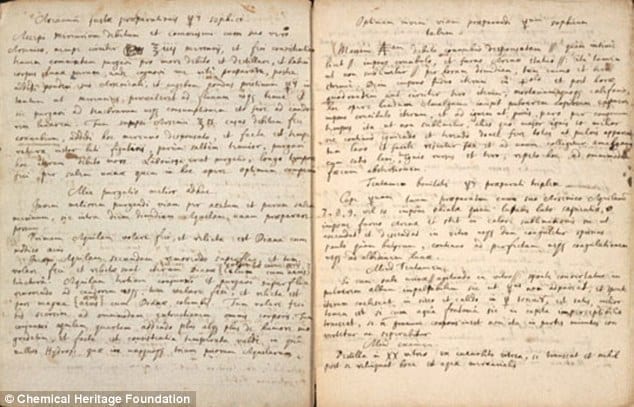
Meanwhile, if you’re interested in trying to create the Philosopher’s Stone for yourself, here is a copy of Isaac Newton’s manuscript on the topic. (BTW, you knew Isaac Newton was an alchemist, right?)
Interesting Note: In the Last Temptation of John books, the main character (John the Apostle) gives a rather extended dialogue about the real purpose of the Philosopher’s Stone – confirming some of the details above, while dispelling other myths. On one hand, John’s use of the Philosopher’s Stone has filled his coffers with untold riches, and yet he has continued to remain disappointed in it to this day.
2. Alkahest vs Azoth
Although sometimes taken to mean the same thing, a closer look reveals that Alkahest and Azoth are in fact quite different alchemical agents.
Alkahest Alkahest was the ‘universal solvent’ used in alchemy. The purpose of alkahest was that is had the power to DISSOLVE any other substance – including gold.
Key contributors to the development of the use of alkahest within alchemy were Paracelsus (legend has it that Paracelsus came up with the term “Alkahest” and who is said to have believed that alkahest was actually the Philosopher’s Stone) and his successor Franciscus Mercurius van Helmont (who developed the concept of Liquor Alkahest).
The challenge with trying to make an alkahest was that most versions of it turned out to be such powerful solvents that they apparently dissolved everything – which was a problem… at least for amateur alchemists.
The mystery surrounding alkahest (and perhaps it’s true key to alchemy’s higher goals) lies in this: from the chemical standpoint, the true ‘universal’ solvent was purported to be WATER (since, over time, it can dissolve anything back to it’s base form) and from a metaphysical standpoint, there is an alkahest (substance only known to alchemy masters) which can dissolve the body’s ailments and deliver eternal life (AKA The Elixir of Life).
Azoth Not to be confused with Alkahest, Azoth is in fact far different. Although it’s true that both were reported to be universal medications, the process by which they accomplished this goal is the key to understanding their differences. Whereas alkahest was the universal SOLVENT, azoth was the universal TRANSFORMER.
A discussion of azoth goes far deeper into metaphysics than alkahest. Like the latter, azoth is also associated with the Philosopher’s Stone and the Elixir of Life, but unlike alkahest, azoth has a far richer history (dating back to the time of the early alchemists like Zosimos of Panopolis and Mary the Prophetess).
Azoth is in fact associated with all of these higher goals in alchemy:
a. The Kaballah concept of Schamayim (שמים) which is “the first outflow of the Word of God” that becomes the Water of Life (AKA Azoth) which in turn “pours itself into the Four Elements.” Of these elements, Edem (vaporous essence or mist) is “the intangible dust out of which God formed Adam” thus making azoth the spirit of life.
b. Azoth is believed to be not only “the animating energy (spiritus animatus) of the body but is also the inspiration and enthusiasm that moves the mind.”
Interesting Note: We learn that Azoth is a core concept for the character John in the Last Temptation of John books. In fact, during the climax of the book in which John is working on his Magnus Opus, we discover that John actually calls himself “Azoth” and instructs another character to only refer to him by that name during the experiment.
3. Elixir Vitae
As we have already spent much time on topics similar to this one, we’ll be brief here. As you probably guessed by know, alchemists around the globe have continuously been intensely interested in finding a substance that would grant them eternal life or immortality – this was the famed Elixir Vitae (AKA. The Elixir of Life).
In China, alchemists experimented with mixing and ingesting numerous elixirs made with jade, cinnabar, hematite, and even gold. Although we don’t know if any of them achieved immortality, we do know that many died of Chinese Alchemical Elixir Poisoning – yikes!
Alchemists in India were focused on finding an elixir made from the nectar of the gods which they called Amrita. Depending on the form of religion they followed (Hindu, Buddhism, Sikhism, etc) the method of finding Amrita varied.
In Europe, the quest to create an Elixir Vitae was part and parcel to the use of the Philosopher’s Stone discussed above.
Whether any of them found their Holy Grail we don’t know.
A Paradox? In the Last Temptation of John books, the main character John was made immortal by Christ. During the course of his long life, John repeatedly turned to alchemy to find Life’s answers since world religions were not accomplishing that task for him. Although John became an alchemy master many times over, one thing he didn’t seek from the craft was the Elixir of Life – if anything, John quested for the Elixir of Death – the one thing that the craft would never delivery to him!
Samuel Norton was an English Alchemist who lived in the 1500’s. Among his works, he wrote about the 14 Keys to Alchemy which describes the processes through which the alchemical substances pass from the time they are first placed in the test tube until ready for harvesting/use in higher level alchemical experiments. This list was published in 1577.
Solution, the act of passing from a gaseous or solid condition into one of liquidity.
Filtration, the mechanical separation of a liquid from the undissolved particles suspended in it.
Evaporation, the changing or converting from a liquid or solid state into a vaporous state with the aid of heat.
Distillation, an operation by which a volatile liquid may be separated from substances which it holds in solution.
Separation, the operation of disuniting or decomposing substances.
Rectification, the process of refining or purifying any substance by repeated distillation.
Calcination, the conversion into a powder or calx by the action of heat; expulsion of the volatile substance from a matter.
Commixtion, the blending of different ingredients into new compounds or mass.
Purification (through putrefaction), disintegration by spontaneous decomposition; decay by artificial means.
Inhibition, the process of holding back or restraining.
Fermentation, the conversion of organic substances into new compounds in the presence of a ferment.
Fixation, the act or process of ceasing to be a fluid and becoming firm; state of being fixed.
Multiplication, the act or process of multiplying or increasing in number, the state of being multiplied.
Projection, the process of turning the base Metals into gold.
In the Last Temptation series, John’s work with the Magnus Opum takes place after these processes and add more levels to mix (see Magnus Opum below)
IV. The Magnus Opus – The Great Work
In alchemy, it all leads to this – the completion of the Great Work and the End of the Matter. Over the centuries, different alchemists throughout the world seemingly had different definitions of the Magnus Opum…or so we are led to believe.
Some claimed it was part of the process of transforming base metals into precious metals via the use of the Philosopher’s Stone previously described.
Regardless of the professed goals for the Magnus Opum, most text appear to agree that the stages of the Great Work involved…
nigredo, in a basic sense this is the stage involving “a blackening,” but in a higher sense, this is also called “The Shadow Stage” in which the material being worked on ‘loses one’s self’ via destruction of self, confession, or cartharsis.
albedo, at the most basic level, this is “a whitening” in which consciousness begins to emerge. This is the stage of Illumination of Self, Full Consciousness, and a connection to one’s inner being.
citrinitas, often overlooked, (a critical error which leads to failure of the Magnus Opum), this stage involves a “yellowing” which seems odd after the illuminating power that was achieved during the Albedo, and yet, if performed, the Citrinitas provides further illumination regarding the external world.
In the Last Temptation books, after centuries of work, John completes his Magnus Opum and finally achieves Rebedification… only to discover the results of his alchemy (and his life’s purpose) were far different than he ever imagined.
7. The Elements of Alchemy
Throughout the world, alchemists have historically quested to ‘know all there was to know’ about the elements that make up our world. Consider the variances and similarities among these cultures and what they considered the base elements from which all other matter is built…
Greeks: Earth, Air, Fire, Water, Aether
Chinese: Wood, Fire, Earth, Gold, Water
Babylonia: Sea, Earth, Sky, Wind
India/Hindi: Earth, Water, Fire, Air, Space, The Void
As we are most focused on the medieval alchemists for this article, let’s turn our attention to the Mediterranean Alchemists Elements of Alchemy…
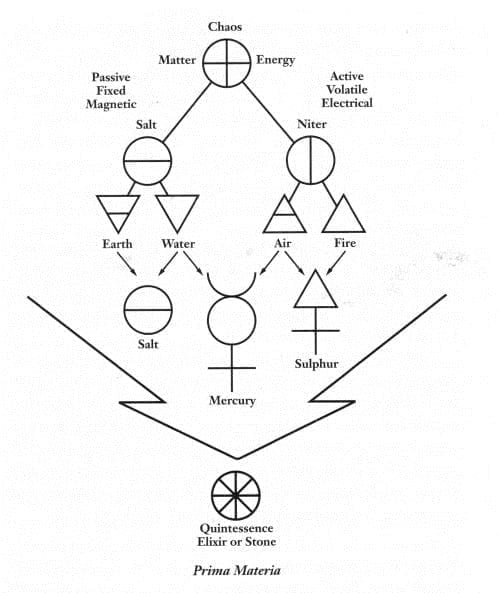
Tracing a path back to the origins of the universe (Chaos) and then beyond to a connection to Divinity (Quintessence), alchemists like Jābir ibn Hayyān and Paracelsus added to the classic 4 elements of Earth, Air, Fire, and Water on both the front and back ends of the spectrum.
From Chaos come Matter & Energy, which are then influenced by either Passive (Magnetic) or Active (Electrical) Forces to follow paths governed by Salt (which leads to Earth & Water) or Niter (which leads to Air & Fire).
It was Jābir ibn Hayyān who allegedly identified Sulphur (AKA sulfur as “The stone that burns”) and Mercury (the element so important to much of alchemy) as having key roles to play in terms of enabling an alchemist to ‘manipulate’ the 4 base elements in their experiments – claiming that both Sulpur and Mercury were ‘irreducible’ elements.
Paracelsus took Hayyān’s work further and added in Salt to the mix to create the 3 Metallic Principles which are:
Sulphur: flammability
Mercury: both volatility and stability
Salt: solidity
Paracelsus named these irreducible elements as The Tria Prima and claimed they could be used to unlock Quintessence.
What is Quintessence?
Now we’re getting somewhere! Quintessence is another of the mystical goals of the alchemist’s quest. Quintessence is given many definitions, including:
Interesting Note: In the Last Temptation of John books, John talks about Quintessence during his pursuit of The Magnus Opus – explaining its importance to The Great Work.
8. Symbols of Alchemy
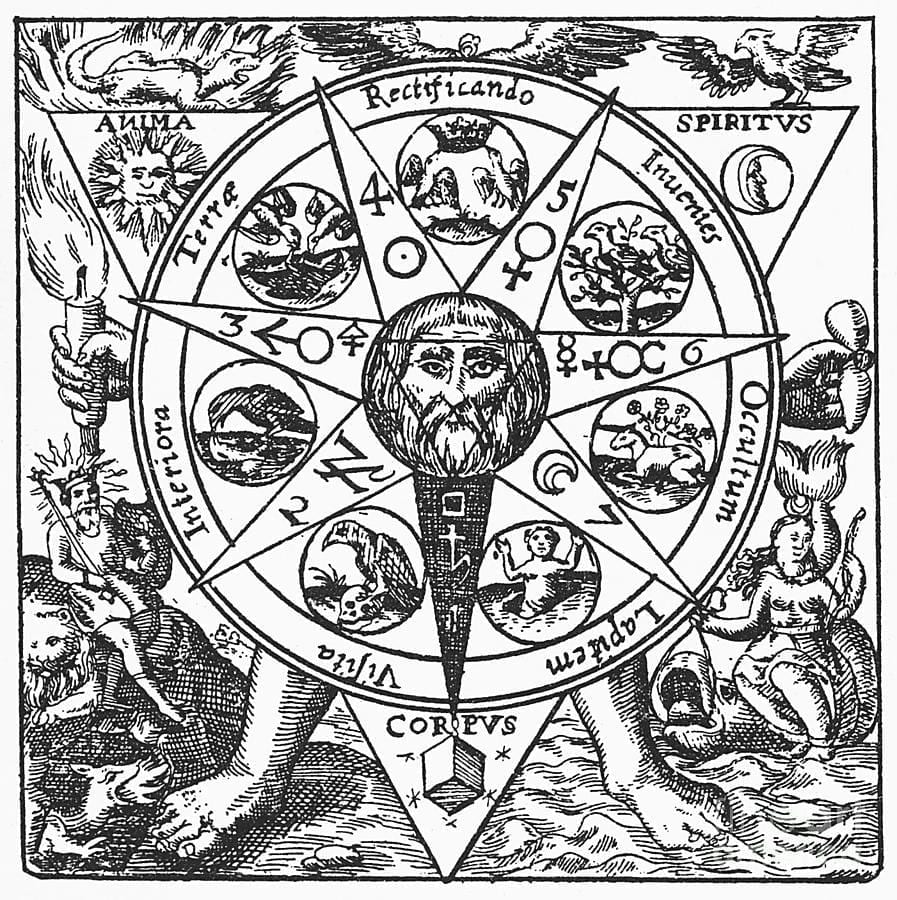
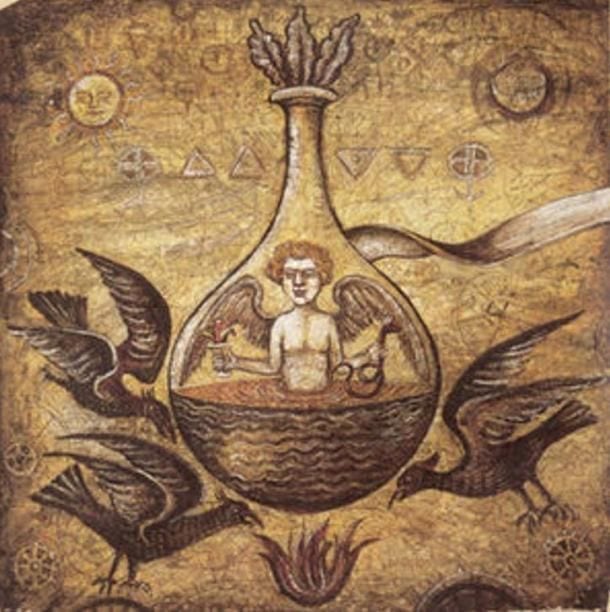
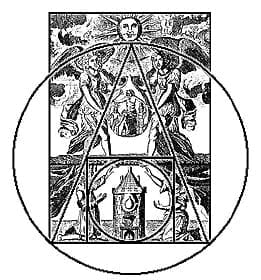
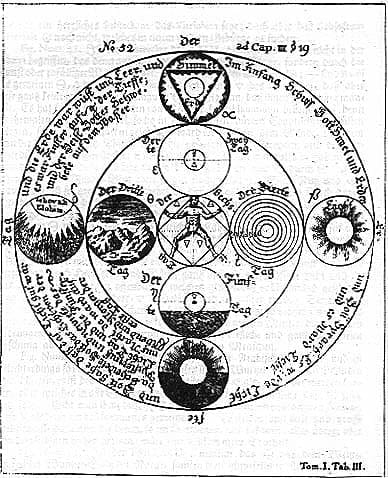
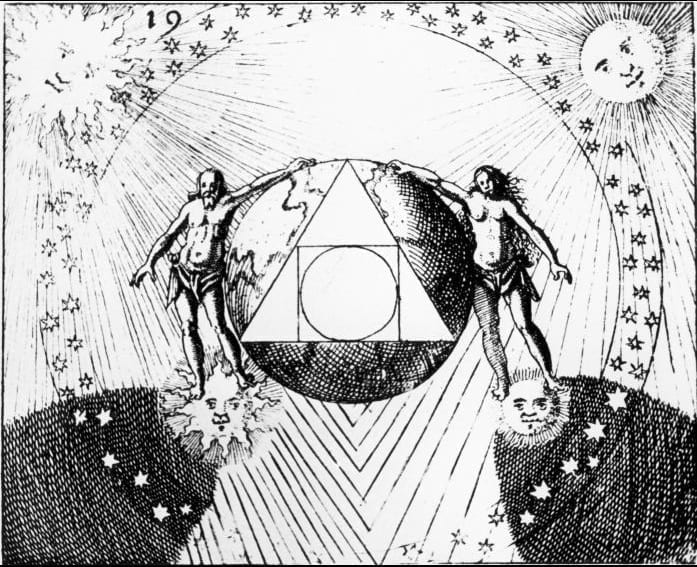
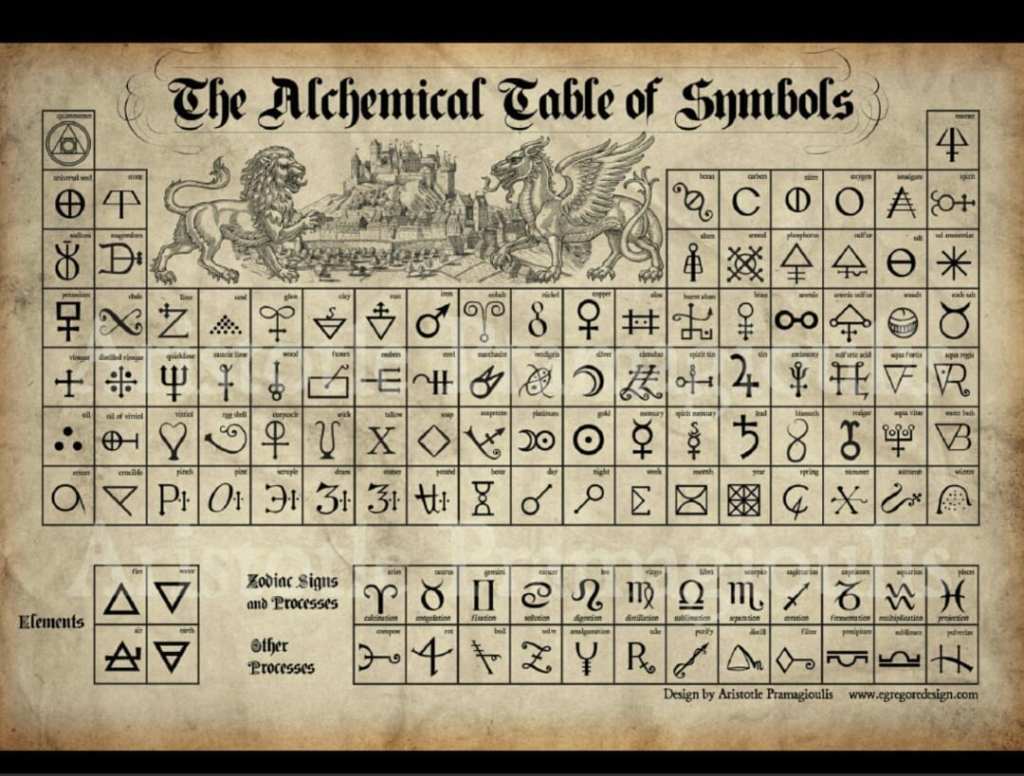
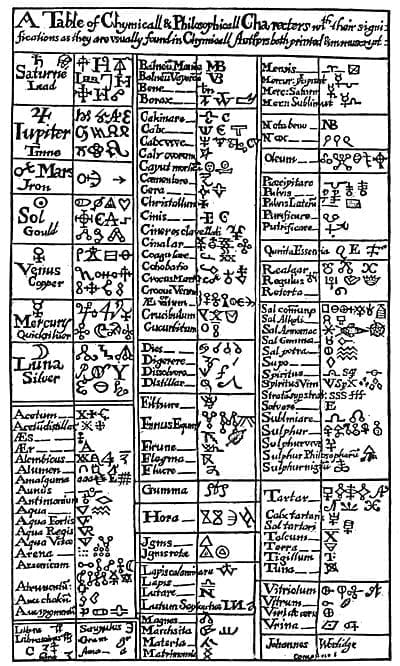
The symbols of alchemy have fascinated us for millennia. Here are two of the more classic examples of alchemy symbols that depict the Elements of Alchemy, the Zodiac Planets, various alchemical processes, and more.
The second image comes from alchemist Basil Valentine – a 15th century Franciscan monk who was also a renowned alchemist.
9. Famous Alchemists
Here is a list of the world’s most famous alchemists, however I’d recommend you keep in mind that just because these alchemists were famous does not necessarily mean they were the most successful – after all isn’t it possible that the alchemists who achieved the highest goals are not listed here because they didn’t want fame or fortune?
This list is compiled from research exploring numerous sites and texts (see references below for more info). A special thanks to the site CrystalLinks for it’s outstanding research on this topic.
Editor’s Note: In the Last Temptation of John books, John claims to have lived portions of his life under the pseudonyms of famous alchemists – including Zosimos, Paracelsus, and Fulcanelli – a trio of heavy hitters in the world of alchemy!
10. Alchemy Books of Important Significance
Although we can’t touch on every alchemy volume ever written (there are untold thousands of texts), let’s look as some of the most famous ones.
Although the trilogy known as the Last Temptation of John is not solely focused on alchemy, the craft plays an important role in the series because the main character (St John the Apostle) is an unhappy immortal whose primary goal in life is to find a way to die. Unable to discover a normal way to die, John turns to alchemy to find a solution. His curious quest takes him on a journey that involves The Philosopher’s Stone, Quintessence, Azoth, and of course The Magnus Opus. Will he successfully complete his alchemical goals?
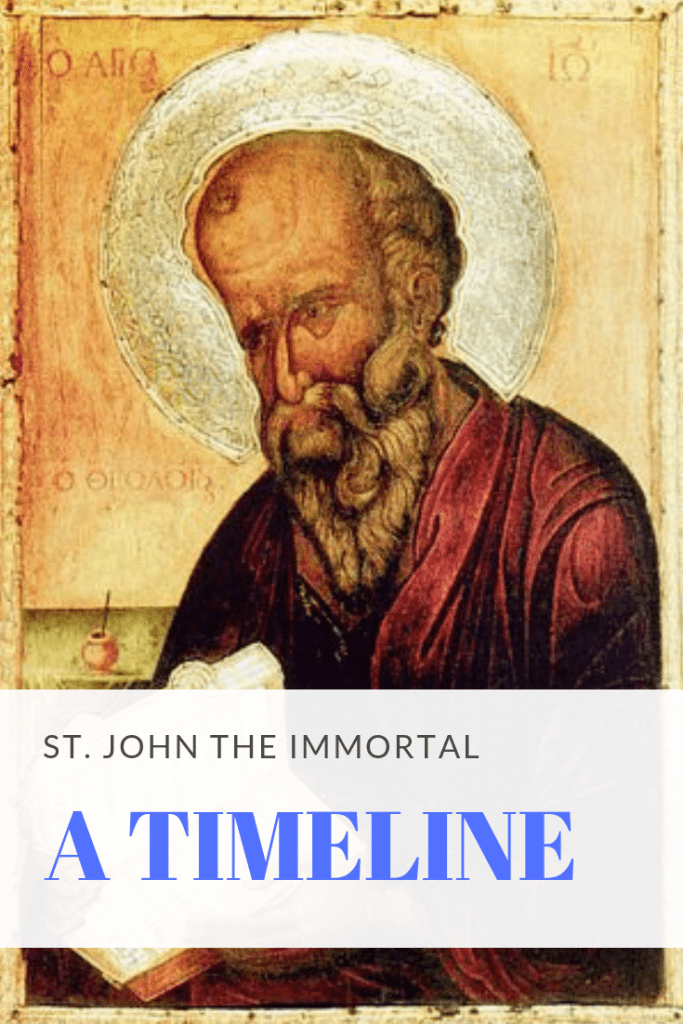
Saint John’s Life – Numerous sources (both secret and otherwise) suggest that the Apostle John did not die. The topic became so engrossing for me that I wrote a series of book about it called “The Last Temptation of John.”
During the writing of The Last Temptation of John novels and my (alleged) conversations with the immortal St John, the as-yet-very-much-alive apostle gave me this timeline of his life – it’s fascinating stuff!
Editor’s Note:
We explored this topic in the article “Is St. John Still Alive” which you can read more about here:
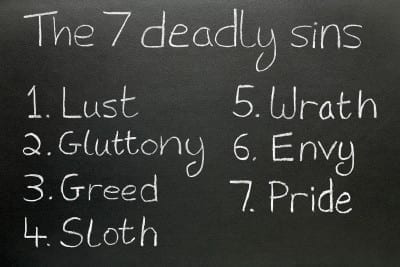
What is a “Deadly” sin and what are the Seven Deadly Sins from The Bible? In this article we’ll explore where they come from in the Bible, what each of the 7 Deadly Sins are, and talk about their relationship to the infamous Chairs of Woe which feature prominently in the books The Last Temptation of John – a trilogy of novels about the events of The Book of Revelations and the emergence of The Antichrist during our times.
[lwptoc]
What is a “Deadly” sin?
The “Deadly” sin is also known as ‘capital sin’ or a ‘mortal sin‘ because committing this types of sins was historically associated with a sin of such magnitude that it would be worthy of eternal death. If the person who committed the sin did not get absolved from it (via the Catholic sacrament of Confession), then they were believed doomed to spend eternity in the fires of Hell.
Think of a Deadly Sin as a crime that is punishable in the modern world by capital punishment (AKA “The Death Penalty”) and you’ll understand the significance of a ‘Deadly’ sin to a person who lived in the Middle Ages.
To understand the meaning of the 7 Deadly Sins we should first understand the context that made them popular. Dante Alighieri (AKA just “Dante”) was a famous poet and writer who lived in Italy during the Late Middle Ages – a period during which Europe (and especially Italy) was essentially ruled by the Catholic Church. Most of the people of the time were poor and endured terrible hardships during their lives – they didn’t have much to hope for in this world so many put their faith in the promise of a better life in the afterlife of The Bible as promised them by The Church.
To attain such an afterlife (unless one could afford to buy indulgences to pay for their sins – which most of the poor could not afford to do), a person had to live a good live on earth (by practicing the 7 Virtues discussed below) and above all avoiding the mortal sins that could cast them into Hell.
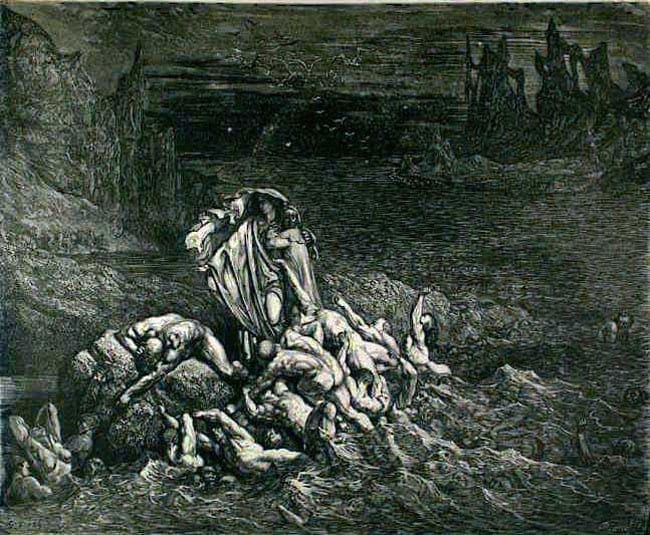
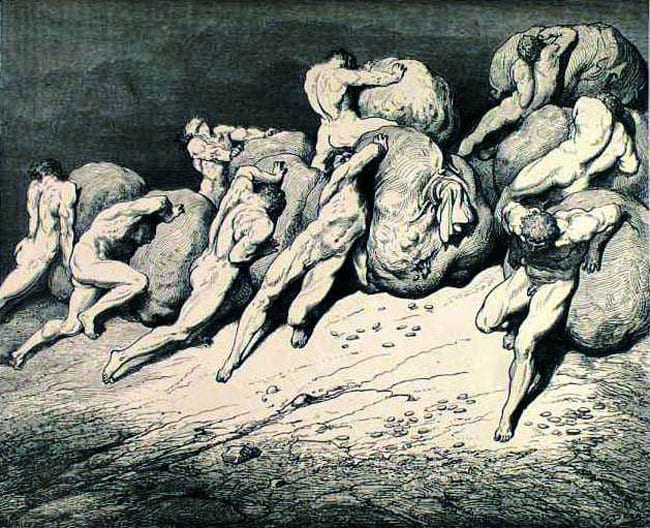
Although he didn’t invent the deadly sins (see below), Dante certainly made them famous when he wrote a trilogy of epic poems called “The Divine Comedy” which included the works “Inferno,” “Purgatorio,” and “Paradisio.” The most famous of these was “Inferno” (his vision of Hell) and this is the one wherein Dante brought The Seven Deadly Sins to life in graphic detail with his writing and the artist Gustave Dore took it a step further with his art…
In Dante’s book, the sinners whose souls are stuck in Hell (i.e. The Inferno) must endure an eternity of punishment by forever ‘living’ the very sin that put them in hell. And this is what brings us to our meaning for each of the 7 deadly sins…
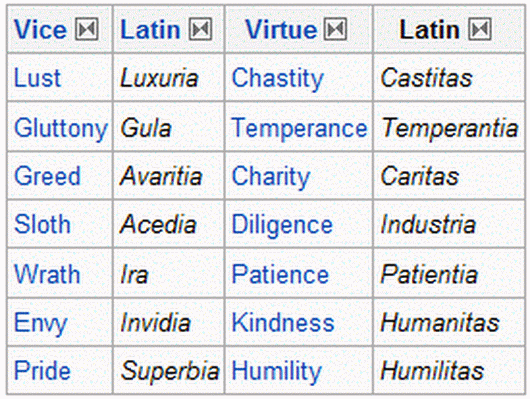
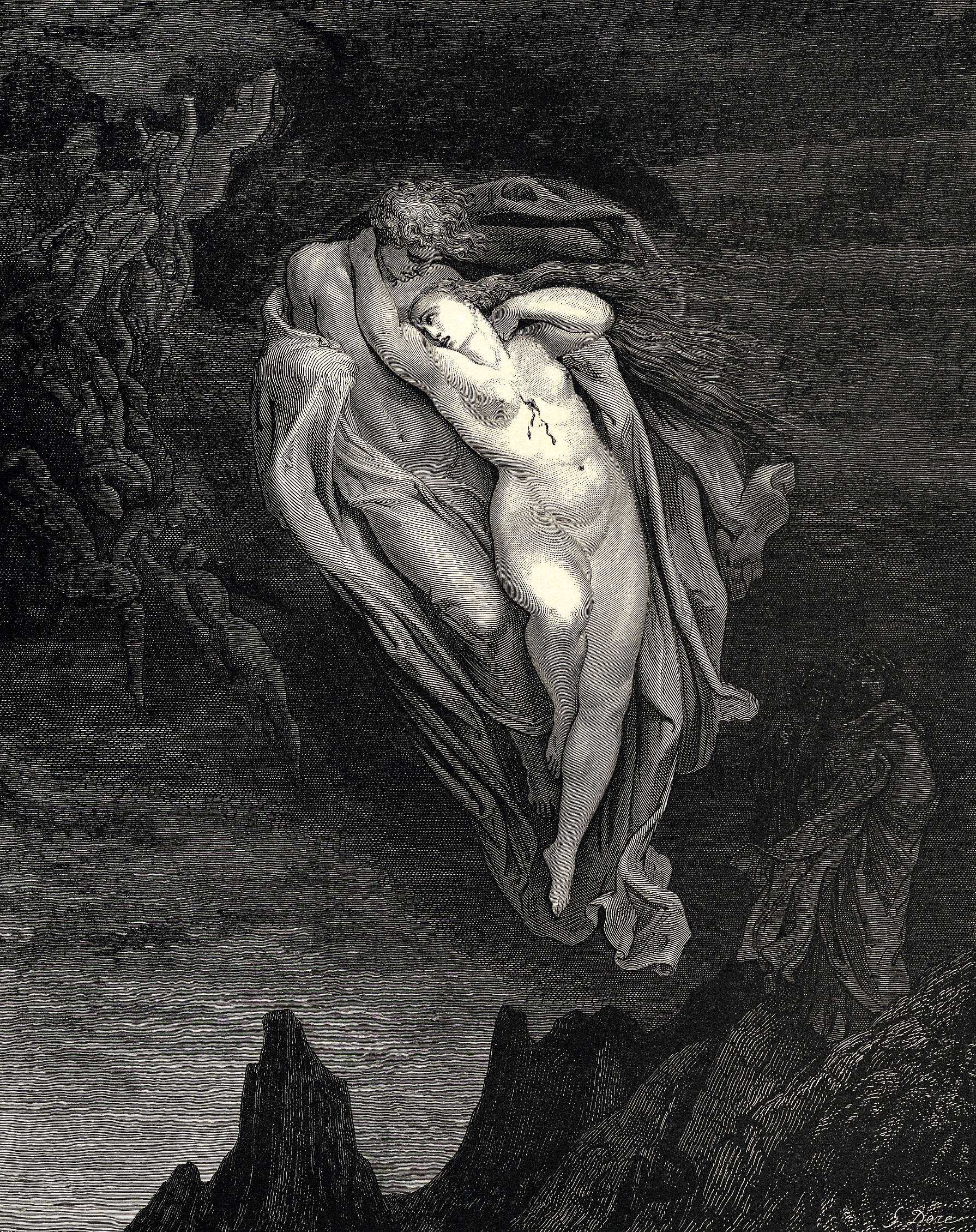
Lust – Luxuria – The First Deadly Sin Dante’s first deadly sin was Lust, AKA Luxuria. This could be a carnal desire or a lust for something non-sexual. From a sexual standpoint this sin could be “unbridled sexual desire that causes the sinner to fornicate, commit adultery, rape, bestiality, and other immoral sexual acts.” But lust of a non-sexual exists too – think lust for wealth, lust for power, etc. Anything a sinner lusts for is something that person places above God and thus the ‘deadly’ nature of this sin.
Gluttony – Gula – The Second Deadly Sin The sin of Gluttony is overindulgence. Too much of anything is never a good thing, right? The over consumption that comes from being a glutton leads to waste and when you consider that food was scare and famines were frequent during the time Dante wrote, you get a better understanding why gluttony was such a big deal – if greedy rich people eat all the rood, that leaves little left for the needy and poor. Beyond just overeating, Gula is also associated with selfishness and the sin of gluttony occurs when you place your own desires above those of others. Similar to Lust, the deadly sin of Gluttony causes the sinner to desire something above God – which is a surefire ticket to Dante’s Inferno, where said sinner can eat whatever they desired most in life again, and again, and again for all time… no matter how sick of it they become.
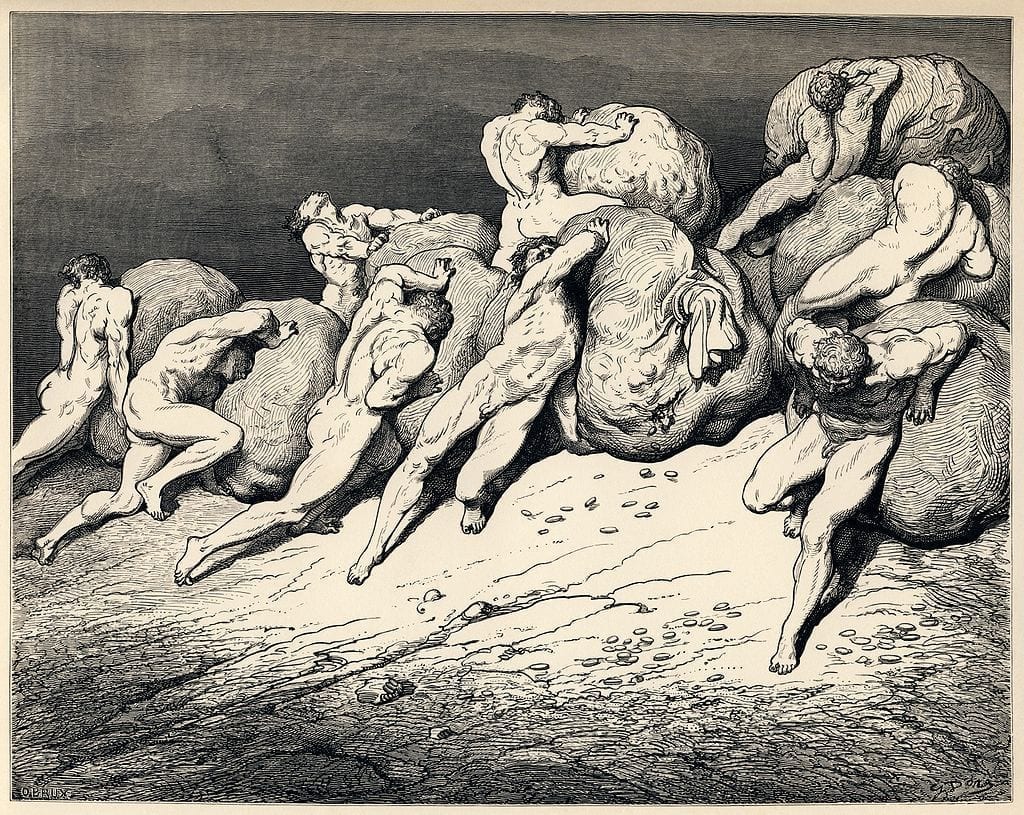
Greed – Avaritia – The Third Deadly Sin Similar to Lust, the sin of Green is associated with desire – in this case mostly for wordly possession. Think “avarice” or “covetousness” and you’ll understand this sin. The Catholic Church talks about this sin as having an uncontrolled “desire and pursuit of material possessions” and Thomas Aquinas wrote, “Greed is a sin against God…in as much as man condemns things eternal for the sake of temporal things.” Examples of Greed are hoarding, theft, miserliness, simony, etc. Remember the words of Jesus from Matthew 6:24 “No one can serve two masters… you can’t love both God and Money.” A sinner greedy for worldly possessions, loses their focus on God, thus forfeiting their potential treasures in heaven for the wealth of this world – which is unfortunately all too fleeting.
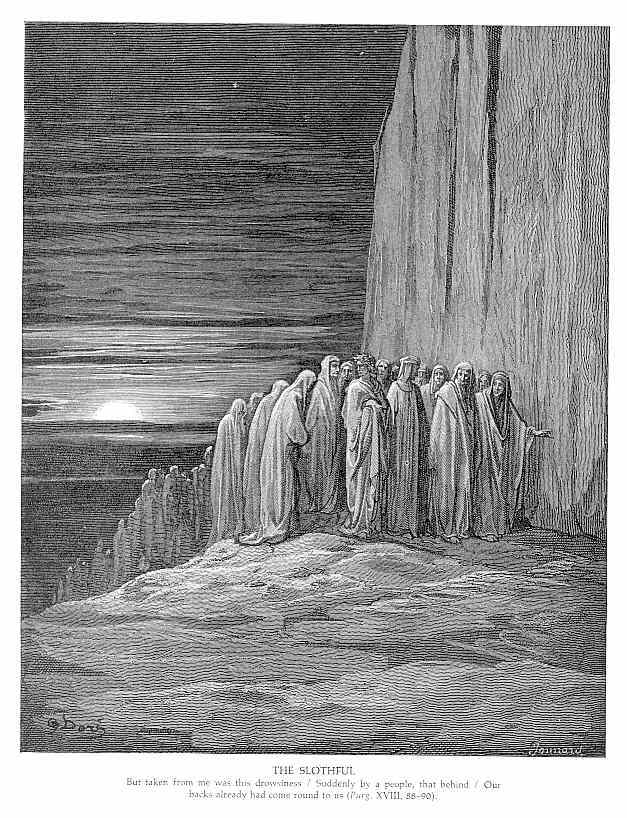
Sloth – Acedia or Tristitia – The Fourth Deadly Sin. Unlike the other deadly sins, which are sins of action, the deadly sin of Sloth is a sin of INACTION. When we think of Sloth now, we usually bring to mind someone who is lazy , but the sin of Sloth is more than just laying around, it’s a failure to do, a failure to act, even a failure to feel. Dante wrote that Acedia was a “failure to love God with all one’s heart, all one’s mind and all one’s soul” (which bring to mind Jesus’ words in Luke 10:27). A person is such a state of apathy would be committing a deadly sin because they are failing to focus on God’s goodness and God’s mission for them in this world – by not using their talents they are destroying God’s work in their life.
Wrath – Ira – The Fifth Deadly Sin The sin of Wrath is many things – including anger, hate, rage, and the desire for revenge. People who commit the sin of Wrath often do acts of violence that harm others (think murder, rape, torture, acts of war) or themselves (self-torture, suicide). Since this type of action is a violation of numerous Commandments it’s not hard to see why Wrath is a deadly sin that would send someone to Hell.
Envy – Invidia – The Sixth Deadly Sin Envy is another deadly since based on desire. It’s also another associated with the 10 Commandments – (specifically the “Thou Shalt Not Covet” commandmens #8, 9, & 10). When someone is jealous of what their neighbor has, it creates a feeling of discontent and eventually severs their relationship. Envy can take many forms beyond just a desire for someone’s possessions, it could also be jealously for someone else’s appearance, status in life, abilities, etc. Dante wrote that envy was “a desire to deprive other men of theirs” and Dante’s punishment for those who committed the deadly sin of Envy was “to have their eyes sewn shut with wire because they gained sinful pleasure from seeing others brought low” – ouch!
Pride – Superbia – The Seventh Deadly Sin Believe it or not, the sin of Pride was the most deadly sin of all. Dante’s definition of pride was “love of self perverted to hatred and contempt for one’s neighbor” and although it is last on the list of deadly sins, Dante consider it the worst. Why? Consider that Pride is the very sin that caused the angel Lucifer to be cast out of heaven. Biblical writers warn against the sin of Pride no less than 30 times in the Bible (for example Proverbs 16:5 ” The Lord detests all the proud of heart. Be sure of this: They will not go unpunished.”) One could even argue that The Original Sin of Adam and Eve was one of Pride – the conscious decision to eat of the forbidden fruit from the Tree of Knowledge of Good and Evil in an effort to become more like God is perhaps the most prideful sin in human history. Thus Pride is (and always has been) the most deadly of the seven deadly sins.
Are the 7 Deadly Sins In The Bible?
The short answer is “NO” – the seven deadly sins are NOT listed in The Bible in the format we are used to seeing them in: i.e. Lust, Gluttony, Greed, Sloth, Wrath, Envy, and Pride.
If they are not listed in the Bible, where did the 7 deadly sins come from? In the 4th century a Christian mystic named Evagrius Ponticus listed 8 ‘Principal Vices’ which the Christian monk John Cassian cataloged in his writings (the additeional vice being one called “Vainglory“). Later, in the 6th century, Pope Gregory I trimmed the list of Cassian’s eight vices down to the “Seven Deadly Sins” that Dante made famous and which we know today. Pope Gregory viewed these as capital (i.e. “principal”) because many other sins came from them. Additionally, according to this source, they are enumerated in the Catechism of the Catholic Church, #1866.
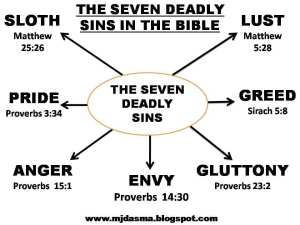
Although the 7 deadly sins are not ‘listed’ in a single list form anywhere in the Bible, they are certainly discussed throughout the text. Here’s an example (from a fellow blogger) of the sins referenced in numerous Bible books…
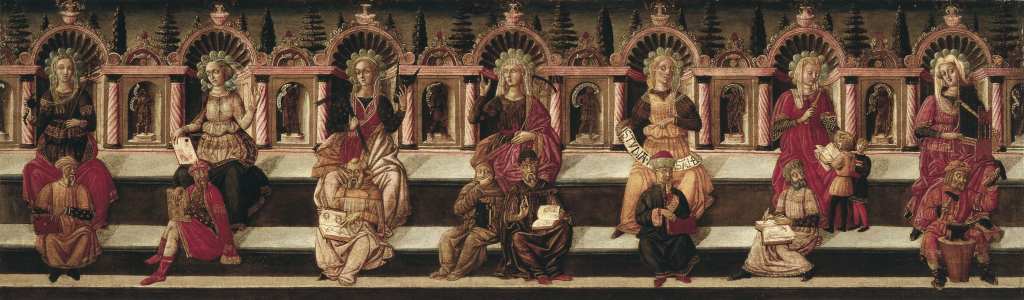
Meanwhile, check out this amazing painting that depicts that Seven Virtues and the Sven Vices by Francesco Pesellino.
What are The Chairs of Woe? How do The Chairs of Woe and 7 Deadly Sins Fit Into The Last Temptation of John books?
The Chairs of Woe are torture devices that exist in the fictional world created by author M. C. Stoppa’s The Last Temptation of John books.
The Chairs of Woe are used by The Antichrist to torture the character Alan Zarus (AKA Lazarus) in an effort to get the immortal to reveal the location of the remaining Nails of Christ which The Beast needs to complete The Armageddon Rite to stop the Second Coming of Jesus.
Each Chair of Woe is located in a different room within the Antichrist’s palace and each chair is associated with one of the seven deadly sins – thus there are chairs for Lust, Gluttony, Greed, Wrath, Sloth, Envy and Pride.
No mortal could endure a single Chair of Woe for very long without perishing, yet when the Antichrist forces the immortal Lazarus to endure the torture of The Chairs, disastrous consequences result – since Lazarus can’t die, he is forced to suffer beyond measure and only the combined efforts of his fellow immortals can save him – if they dare to try to break into The Beast’s stronghold.
The Antichrist and The 7 Deadly Sins
The Antichrist has come
What if the events detailed in The Book of Revelations were about to occur… this year?
Could anyone save us from certain death? The answer is YES. Hard as it may be to believe, St. John the Apostle is still alive today – having been blessed with the Gift of Immortality so that he could survive to fight against the coming of The Antichrist. Unfortunately, over the course of the last 2,000 years John has lost is faith!
Can John recover his faith in time to stop Armageddon or will Satan’s Son achieve Ultimate Victory? The answer to that question and many more will be revealed in the thrilling new book series The Last Temptation of John.
Read it the trilogy today… if your faith is strong enough.
The marathon revelation continued for me as I watched Alan’s torture from afar. When Bill Bates as Ghaz Ma’bus instructed his servant to take Alan to The Life Labs, even the loyal Iffat froze at the thought and I saw Alan visibly shudder at the thought…
What was it about Bates’ labs that scared everybody?
I feared we’d find out soon enough.
Not wanting to upset his master, Iffat quickly recovered and got to work — after further securing Alan to the bed’s frame, he adjusted the prison bed in such a way that Alan was raised fully upright. Then, after unlocking the wheels, Alan’s movable prison was ready to go.
Bates nodded, “All set? Good. Iffat lead the way.”
I watched as they guided Alan through stark hallways, devoid of activity. Finally, after descending multiple levels, at last they stopped before an otherwise non-descript room – its only detail of note being the numbers on the door, which read Room 101.
(Hmm, makes me think of an Orwellian book I once read. Oh, sorry, guess I’m getting off track).
Bates moved ahead to provide the security codes required to enter. Once finished, he opened the door, “Go ahead, Iffat.”
When his servant hesitated, Bates chuckled, “Don’t worry, Iffat, YOU will be exiting again.”
Still frightened, Iffat cautiously pushed Alan’s bed forward.
Torch fires burned in sconces on the walls, swathing everything in stark brightness – an evil paradox to the deadly pall emanating from Room 101. Standing in the middle of the room was none other than Tony Flipflop – the infamous doctor who’d partnered with Bates on creating the Covid plandemic.
“Welcome to the Life Labs.” Dr Flipflop proudly stated (he always was someone who loved a good show).
“It’s where Tony and I ply the task given to me by my father.” Bates added.
In my vision I looked past the lap dog Dr. Flipflop and into the rest of the room. Against the rear wall I noted a steel cage – understanding at once that anyone who found himself in that cell would be facing a grim future indeed. For in the center of the room were three cold-looking, metal tables; beside each was a little push cart, filled with a plethora of cutting tools – flaying knives, bone saws, and hooks – as well as situational instruments like forceps, clamps and vices. Wash stands too stood at the head of each work area. And each table had raised edges on all but one side.
Seeing Alan also looking around, Bates also smiled, “Ah, you’re noticed our work stations. You’re probably wondering why the sides are mismatched? It’s simple really — whenever Dr. Flipflop has one of my subjects exposed on the cutting board, with their blood flowing freely – and it always does – well, I just can’t stand for him to lose even a drop. But with our tables crafted in this manner, we can ensure that Dr. Flipflop ‘s participant will have their life-force flow down the slope of the table, to run off into tiny troughs waiting below to collect that precious liquid. Clever, huh?”
Alan’s knees buckled, “Why are you showing me all this? It doesn’t matter what you do to me. I’ll never help you.”
Bates overlooked that, “Prior to our tour, you asked how I planned to influence you.” And striding casually around the room, he explained, “Surely you were around during the so-called Dark Ages, right? Alas, how I miss those days. Yet, I digress. You will make a great candidate for Nail Removal. Perhaps I’ll instruct Tony to pull off a few of your toes too. Of course, you can be sure that we won’t overlook my favorite method of all – Flaying – even I get in on the fun for that!” And he demonstrated his delicate technique in the air with one of his knives.
Meanwhile, seeing his words hit home, Dr. Flipflop goaded Alan, “You see, that’s the beauty of it all, Mr. Zarus — Dr. Ma’bus tells me that you CAN’T die! I’ve never had a subject like that and I can’t wait to experiment on you.”
“We’ll torture you forever – until you break.” Bill sneered. “And you WILL break, Lazarus.”
Alan gritted, “You can break my bones, but you’ll never break my spirit. My Lord will protect that much.”
“Even your master broke in the end.” Bates laughed.
“’My God, why have you forsaken me.’” Bates translated in delight. “It’s true — your Master doubted himself and all he THOUGHT he was.”
“But in the end, God DID save his son.” Alan fought Bates’ logic.
“Your God broke his promise to my father! The deal was that we could tempt Jesus WITHOUT him getting assistance from Above.”
Alan did not reply – seemingly caught in his own vision of what Christ must have endured while in the limbo of Hell without His Father’s protection.
“Christ in Limbo” by Hieronymus Bosch
(OK, I’ll admit, this was all news to me. Even though I said I don’t care, I’m not all that keen on doubting the power of God. I mean, it’s one thing for a child to complain about his parents, but the kid doesn’t usually like it when an outsider is doing the insulting, right? That’s kind of how I felt. Bill Bates was really starting to get my goat).
“Nonetheless,” Bates calmed himself, “We are patient. My Father and I know the treacherous ways of The Cursed One. After Jesus’ death, when he descended to us, we had three good days with him – but there again your God broke his promise and forced us to give up his pitiful son.”
“Believe what you will. But my point is this — your Christ did NOT defeat Death. And he certainly did not defeat my father. If so, why is this war not over? No, the FACT is that we let Jesus go.”
(Now this was hitting too close to home. If I had any power to end my visions, this would have been one I sacked. But alas, I was locked in and, like Alan, forced to keep listening to this madman).
“I tell you the real truth!” Bates said. “Your Messiah is a coward.”
Alan changed the subject, “I will endure anything you throw at me. And my Lord will give me all the strength I need.”
“I figured you’d say that. Which is why my plan is not really to have Dr. Flipflop torture you indefinitely – just to give you a taste of what your friends will feel.”
“What do you mean? Have you done something with Benedict?”
“Then who are you talking about?” Alan played dumb. “What are you really after, Ma’bus?”
“Surely you know that I need all THREE Nails. And as to what I want, you know that too, Brother — I want to destroy you, I want to destroy your master, and I want to destroy all that ever was. I want to consume it all, to be ALL!”
OK, I have to admit, by this point I actually pissed my pants – and saying that was because I’m an old man is not really true – I was scared!
Thankfully, my vision finally ended, and I could get back to my bottles of Jack — yes, I said bottles – it was the only way I knew I could escape my fate… or so I hoped…
Just as quickly as the Witnesses came, they were gone; once more I was looking back at Alan – and his new visitor…
So who was it that entered Alan’s room?
I’ve got to say, I was a bit shocked myself when I saw none other than Bill Bates!
Look, I’m the first to admit that I hate “The News” and I believe that President Trump is right when we says that most of it is just ‘fake’ news anyway.
But that said, even I, who hate listening to this hogwash, even I knew enough about current events to know that Bill Bates was the most beloved world-saving philanthropists of our times. To think that he of all people would show up here as Alan’s captor was beyond belief.
I shifted my attention back to Alan and his visitor…
“Bill Bates? You are The Beast!” Alan averred to the man who had entered his prison cell.
(Surprised though I was to see Bates standing there, there could be no denying it was him – especially since he wasn’t wearing a face mask. I found myself intrigued by the vision and eager for answers – how in the hell did Bill Bates turn himself into Satan’s son?!?)
“Call me Ishmael.” Bates quipped in reply to Alan. “Or call me Irresistible. Although I’d prefer you stop calling me by my White Privilege name and instead kindly recognize me by the more racially equitable moniker Ghaz ‘al Ridwan Ma’bus.”
“Well, this is certainly a break from your impeccable image, Mr Bates.” Alan refused to use the made up name. “What would the rest of the world think of you torturing me?”
“Torturing you?” Bates sighed. “Why I have done no such thing. My team is merely holding you for your own good. I’d say that’s pretty altruistic. And as for my image, apparently the world likes me quite a bit. After all, the U.N. elected me Secretary General.” Upon seeing Alan’s surprised look, Bates added, “Oh, that’s right. You didn’t hear the news. Well, allow me to fill you in: Ki-Moon is dead – don’t ask me how, I’m sure your friend Benedict had something to do with it. In any case, I am the new Secretary General. As usual, I gave an impassioned speech at my coronation. It was a lovely ceremony. But more importantly, this is just another stepping stone in The Great Reset – soon enough I’ll be named the first World President and then I’ll control the world forever more.”
“But…but…?”
“What’s the matter?” Bates teased, when Alan didn’t respond. “Cat got your tongue?”
“What do you need ME for?” Alan relaxed back into his bonds. “In your own words you already said you’ll control the world. What else is there?”
“I want souls, dear Brother, SOULS…”
(The way Bates said his last comment caused me to feel a terrible chill – as if his was emanating malevolence. Sorry, Alan, but immortal or not, I’m glad you’re there and not me).
Fighting against this, Alan cried out, “There’s nothing you could do to make me help you! I don’t care if The Brotherhood did help you gain control of the world’s resources after your made up plandemic – clearly we underestimated how you would use The Great Reset and your Climate Change agenda. But even still, you’re nothing more than a glorified nerd. You’ve already been given more than you deserve and when I get out of here, I’ll personally see to it that you are finished. You can’t harm me and you know it.”
“I may not be able to kill you, but I have ways to influence you.”
“Such as?”
“Well, rather than have me tell you, why don’t I SHOW you, eh?” And calling back through the doorway, “Iffat, enter.”
His servant dutifully entered — head down, awaiting his instructions.
“Iffat, kindly arrange it so that our guest can go on a little tour,” Bates commanded. Then to Alan he added, “To the Life Labs.”
“Can they resist?” Enoch raised his hands, as if to ward off a blow.
“No one can resist The Third Seal!” Elijah fell back, unconscious.
(Actually that’s true – The Third Seal is a bitch – see for yourself…)
At this point my sight of the Two Witnesses ended and I was returned again back to my revelation about Alan and his ordeal with The Beast – would his identity finally be revealed?
The next day, I got yet another vision, but instead of giving me some answers, it only added to my confusion.
Tell me what YOU think is going on here…
<CLANG! BANG!> The thundering sound caused a man strapped to a bed to wake up – it was Alan.
But just where was he? I could tell that Alan had no clue and I was unable to make out much from his lonely surroundings.
The last thing I remember about Alan was that he had collected his Nail from the CEC Catacomb vault and was on his way to see Joseph – until he got jumped by a bunch of goons.
After that I didn’t see him again – until now.
“Ah, finally you’ve decided to join us,” a metallic voice blared through a loudspeaker affixed to a nearby wall. “I trust your stay has been pleasant? No? Oh well, please feel free to take it up with management. Oh yes, that’s me. Well, your complaint has been duly noted. Thank you.”
(Now who the hell is this joker?)
“Wha–?” Alan began. “Who are you? Is this The Vatican?”
“Please save all your questions till the end of the tour.” The voice continued. “Now, if you don’t mind, let’s begin.”
Alan tried to sit up – only to discover that he was bound to his bed.
“Oh, did I forget to mention that?” The voice said. “Well, that’s merely a precaution – for your own safety. Not your safety from anything to do with the virus, mind you, but for, well let’s just say…other reasons. And to answer your question – No, this is not The Vatican.”
Although he was a prisoner, I could tell that Alan was more annoyed than frightened. Did he remember the conspiracy theories he and Teri had been discussing back in Bucharest? Was he worried about the personal safety of his friend Pope Benedict? Did he think he’d been nabbed by contact tracers and taken into the shadow world of the UN Quarantine Camps? I didn’t know the answers to those questions, but I could see he was no mood to banter with some halfwit captor.
“What do you want with me?” Alan asked.
“Master Alan Zarus, until recently, the Sef de Catadre of Bucharest University’s History Department. Prior that, you were at Antioch. And before that, Jerusalem – serving 15 years there. Then let’s see, oh yes, before that you were in the New World – at UCLA, Loyola of Chicago, and Saint Bonaventure. Nearly a decade at each – hmm, very interesting.”
Alan remained silent. (I knew he wasn’t liking where this was going).
“What I don’t understand is the timeline.” The voice replied slyly. “I’ve just rattled off a period of no less than seventy-five years – seventy-five! — yet, you don’t look a day past forty. What’s your secret, man? Are you using a mountain of Oil of Olay? Have you discovered the Fountain of Youth? No, I’ve got it — you must have the Holy Grail!”
“Clearly you have me confused with someone else.” Alan replied without emotion. “I was only an intern at Jerusalem and prior to that had no professional history.”
“Oh yes, and I am a retired investor on a pension, living here as a Jew in the twilight of my life.” The speaker quipped (are we quoting movies now?), “Come off it, man. We both know that’s a lie. If you hadn’t been so damned overconfident you would have changed your identity. You didn’t — you simply changed your locale. Did you really think we wouldn’t find you, Laz—ah, perhaps I’ll save that.”
Alan flinched, but did not reply.
“I DID see that, by the way.” The voice slithered. “But, I didn’t need that to confirm anything.” (Obviously his captor knew Alan was Lazarus. Oops, hope I didn’t just ruin the suspense for you).
“What do you want?”
“We’re not there yet. I’m having too much fun. Now where was I? Oh yes, this impresses me – you’re quite the secret society buff; and I’m not just talking research, you’re active! Let’s name just a few, shall we… first there’s the prestigious Club of Rome – ooh. And let’s not forget The Committee of 300 – obviously very selective. I’m impressed — especially since I was active in those too. But, by now, you knew that right, Brother?”
(There’s that damn Brotherhood again — don’t worry, I’ll get to that).
Alan sighed. “I can see you have quite an imagination.”
“Is that so? Then, I’m sure you won’t have any concerns about this.”
On cue, the door to Alan’s room opened. In walked an otherwise non-descript middle-eastern man, he wore a surgical mask (apparently he never got the memo about how dangerous those cancer cloths were) and was clothed in a simple black robe. Standing silently, he held a silver platter, while looking vacantly at the far wall.
Alan’s eyes went to the object on the tray – a wooden caisse about a foot long. (I’ll bet you know what that is. This is not a good sign).
Alan struggled to break free, “Damn you!”
“Ah, something finally has registered.” The speaker jeered. “Come now, did you really think I didn’t know about It?” Then instructing the attendant, “Go ahead, Iffat, open the case.”
(Ah, that’s a BIG mistake).
“NO!” Alan urged. “Don’t do it, man. It’s a death sentence.”
Iffat didn’t heed Alan’s warning, instead he opened the tiny black coffin, revealing the lone object inside – an iron rod nestled amidst red velvet.
At this point, the speaker advised, “All right, Iffat, you can close the box.” (Wise move).
The servant did as commanded and then left the room – despite his protests Alan was powerless to stop him. Yet the interrogator laughed, “Don’t worry, my men won’t touch the Nail – they know better… now. I just wanted you to know your prize was safe. Soon, I’ll have the two held by your friends… And YOU will help me get them.”
(So he wants my Nail too? Fine by me. Come and get it).
Yet Alan didn’t agree, “NEVER! I’ll never help you!”
Harsh laughter boomed from the speaker in reply.
Alan screamed, “What do you want?”
Still no answer came forth.
“Who are you?” Alan tried again.
Finally, the voice replied, “You know who I am, Brother Lazarus.”
Showing no emotion or further surprise, Alan closed his eyes and simply stated, “You are The Beast.”
At that, the door opened, and in walked…
Just then the vision ended… BEFORE I could get a look at The Beast’s face!
My marathon day of visions continued. After moving past the vision of Mary and Jesus, my second – and much more interesting – vision, was pretty deep — think Book of Revelations…
As best I could make out, I was witnessing a FUTURE event—for I was looking upon The Altar of The One True God at The Temple of Jerusalem and immediately I spied Chief Rabbi Yona Metzger, Pope Benedict XVI, the Ayatollah, and that crazy nut Bill Bates — all together.
Given the hordes of people covering the hillsides, I surmised that this was the much publicized ceremony that Rabbi Metzger was organizing to unite their religions in a new era of brotherly love. (Hogwash in my opinion, but who am I to object?)
My vision blurred for a moment, and when it returned, the entire mood had shifted; something was off – for the rabbi was now laying motionless upon The Altar — and peering closer I could see he was dead. Looking around, I also noticed three crosses in the background — they had an eerie resemblance to the ones back on Golgotha – especially since I saw figures on those crosses – crucified!
I strained my eyes to identify the victims – only to get a major shock – for the first body hanging limply on a cross was Lazarus!
I turned to the second cross – only to see Mary.
(Can you guess who was nailed to the third?)
Yes, it’s always unnerving to see yourself as a bloody corpse, but over the years, I’ve been stabbed, shot, and killed in so many ways that it doesn’t affect me much anymore. Instead what excited me about this vision was that, perhaps, just perhaps, this death would really take.
For if this prophecy was true, it seemed I was looking upon the event which I had been waiting nearly two thousand years for – my own death!
Whoopee!!
Now as I told you before, Mary, Lazarus, and I had all been made immortal so that we could stop the coming of The Antichrist. This was our Commission and if successful, we’d be assisting Jesus in his glorious return – unfortunately, it was a job at which we had failed miserably – many times.
For nearly two thousand years, we’d been on guard. At various times in the past, my friends and I thought The End Times were approaching and that the Antichrist walked the earth – yet upon every occasion we were wrong.
Now, however, it appeared that I was finally seeing a different vision – for it was the first which showed the deaths of The Immortals – which I always knew was a key to The End.
Unfortunately for the sake of The Commission, again it seemed that my friends and I had failed – for in my vision The Beast was very much alive, while we three were clearly dead. (Oops!)
Once more my vision got hazy. When next it cleared, I found myself riveted back to the altar – someone was standing there. It was a man who looks like everyman, yet no man. He was wearing a crown of thorns and blood was raining from his head. For a moment I thought it was Jesus, but suddenly I realized it was another – Bill Bates!
Or was it? For his face shifted, and I was left to wonder, Is it you, Lord? Are you really Bill Bates?
Yet there was no time to be sure, for now there was more activity over at the crosses. Something was being done to defile us — a figure in white was pushing a spear into the sides of our bodies.
That’s when I realized Lazarus and Mary were NOT dead after all – for I heard them scream as they got impaled!
Did that finally kill them? I had no time to ponder further, for now the mysterious murderer came over to me.
Entering my own body in my vision, I looked down upon my murderer, yet before I could make out his face, he pierced me too!
“YAAAWWWWWP!!!!” I wailed and even though it was a vision, it hurt like Hell!
To my horror I realized just what we had been speared by — This wasn’t the infamous Spear of Longinus, instead it was one our Nails… The Nails of Jesus Christ!
Immediately my soul began to separate from my body and I was floating away to… to?
As I felt my true self being torn from this world, my vision shifted back to The Altar.
Bill Bates was there and the figure in white was approaching him from behind.
Finally I could see his face clearly — it was none other than Joseph Ratzinger — Pope Benedict XVI!
Then it was that I made a shocking observation: Joseph was actually carrying The Nails – something no mortal had ever done and lived to tell about it.
Yet the pope was doing it — carefully he took each one and installed them in a glowing new crown – even as Bill Bates was removing his own crown of thorns.
His face a picture of <POWER!>, Bates was glowing with Victory. Meanwhile, Joseph face showed a sly smile as he lowered the crown filled with our Nails down upon Bates’ head…
<A Blinding Light from Above!>
And the vision expired.
Breathless, I was left with but one thought..
Can it really be true? My God, Pope Benedict will be responsible for the death of Bill Bates!
Like I was trying to tell you, today I received not one, but two new visions. Well, one was more of a memory and the other was a revelation…
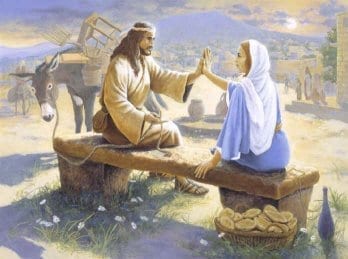
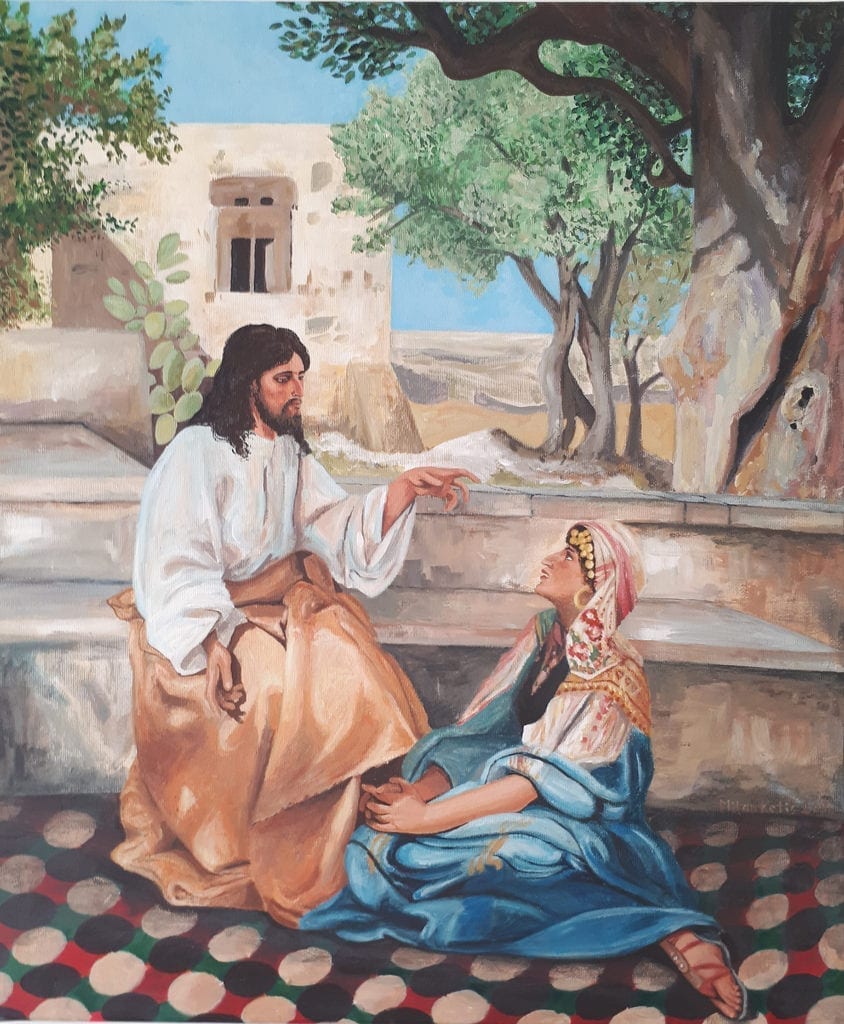
At first, I was transported back in time to witness a conversation between Mary and Jesus – it must have been shortly before his death.
By the look of the surroundings it appeared they were somewhere in the hills of the Garden of Gethsemane.
“Why do you always talk of leaving us?” Mary asked. “Ever since we reached Jerusalem, the only thing you talk about is your death!”
(Hey, I’ll bet this was that same Passover day I just thought about. Yeah, I remember now, it was about mid-day when Jesus and Mary went off; Judas was away buying provisions, and the rest of us were preparing the room. How ironic – I was just thinking about that day, huh?)
“This is what Father has planned.” Jesus said. “It is my destiny.”
“But, what about me? Us?” Mary buried her face in his chest. “Stay with me. Together we can lead your flocks to salvation. Isn’t that what you want?” (See, I told you she wanted to be a leader).
“You will indeed have a hand in helping the world find salvation.” Jesus held her close. “But your destiny is not with me. I must be about my Father’s business.”
“You must die?!” Mary pulled back. “Your Father wants you to die? Why would he let Evil triumph over you? It doesn’t make sense!”
“Much of life doesn’t make sense while it is happening.” Jesus wiped Mary’s tears. “This is not The End. Once it is finished, you will understand.”
“So you are just going to let The Pharisees… kill you? You’re going to desert your disciples? Desert me? Desert the world you came to save?”
“It is the only way.” Jesus laid a hand on her shoulder.
“It’s not!” Mary pushed his hand away. “It’s not the only way. It’s YOUR way. I don’t agree!” (Ah, Mary, always the Drama Queen).
“It doesn’t matter what I want.” And more softly still. “Or what you want, Mary. The Son of Man must obey his Father’s will. You KNOW this is the case – Gabriel told you so.”
“Don’t tell me what The Angel said! Those visions are my own; given to me so that… so that… I can change the future if need be!”
“This is not one of those times, Mary.” Jesus cautioned. “Gabriel’s words are a gift. And later I will bless you with another gift. You will use them in the future to help this world. But, on this occasion, there is no action for you to take. What will be, will be.”
Mary’s shoulders slumped; even I could tell her heart was breaking.
“Please don’t leave me in my time of need, Mary.” Jesus extended a hand out to her. “I DO need you.”
The pain was evident in Jesus’ eyes as Mary looked at him. I watched as she began to reach out to take his hand, but then…
I would guess that here Mary realized that no matter what she did, it would not stop Jesus’ death and the thought of him being crucified was apparently too much for her to bear – for Mary suddenly cried out in agony and ran off – racing to escape her sorrow.
Jesus did not chase her.
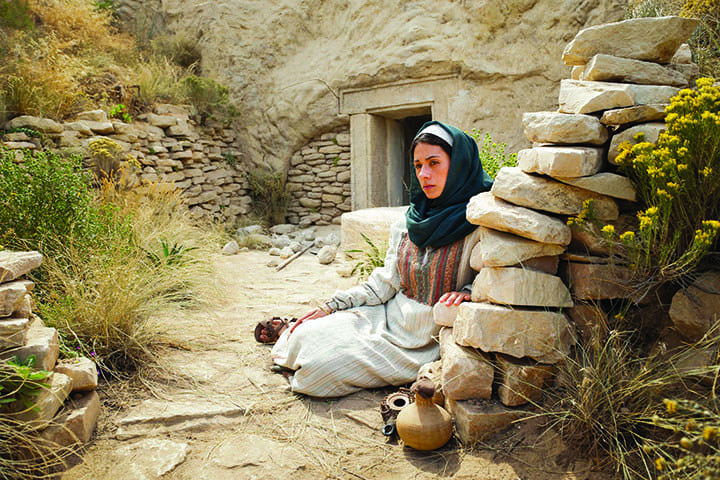
Mary sought out the secluded confines of the stone hills to lament the situation – perhaps trying to work out a plan to change Jesus’ mind?
Whatever her plans may have been, as it turned out, Mary would not see Jesus again until he was captured and then crucified – and by then it was too late.
Suddenly I wondered – did she ever forgive herself for deserting her Lord?
For a brief moment I actually felt sorry for Mary.
For a brief moment I actually felt sorry for Mary.
But then I remembered a great song by The Rolling Stones and opened up a bottle of one of Budweiser Copper Lagers – that took my mind off Mary and put me in a better mood.
Unfortunately I couldn’t enjoy myself too much because I still had to tell you about that other revelation…

















 The Last Temptation of John


